Your car could soon warn you of danger ahead: India plans V2V safety mandate from 2028
Cars in India could soon be able to talk to each other as the government moves to introduce Vehicle-to-Vehicle (V2V) communication technology. The Ministry of
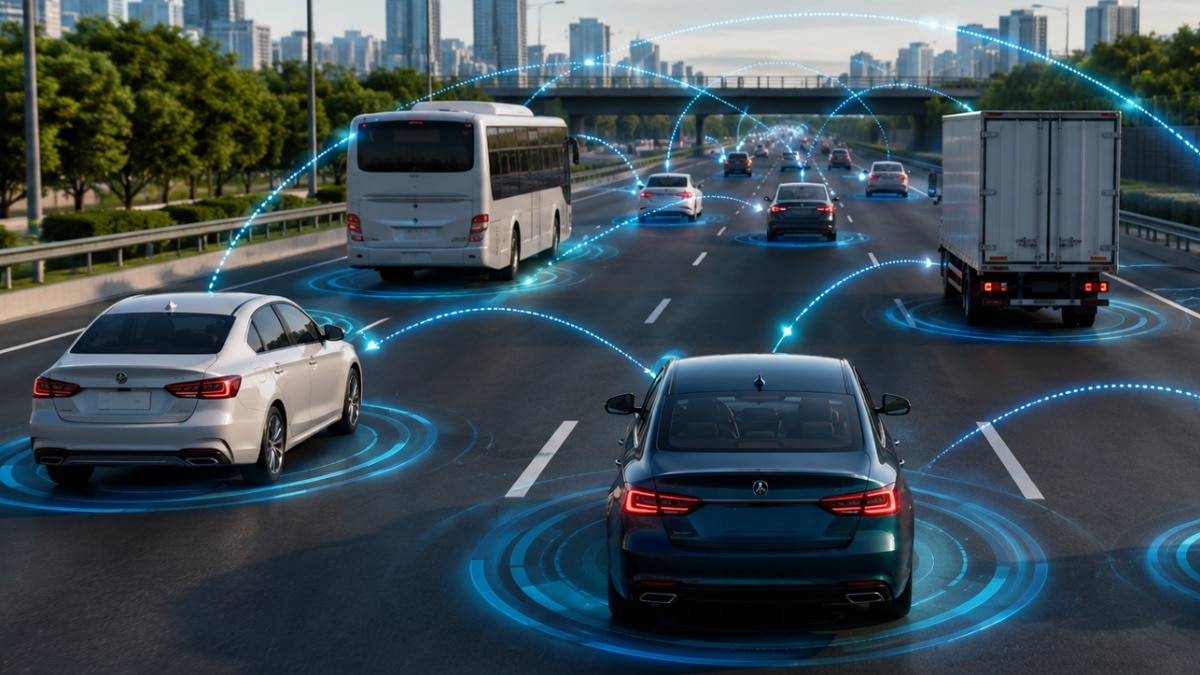
Cars in India could soon be able to talk to each other as the government moves to introduce Vehicle-to-Vehicle (V2V) communication technology. The Ministry of Road Transport and Highways (MoRTH) has proposed making the safety feature mandatory in new vehicles from October 1, 2028, through a phased rollout aimed at improving road safety and enabling connected mobility. The proposal, issued through a draft amendment to the Central Motor Vehicles Rules (CMVR), 1989, outlines a roadmap under which passenger vehicles, commercial vehicles and two-wheelers will gradually adopt V2V technology. If implemented, the regulation could fundamentally change the way vehicles interact on Indian roads by enabling them to exchange safety-related information in real time. Read Full Story What is V2V communication? V2V, or Vehicle-to-Vehicle communication, allows nearby vehicles to wirelessly share information such as their speed, location, direction of travel and acceleration. By continuously exchanging this data, vehicles can detect potential hazards much earlier than conventional safety systems, allowing drivers or electronic safety systems to react before a dangerous situation develops. Unlike camera- or radar-based systems that are limited by the driver's field of view, V2V technology can warn motorists about incidents occurring beyond visible traffic.
For example, it can alert a driver about a vehicle braking suddenly several cars ahead, a wrong-way vehicle approaching, an emergency vehicle closing in or a neighbouring vehicle making an unsafe lane change, even when these are obscured by traffic or road geometry. The technology is expected to complement Advanced Driver Assistance Systems (ADAS) and play a key role in the evolution of intelligent and connected transportation. Two-stage implementation plan The proposal outlines a phased two-step implementation plan. From October 1, 2027: All newly manufactured Category L, M and N vehicles equipped with Vehicle-to-Vehicle (V2V) communication systems must ensure those systems comply with the AIS-230 standard. However, fitting V2V technology itself will remain optional at this stage. From October 1, 2028: V2V communication systems meeting AIS-230 standards will become mandatory for all newly manufactured vehicles in Categories L, M The proposal covers the following vehicle classes Category L: Two-wheelers and three-wheelers Category M: Passenger vehicles, including cars and buses Category N: Goods vehicles, trucks The staggered implementation is intended to provide manufacturers, suppliers and other stakeholders adequate time to develop, validate and integrate the new technology into future products.
 The BriefWire