Meet Jo Nagai: 10-year-old Japanese student who discovered butterflies can remember their time as caterpillars after he noticed that the caterpillars he had raised to recognise him after turning into butterflies
Who is Jo Nagai, the 10-year-old Japanese student behind the butterfly discovery? The observation that started Jo Nagai's butterfly research What did Jo Nagai's butterfly
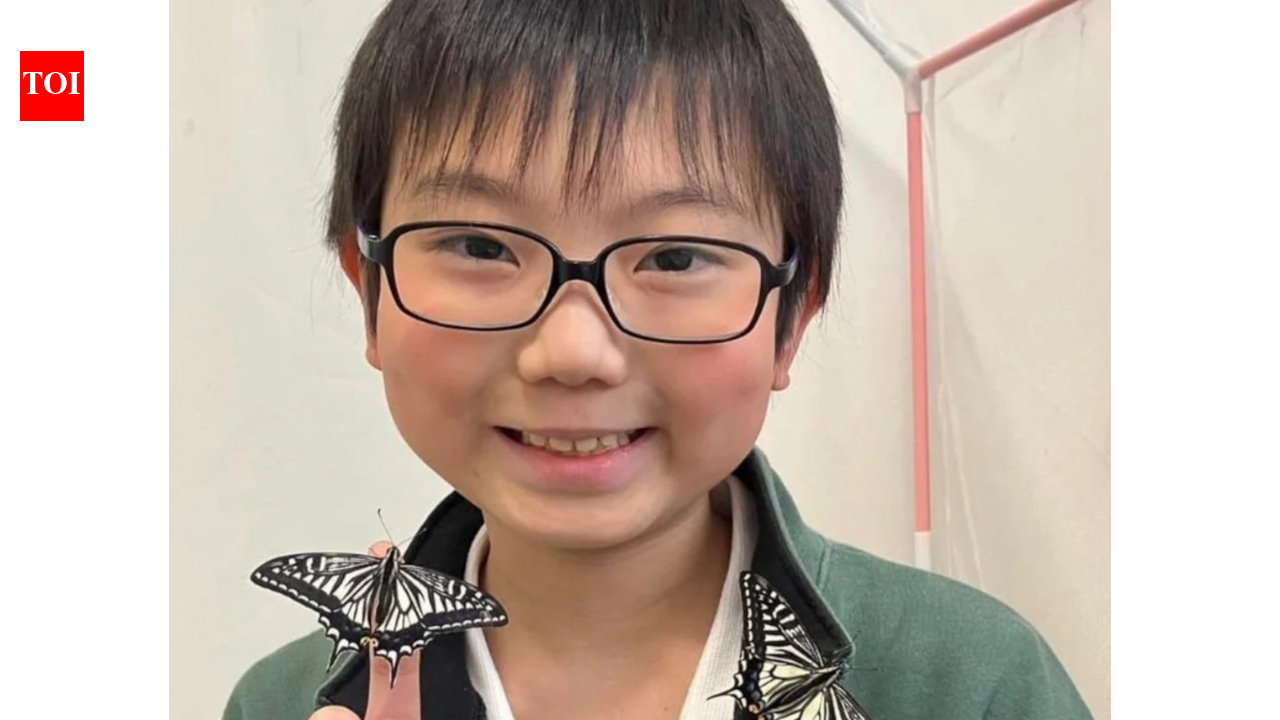
Who is Jo Nagai, the 10-year-old Japanese student behind the butterfly discovery? The observation that started Jo Nagai's butterfly research What did Jo Nagai's butterfly experiments reveal? Possible evidence of inherited butterfly memories How scientists are viewing Jo Nagai's findings Why Jo Nagai's butterfly research went viral The scientific significance of Jo Nagai's discovery A 10-year-old student from Japan has captured worldwide attention after his fascination with butterflies led to a remarkable scientific study that is challenging long-held assumptions about insect memory. Jo Nagai, an elementary school student from Kobe, spent years carefully observing the Asian swallowtail butterflies he raised at home. His curiosity was sparked when he noticed that the butterflies appeared to recognise him even after undergoing metamorphosis from caterpillars. Determined to understand whether memories formed during the caterpillar stage could survive this dramatic transformation, Jo designed a series of experiments that have since been presented before professional scientists, generating discussions about animal cognition, metamorphosis and inherited behaviour. While some of his findings still require independent verification, his work has made him one of the youngest researchers to gain international recognition.Jo Nagai is a 10-year-old student at Ibuki East Elementary School in Kobe, Japan. He is also a scholar of the Son Masayoshi Philanthropic Foundation, which supports exceptionally talented young people across the country.
Passionate about insects since early childhood, Jo has reportedly filled hundreds of handwritten pages with observations of insect behaviour.Despite gaining international recognition for his butterfly research, he says his long-term ambition is to become a veterinarian, reflecting his lifelong love for animals and nature.Jo's research did not begin in a laboratory or as part of a school assignment. Instead, it started with a simple observation while raising Asian swallowtail butterflies. He noticed that wild butterflies usually flew away when approached, but the butterflies he had raised from caterpillars often returned to his hand even after being released into the wild. This unusual behaviour led him to wonder whether butterflies could retain memories formed during their caterpillar stage despite undergoing complete metamorphosis. Motivated by that question, he spent several years documenting their behaviour and developing carefully planned experiments.To investigate his hypothesis, Jo exposed swallowtail caterpillars to the scent of lavender while simultaneously applying a mild vibration stimulus using a muscle-therapy device. After the caterpillars completed metamorphosis and emerged as butterflies, he tested them using a Y-shaped tube maze. According to his findings, around 70% of the adult butterflies avoided the lavender scent, suggesting they had retained memories formed before metamorphosis. These observations challenge the traditional belief that an insect's nervous system is completely rebuilt during the pupal stage, erasing all previous memories.
 The BriefWire