US-Iran peace hinges on a delicate thread
DUBAI/WASHINGTON - Conflicting signals from the United States and Iran over the status of talks to end their five-month-old war boosted uncertainty on Tuesday, with
DUBAI/WASHINGTON - Conflicting signals from the United States and Iran over the status of talks to end their five-month-old war boosted uncertainty on Tuesday, with the latest attack on shipping in the Strait of Hormuz highlighting risks to global energy flows.U.S. President Donald Trump said the talks were under way on Monday, warning of a "last chance" for Tehran to sign a good deal, but Iran denied that negotiations were being held or planned."They are going on right now," Trump told reporters at an Oval Office event when asked about the state of negotiations, saying the sides were talking at the request of Iran, Saudi Arabia, the United Arab Emirates and Qatar, among others."This is a last chance for them (Iran) to sign a good document."Also read: Trump says Iran talks under way, calls them 'last chance' to reach dealThe comments followed Trump's weekend decision to call off "massive attacks" he said he had authorized on Iran, as talks were to be held, repeating a pattern in which he has vowed major strikes only to cancel them.Earlier on Monday, Iranian Foreign Ministry spokesman Esmail Baghaei said no negotiations with the United States were taking place and no meetings were scheduled.Iran had no plans to host foreign delegations or send negotiators abroad in the coming days, he said.Baghaei added that all Iranian negotiators were in the country, except for Foreign Minister Abbas Araqchi, who was on a religious pilgrimage in Iraq.
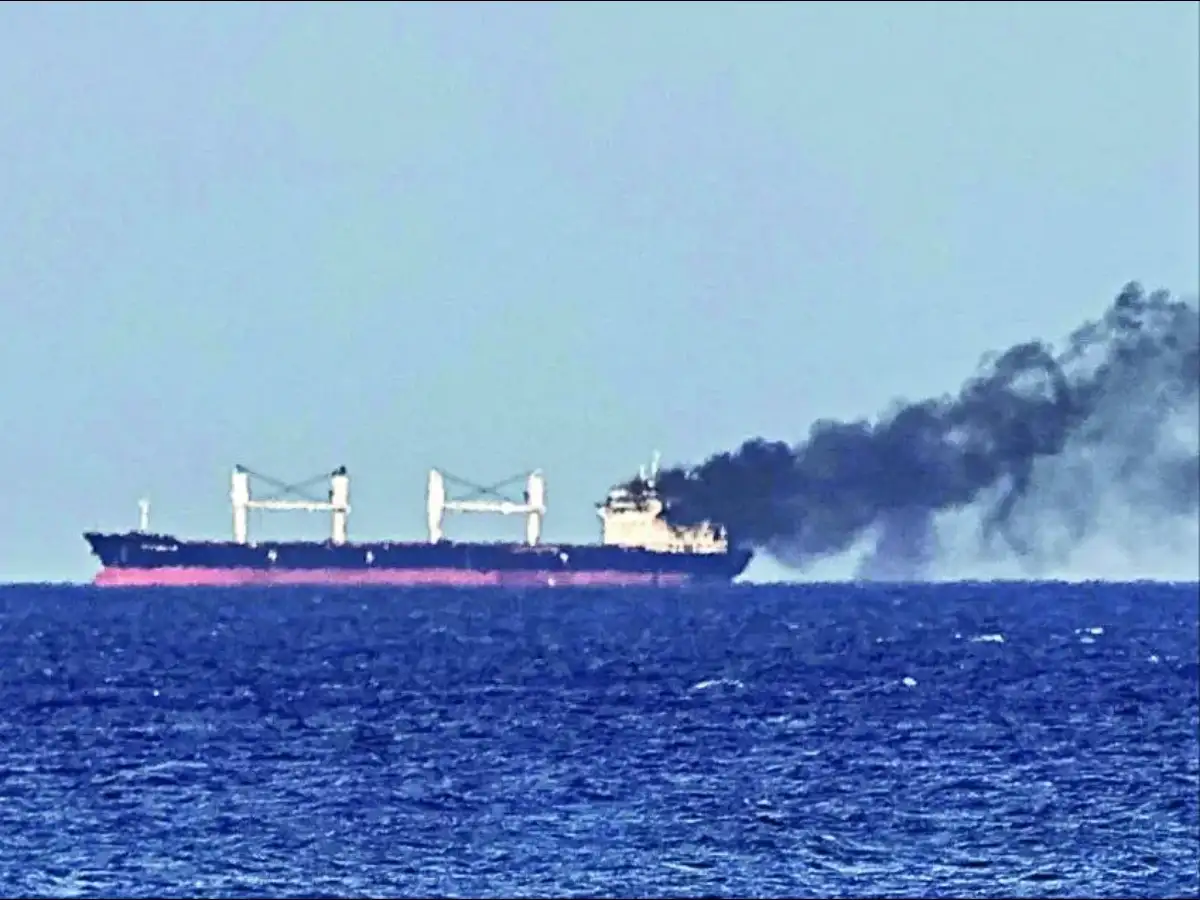
The only talks underway, he said, were discussions with Oman over management of the Strait of Hormuz.Shipping activity in the Gulf only reinforced the ongoing stand-off since Iran all but shut off transits through the vital route for a fifth of global shipments of crude oil and natural gas before it was blockaded in the war.One cargo vessel broadcast it had been hit by an unknown projectile near the strait off Oman's coast, the United Kingdom Maritime Trade Operations (UKMTO) agency said.Traffic through Hormuz remained largely slow, with three tankers and three bulk carriers among the six vessels transiting the strait on Monday, down from seven the previous day, Kpler data showed.Also read: 'Unknown projectile' strikes cargo vessel off Oman's Al Khasab, UKMTO says probe onSTOCKS RISE, OIL DOWN ON HOPES FOR RESOLUTIONStill, hopes that U.S.-Iran tensions were easing again pushed down oil prices, while major stock indexes gained on Monday.Brent crude futures fell about 7% to around $83.77 a barrel while the Dow closed at a record high. Asian stocks
and oil prices both edged higher on Tuesday.Gulf officials and analysts say Iran is betting it can outlast Washington by turning the Middle East's trade routes, shipping lanes and energy infrastructure into pressure points that steadily raise the cost of confrontation.It hopes such a strategy will convince the United States and its allies that containing the crisis is more costly than accommodating Iran's demands over the Strait of Hormuz."Their big advantage is that they can hurt the regional states and the global economy," said Michael Knights of the Washington Institute.In a post on Truth Social later on Monday, Trump called Iran's leadership "unbelievably duplicitous," saying they had asked for a meeting and more talks were set for the "immediate future."He also repeated his assertion that the U.S. Navy had total control over the Strait of Hormuz."'The United States Wall of Steel!' Nothing gets through to Iran, unless we want it to, and nothing will get through, unless a Deal, or Total Surrender, is accomplished," he wrote.Also read: Iran warns of strikes
 The BriefWire