Europe's Rivers Dry Up In Heat. What Was Hidden Beneath Them? Wooly Mammoth, WWII Bombs And..
Europe's Rivers Dry Up In Heat. What Was Hidden Beneath Them? Wooly Mammoth, WWII Bombs And... Published By, Last Updated: August 04, 2026, 08:25 IST
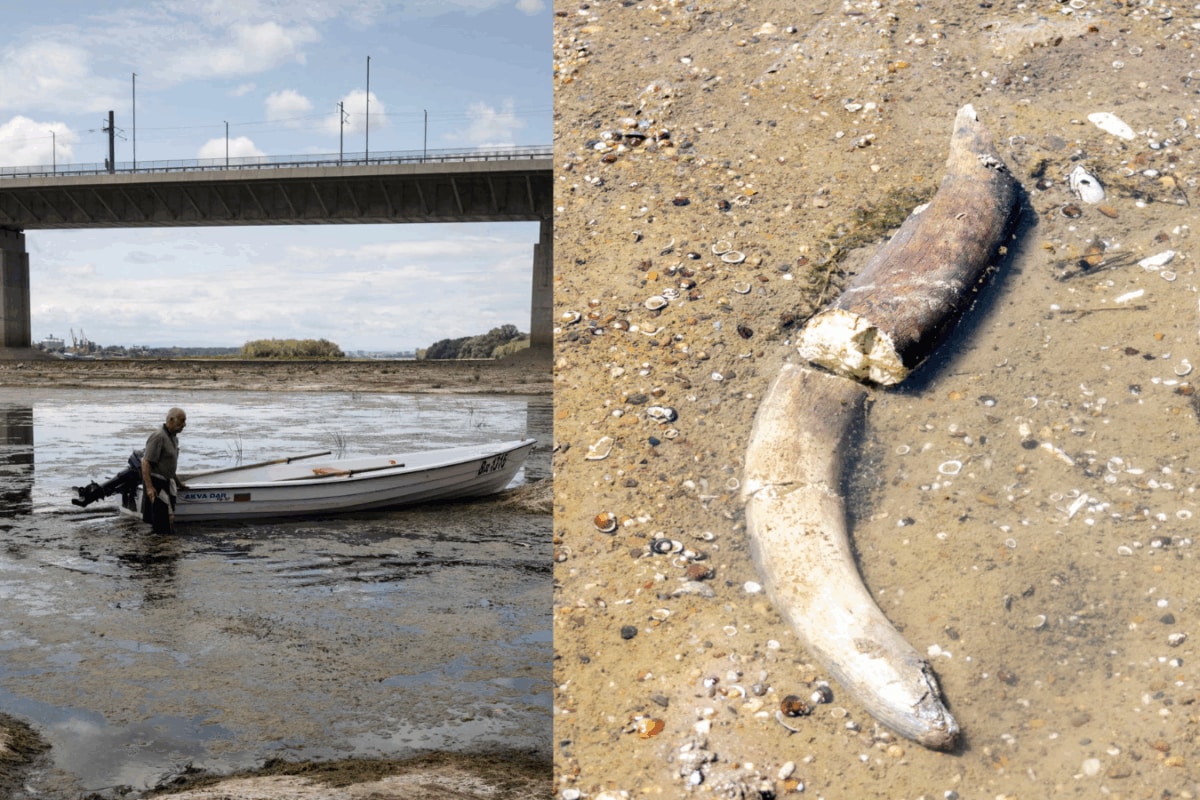
Europe's Rivers Dry Up In Heat. What Was Hidden Beneath Them? Wooly Mammoth, WWII Bombs And... Published By, Last Updated: August 04, 2026, 08:25 IST Europe's heatwave and drought exposed ancient relics, WWII bombs and shipwrecks in Danube and Rhine rivers. Europe’s relentless heatwave and prolonged drought shrunk some of the continent’s biggest rivers, uncovering relics hidden beneath their waters. As water levels on the Danube and Rhine rivers plunged to record lows across central and eastern Europe, ancient mammoth remains, World War II-era bombs, sunken shipwrecks and vast stretches of exposed riverbeds emerged, even as the extreme conditions disrupted shipping, power generation and tourism. One of the most remarkable discoveries came in northern Bulgaria, where a resident of Ryahovo village spotted what experts believe are the remains of an ancient woolly mammoth on the dried-up Danube riverbed. Specialists from the Regional History Museum in Ruse arrived at the site to examine the rare Ice Age find. In Hungary’s capital Budapest, authorities were forced to temporarily close the Margaret Bridge after receding waters exposed a wartime bomb at its base.
Elsewhere along the Danube, long-submerged Second World War shipwrecks resurfaced near Serbia’s Prahovo, while rocks hidden beneath the river also became visible as water levels continued to fall. The historic river, which flows through 10 European countries before emptying into the Black Sea, receded to unprecedented levels in several stretches, exposing parts of its riverbed rarely seen in modern times. The drought has also triggered a wider crisis across the region. For the first time, Hungary and Romania were forced to shut down nuclear reactors that rely on the Danube for cooling because water levels fell too low to safely operate them. Hungary’s Paks Nuclear Power Plant, which generates nearly half of the country’s electricity, has reduced output to below 50%, with authorities warning it may have to suspend operations entirely if river levels do not recover. Romania has also taken reactor units at the Cernavodă nuclear power plant offline as a precaution. Governments in both countries appealed to residents to conserve electricity during peak evening hours, while Hungary also ordered major industrial users to reduce power and water consumption.
The low water levels severely disrupted river transport as well. Cargo ships on the Danube were forced to sail with significantly lighter loads, while cruise operations in Budapest have been cancelled or shifted upstream. In Bulgaria and Romania, fishermen and boat operators said that vessels have become stranded on dry riverbanks. Some locals said the river had receded so dramatically that they could now walk much farther across areas that were previously underwater. The Rhine River has also been hit hard. In Germany, shallow waters have forced cargo vessels to operate at only a fraction of their usual capacity, raising concerns over the movement of grains, coal, minerals and fuel across one of Europe’s busiest commercial waterways. In the Netherlands, the Rhine has fallen to its lowest recorded level where it enters the country, adding to an officially declared water shortage that has already led to restrictions on water use, particularly in agriculture. Meteorologists said that the situation is unlikely to improve immediately, with little rainfall forecast and temperatures expected to exceed 38 degrees Celsius across parts of central and eastern Europe in the coming days, raising fears that both the environmental and economic impacts of the drought could deepen further.
 The BriefWire