Dry Danube River threatens nuclear power in Romania, Hungary
Hungary's Paks nuclear power plant was operating at about 10% of capacity because of a lack of cooling riverwater. In Romania, the military blew up
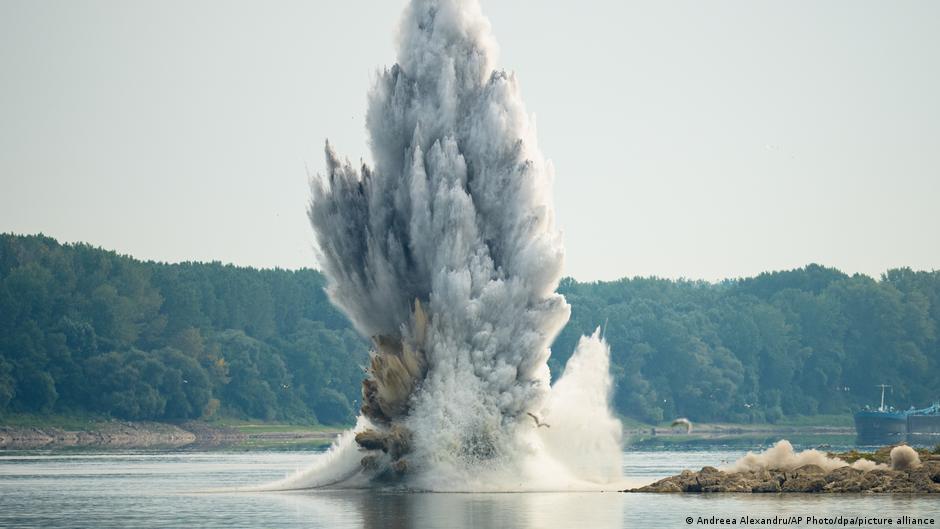
Hungary's Paks nuclear power plant was operating at about 10% of capacity because of a lack of cooling riverwater. In Romania, the military blew up a rock outcrop in a bid to improve water flow to the Cernavoda plant. Several central and eastern European countries are facing power shortages and impacts on industry amid prolonged hot and dry weather and record low levels on the Danube River and other waterways. Hungary narrowly averted switching off its lone nuclear plant, but had still powered it down to a fraction of capacity. In Romania, the navy demolished a rocky outcrop exposed in the Danube's riverbed, trying to improve the water flow. And in Serbia, hydroelectric power output was severely impacted by the dry conditions. Continued hot and dry weather is forecast during the week, providing little sign of relief. The Cernavoda nuclear plant draws its cooling water from the Danube Image: Andreea Alexandru/AP Photo/picture alliance How did Romania try to feed the Cernavoda power plant? Romania's military detonated a rocky outcrop exposed by the low water levels on a branch of the Danube, seeking to improve the flow of cooling water to the Cernavoda nuclear plant, which typically supplies about one-fifth of the country's power. The plant draws all of its cooling water from the Danube.
Soldiers detonated a rock some 50 kilometers (roughly 30 miles) upstream. The debris would be taken to a strategic spot and sunk to help raise the water level. Defense Minister Radu Miruta said the operation was a success, and also said the military had been waiting for a chance to access and demolish the rocks for decades. Romania's navy was in action on the river on Monday Image: Andreea Alexandru/AP Photo/picture alliance If the partial diversion of the water fails, Miruta said, the plant would likely have to shut down entirely by Thursday. Caretaker Prime Minister Ilie Bolojan said that carmakers Dacia and Ford had agreed to suspend production in Romania until August 19, following a crisis meeting with representatives of the energy-intensive industry. He said that other companies would be taking similar steps. What was the situation at Hungary's Paks power plant? Hungarian Prime Minister Peter Magyar said it was possible to avoid the unprecedented total shutdown of the Paks nuclear power plant on Monday that was originally announced last week. But the four-reactor station that typically generates almost half of Hungary's electricity production and around a third of its consumption was running at little more than 10% capacity on Monday. The four-reactor Paks plant is a key contributor to Hungary's energy output Image: David Balogh/Xinhua/IMAGO Hungary had asked industrial users to curb consumption and households to make voluntary savings.
 The BriefWire