Scottish proverb of the day: "The father buys, the son builds, the grandchild sells and his son..."
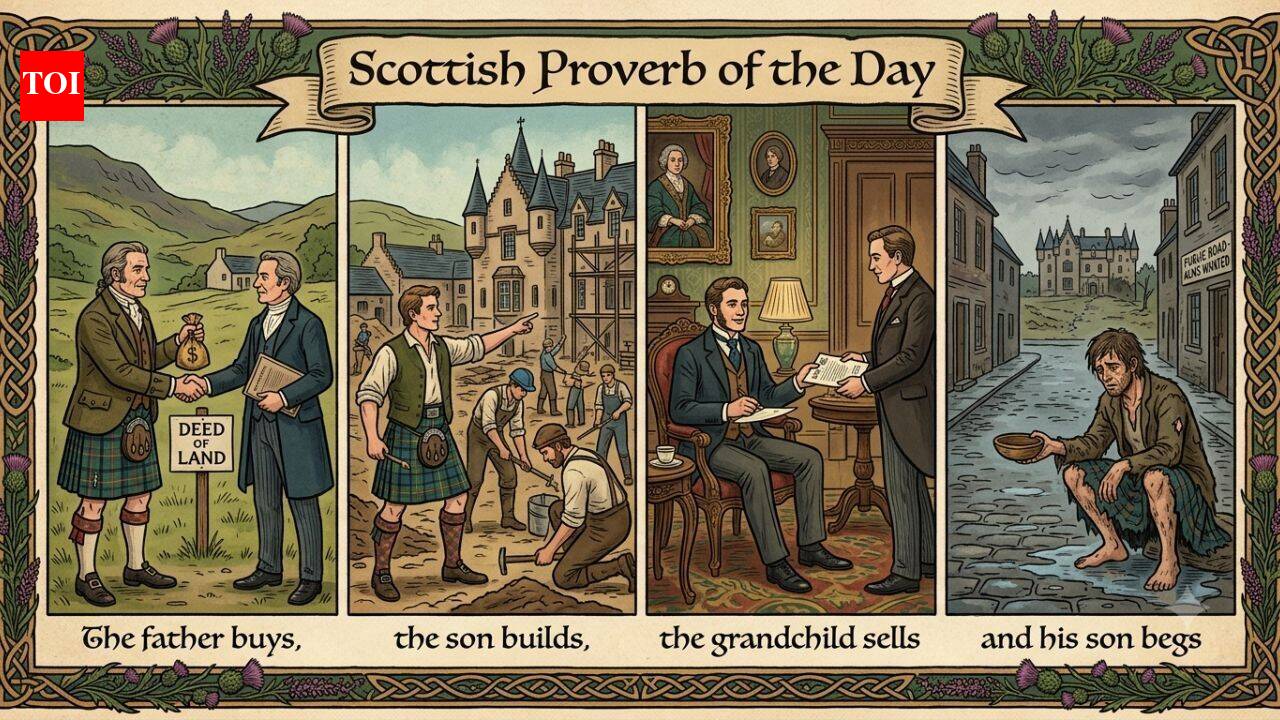
Scottish proverb of the day (AI-generated image) Scottish proverb of the day "The father buys, the son builds, the grandchild sells and his son begs"
Scottish proverb of the day (AI-generated image) Scottish proverb of the day "The father buys, the son builds, the grandchild sells and his son begs" What the proverb actually means A pattern that shows up across many different cultures Why this old Scottish saying still lands today Five timeless lessons hiding inside this proverb Building wealth is only ever the beginning. Creating something valuable takes real effort, but protecting it afterward requires just as much commitment, if not more. Financial security, a thriving business, even strong family traditions, all of it needs continuous care if it is going to survive being passed down. Every generation shapes what comes after it. The proverb shows that each generation inherits real opportunity, but it also inherits real responsibility alongside it. Decisions made today quietly shape children and grandchildren in ways that are not always visible right away. Never treat success as something permanent. Prosperity has a way of creating a false sense of security. This saying is a reminder that real achievements can quietly disappear once people assume they will simply last without any attention, planning or discipline behind them. The greatest inheritance is not always money. Property and wealth genuinely matter, but qualities like honesty, hard work, education and financial discipline are usually the actual foundation that lets later generations succeed at all. Without those qualities in place, even considerable wealth rarely lasts very long. Think carefully about the legacy you are actually leaving. Everyone leaves something behind for whoever comes next, whether that is financial security, real knowledge, family tradition, or simply an example of how to actually live. The proverb is really asking people to think honestly about what kind of inheritance their everyday decisions are quietly building right now. How this proverb can guide everyday life right now Why its message still matters now Learning from this proverb Four generations.
Four decisions. One family's fortune built, expanded, squandered and ultimately lost.This old Scottish proverb tells an entire family saga in a single sentence. The first generation works hard to acquire something valuable. The next strengthens it. The third slowly begins to sell what earlier generations created. By the fourth, nothing remains, leaving the family to start again with empty hands. Although the proverb speaks about money and property, its deeper message is about responsibility, discipline and the choices every generation makes with what it inherits. More than a warning about wealth, it is a timeless reminder that success survives only when each generation earns the right to pass it on.The proverb lays out four generations, each one representing a different stage in a family's rise and eventual fall. The first generation buys, laying the actual foundation through determination, sacrifice and careful planning. The second generation builds on top of it, expanding what they inherited through hard work and genuinely sound decisions.The third generation starts selling instead. Rather than creating anything new, they slowly work through everything earlier generations spent years building up.By the fourth generation, there is nothing left. Without assets, savings or real opportunity, the family effectively finds itself starting again right back at the bottom.None of this is meant as a prediction that every family will follow exactly this path. It is really a warning that wealth, knowledge and opportunity can disappear surprisingly fast once a generation starts taking it for granted.What makes this proverb genuinely interesting is how many different cultures have landed on almost the exact same idea, independently, in their own language. Americans say "shirtsleeves to shirtsleeves in three generations." In Japan, the phrase is "rice paddies to rice paddies in three generations." In England, it becomes "clogs to clogs is only three generations." In China, there is a version that translates directly as "wealth never survives three generations.
 The BriefWire