Growing impact of extreme heat on informal workers in Asia's cities
When temperatures soar across Asia's cities, informal workers face a choice: risk their health or lose their income. For many, the effects don't end when
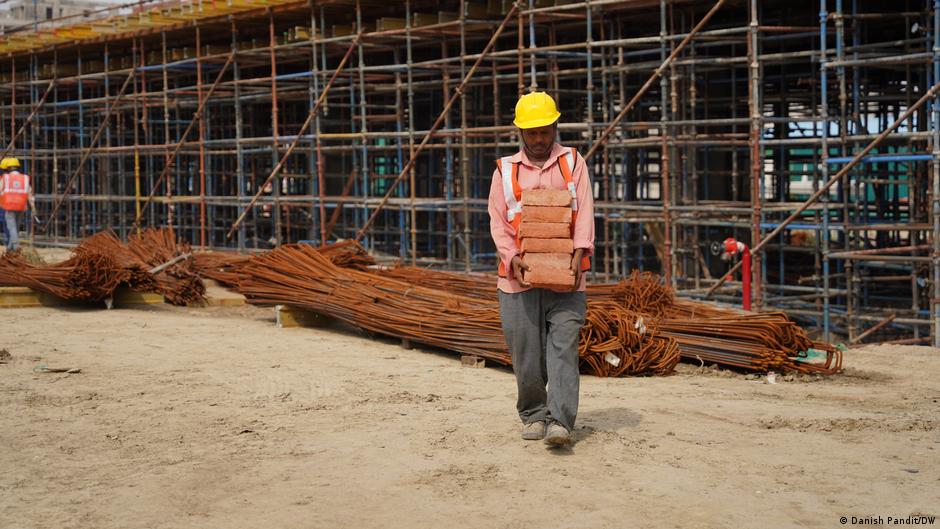
When temperatures soar across Asia's cities, informal workers face a choice: risk their health or lose their income. For many, the effects don't end when the workday is over. Brijpal Singh spends long hours working construction under the blazing sun in Noida, a sprawling industrial satellite city in India's Capital Region. Even as temperatures soar past 45 degrees Celsius (113 Fahrenheit), work on the building site rarely stops. By the end of each shift, the 51-year-old says his heart is pounding, and he's usually dizzy, dehydrated and physically drained from hours in the heat. Yet taking a day off is a luxury he cannot afford. Missing work would mean losing his daily wage of 500 to 600 rupees ($6 to $7). The money supports his wife and three children living in a village in Uttar Pradesh, a two-day journey away. "There are days when I don't feel like working," said Singh. "But if I miss a day, who will take care of my children and pay for their expenses?" After a day in relentless heat on a construction site, Singh tries to find relief in front of a fan Image: Danish Pandit/DW Some 5 million people work in the Delhi region's informal economy, accounting for roughly 80% of the total workforce. And as climate change drives up temperatures, many paid by the day like Singh are faced with an impossible trade-off between providing for their families and protecting their health. Extreme heat harms health, productivity and earnings The past decade has been India's warmest on record, bringing more frequent, intense, and prolonged heat waves. At the same time, heat is reducing productivity and increasing illnesses, with one study finding rising temperatures could be costing informal workers the equivalent of 2% of their country's GDP annually. That's nearly $80 billion (€69 billion). "Wage losses are only going to worsen as temperatures continue to rise," said Ameena Kidwai, lead researcher at People's Courage International, a nonprofit aiming to strengthen informal workers' rights.
"Workers are now putting in many more hours than they did before to complete the same amount of work." The US-based organization surveyed informal workers in five Asian cities. Kidwai said some of those surveyed reported that tasks once completed in eight hours now take 10 to 12 hours during the hottest months, as they slow down to cope with dangerous conditions. With heat becoming a major occupational hazard, workers described the harm to their health, ranging from respiratory and gastrointestinal illnesses to stroke and kidney disease. "As a result, workers also have to spend more on over-the-counter medicines and visits to clinics or hospitals," Kidwai said. Out of the work frying pan and into the home furnace A lack of ability to recover is a defining feature of urban heat for informal workers — from construction laborers and street vendors to delivery riders — say researchers. Like Singh, many are migrants who leave their families behind to earn a living in fast-growing cities, said Patricia Samantha Narvaez, a program manager at the Philippine development organization IDEALS. "You would expect home to be a place of relief," said Narvaez. "But many live in densely packed neighborhoods with poor ventilation, little green space and heat-absorbing concrete." That's the case for Singh, who returns to a single room with poor ventilation after work. During the hot months from April to June, it becomes a furnace, and frequent power cuts make it difficult to cool down before the next day's shift. "During the hot days, I can't eat well," Singh said. "I often drink oral rehydration solution and go to bed without eating." Narvaez surveyed informal workers in Quezon City for a report on the impacts of extreme heat. The city is just northeast of Manila, the capital of the Philippines, a country in which some 42% of the employed population are informal workers. "Some participants described Quezon City as a 'concrete jungle' because even at night it remains unbearably hot," said Narvaez.
 The BriefWire