Why Europe’s Wildfires Are Getting Harder To Stop? Climate Change Is Not The Only Reason
Why Europe’s Wildfires Are Getting Harder To Stop? Climate Change Is Not The Only Reason Published By, Last Updated: August 03, 2026, 14:21 IST A
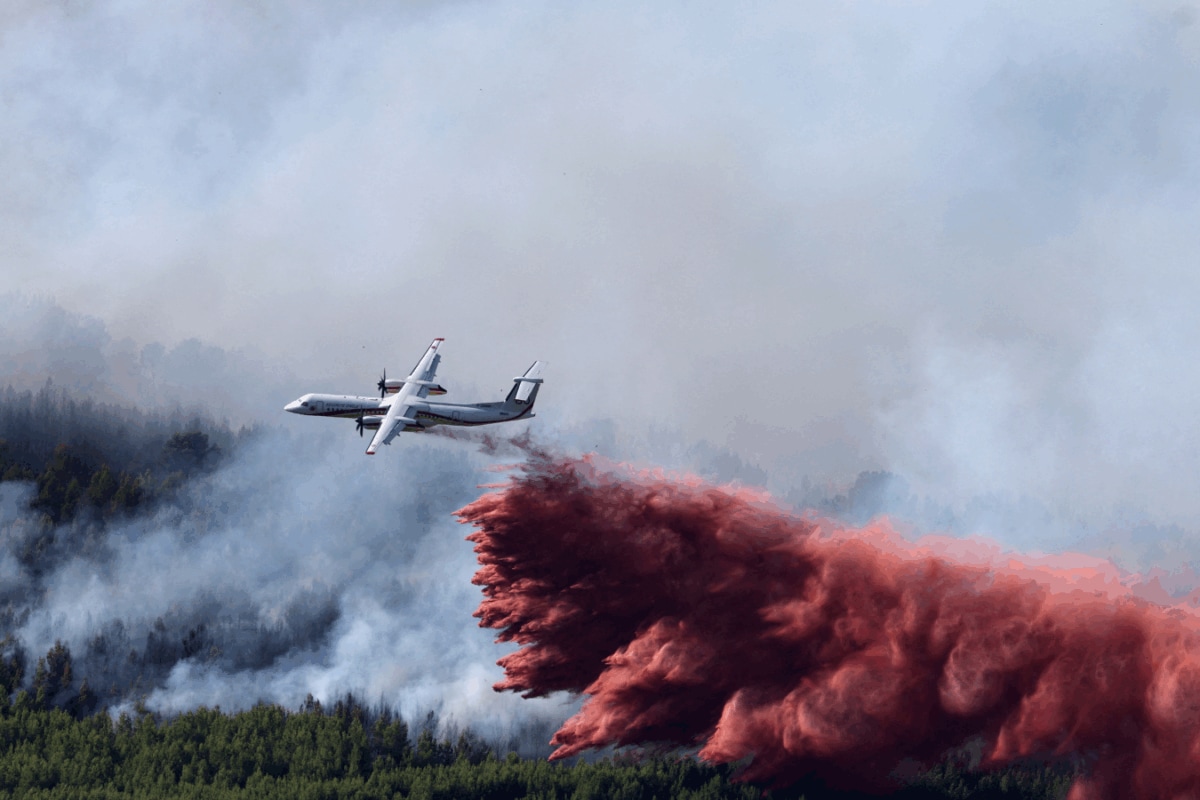
Why Europe’s Wildfires Are Getting Harder To Stop? Climate Change Is Not The Only Reason Published By, Last Updated: August 03, 2026, 14:21 IST A forestry expert estimated that the fires threatening Madrid carried energy equivalent to 29 Hiroshima bombs, underscoring the scale of Europe’s growing megafire threat. Rapid Read A French Civil Security's firefighting aircraft drops flame retardant to battle a wildfire in Pouzols-Minervois near Narbonne, France. (Source: Reuters) Wildfires almost always need a spark. It may come from lightning, arson, heavy machinery or even a hot exhaust pipe touching dry vegetation. But the source of ignition does not explain why fires across Europe are increasingly growing into vast, fast-moving infernos that overwhelm firefighters and force mass evacuations. Scientists say the scale of these fires is being driven by a dangerous combination of climate change, extreme swings between wet and dry weather, fuel-heavy forests and decades of changes in rural land use. The impact has been enormous. More than 300,000 people have been forced to evacuate across France and Spain, according to The Wall Street Journal. More than 100,000 acres have burned around Bordeaux, while Spain has lost over 370,000 acres to wildfires this year. How A Wet Winter Can Fuel Summer Fires An exceptionally wet winter may appear to reduce wildfire risk. In reality, it can help create the fuel for a severe fire season. Heavy rainfall encourages rapid growth of grass, shrubs and other vegetation. When intense heat and drought follow, that vegetation dries out and becomes highly combustible. This rapid shift between wet and dry conditions is known as hydroclimatic whiplash. “They are two faces of the same coin," Francesca Di Giuseppe, fire forecast coordinator at the European Centre for Medium-Range Weather Forecasts, told The Wall Street Journal. “You go from extreme wet to extreme dry." As the planet warms, the atmosphere can hold more moisture, intensifying rainfall during wet periods. Higher temperatures also draw water from soil and plants more quickly when dry conditions arrive.
“This has created an abundance of biomass that then has rapidly dried during a sequence of heat waves," Di Giuseppe told DW. In effect, wet weather grows the fuel, and subsequent heatwaves turn it into tinder. Europe Is Getting Hotter And Its Fire Season Longer June was the warmest ever recorded in Western Europe, with temperatures exceeding 104 degrees Fahrenheit in some areas. Three factors largely determine whether a wildfire will spread rapidly: how much vegetation is available to burn, how dry it is and the weather around the fire. “When all three of these conditions are very much fire-prone and they align, then you have this kind of fire event," Di Giuseppe told DW. Climate change is making those conditions more frequent and intense. According to WSJ, Europe is the world’s fastest-warming continent, with temperatures already around 2.5 degrees Celsius above pre-industrial levels, compared with approximately 1.4 degrees globally. Repeated heatwaves dry out vegetation faster and lengthen the period during which fires can start and spread. Officials cited by the newspaper said the current fire season could continue until early November. Why Some European Forests Burn So Quickly Climate is not the only factor. The way forests have been planted and managed has also increased the danger. Across parts of Europe, large areas are dominated by commercially valuable species such as pine and eucalyptus. These monocultures often consist of trees of similar age and height growing close together, allowing flames to spread rapidly. The Landes de Gascogne forest in southwestern France is largely made up of maritime pine. The species sheds coarse needles that collect on the forest floor and add to the available fuel. “Some of the fires we’ve been seeing in France and Spain are in places where you have these very flammable trees which are quite fine and they often are growing close together so fire spreads really easily," Doug Kelley, a land surface modeller at the UK Centre for Ecology and Hydrology, told DW.
 The BriefWire