Kerala Drowns, 11 Dead, 7,600 Displaced: Did IMD Fail To Warn About Cloudburst-Like Rain Event?
Kerala Drowns, 15 Dead, 7,600 Displaced: Did IMD Fail To Warn About Cloudburst-Like Rain Event? Published By, Last Updated: August 03, 2026, 13:31 IST Kerala
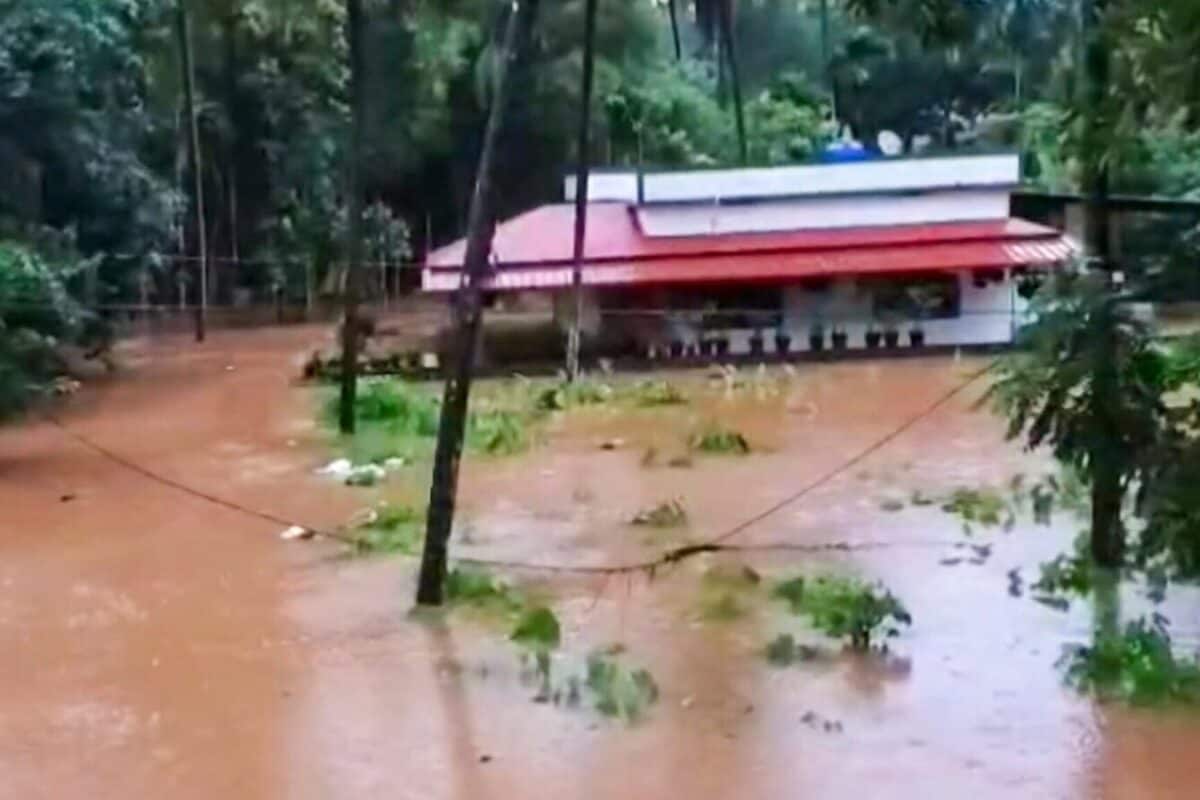
Kerala Drowns, 15 Dead, 7,600 Displaced: Did IMD Fail To Warn About Cloudburst-Like Rain Event? Published By, Last Updated: August 03, 2026, 13:31 IST Kerala floods: Critics and opposition leaders allege gap in disaster preparedness, stating IMD did not issue a preventive Red Alert; IMD denies lapse or failure in its protocol Rapid Read Floodwaters inundate a residential area following heavy rain in Kannur, Kerala, on Sunday. (PTI) The Kerala floods have resulted in 15 confirmed deaths, with over 7,600 people displaced to relief camps following an intense, cloudburst-like rain event that struck the state. The crisis escalated overnight between July 31 and August 1, 2026, catching authorities off guard and exposing critical failures in local weather forecasting and disaster response coordination. The disaster has reignited friction between local authorities and central forecasting agencies regarding how early extreme weather can be anticipated. Key Meteorological Data for August 1, 2026 Vadasserikkara (Pathanamthitta): 361 mm of rain in 24 hours. Anakkampoyil (Kozhikode): 340 mm of rain over 35 hours. Laha (Pathanamthitta): 250 mm of rain in 24 hours. Meppadi (Wayanad): 177 mm of rain. Critical Gaps Exposed? Failure to Issue Advance Red Alerts: The India Meteorological Department (IMD) failed to forecast the extreme, localised nature of the downpour, upgrading to a red alert only after intense overnight rains had already flooded major areas, according to reports.
Inability to Track Local Convection: Weather scientists noted that while the IMD tracked macro monsoon systems, it ignored sharp regional temperature spikes caused by a prior dry spell. These localized thermal imbalances mixed with monsoon winds and the Western Ghats terrain to form sudden, violent cumulonimbus storm clouds. Ghat Region Blindspots: The Kerala State Disaster Management Authority (KSDMA) failed to anticipate flash floods and landslips in the mountainous high-ranges due to missing real-time, ground-level diagnostic warnings, say experts. The Warning Timeline Controversy Critics and state opposition leaders alleged a gap in disaster preparedness because the IMD did not issue a preventive Red Alert before the severe downpour began. The Initial Forecast: Up until Friday morning, the IMD maintained an Orange Alert for most districts, forecasting very heavy rain (115 mm to 204 mm). The Actual Deluge: Overnight, several regions experienced torrential downpours completely exceeding these projections. For instance, Vadasserikkara in Pathanamthitta recorded a massive 361 mm of rain, and Anakkampoyil in Kozhikode saw 340 mm. The Retroactive Upgrade: The IMD upgraded its warning to a Red Alert for eight to nine districts on Saturday morning, but critics point out that by that time, many towns were already waterlogged and landslides had occurred. The IMD’s Defence The IMD has strongly denied any lapse or failure in its protocol. According to IMD Director Neetha K.
 The BriefWire