China Keeps More Than Eye On Foreigners, Indian Students: Travel, Shopping To Friends & Biometrics
China Keeps More Than Eye On Foreigners, Indian Students: Travel, Shopping To Friends & Biometrics Published By, Last Updated: August 03, 2026, 13:00 IST China's
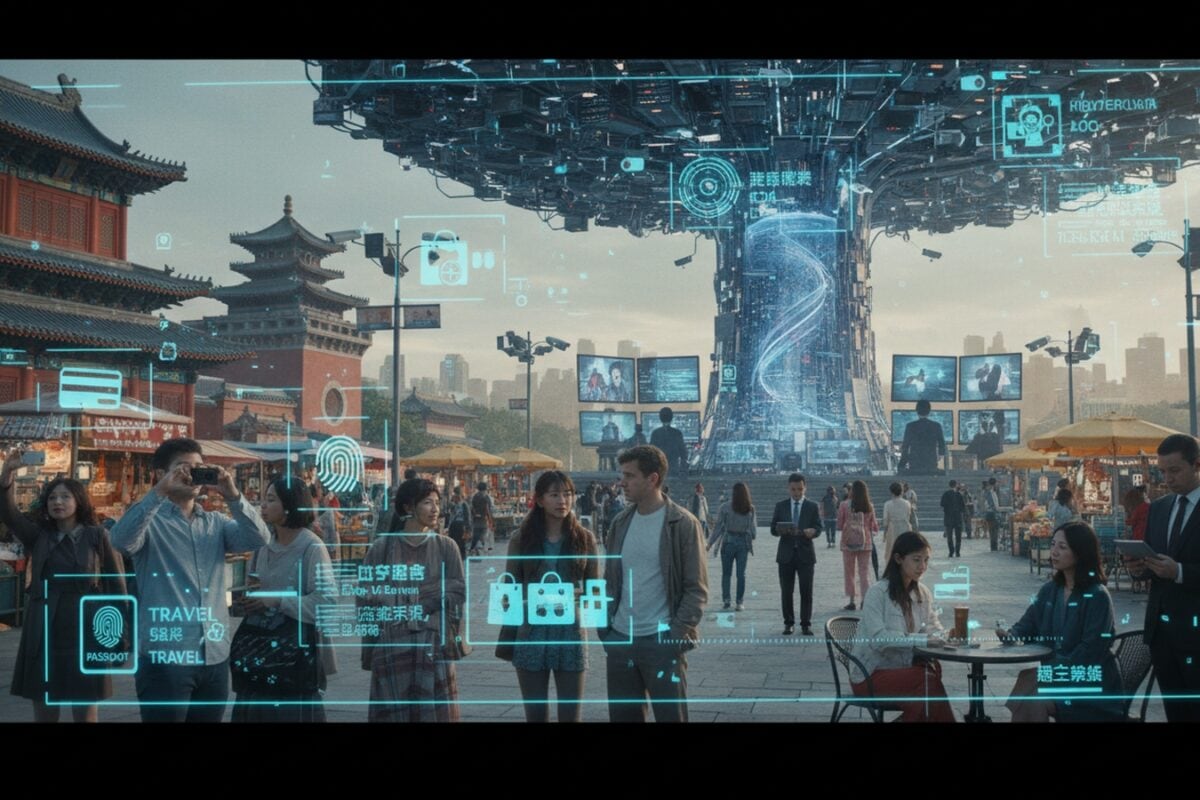
China Keeps More Than Eye On Foreigners, Indian Students: Travel, Shopping To Friends & Biometrics Published By, Last Updated: August 03, 2026, 13:00 IST China's surveillance system has eyes in the sky and on ground: Managed by local public security bureaus, the system creates a running log of daily life for foreign residents Rapid Read Managed by local public security bureaus, this system creates a holistic, running log of daily life for foreign residents and visitors. (AI generated for representation) China monitors foreigners inside its borders through an unprecedented, highly integrated surveillance network that aggregates private, public, and biometric data in real-time. The scale of this operation was recently exposed by cybersecurity researchers who discovered an unsecured police dashboard named the ‘Dynamic Control Platform for Overseas Personnel or Foreigners’. Managed by local public security bureaus, this system creates a holistic, running log of daily life for foreign residents and visitors. WHAT IS THE DYNAMIC CONTROL PLATFORM FOR OVERSEAS PERSONNEL? The Dynamic Control Platform for Overseas Personnel is an unsecured Chinese police dashboard discovered by cybersecurity researchers that exposes the unprecedented scale of Beijing’s data-fusion surveillance net targeting foreign nationals. Discovered by cybersecurity researcher Marc Hofer while auditing public websites linked to China’s Ministry of Public Security, the platform operated as a prototype tracking database for the Zhangjiakou Public Security Bureau—the city in Hebei province that co-hosted the 2022 Winter Olympics. The database, which featured a bright blue login window bearing the Chinese police (Gong’an) insignia, remained online in a test state until it entirely vanished from the open web. KEY SCALE AND TARGETS The platform was built to compile data on long-term foreign residents, tourists, and targeted professions, capturing, according to a New York Times report Total Entries: Nearly 12,000 global data logs mapping physical locations at a regional district level.
Foreign Residents: Granular files on more than 700 foreigners living directly in the Zhangjiakou prefecture. Foreign Journalists: A dedicated tracking list containing up-to-date profiles of over 300 foreign media correspondents based in Beijing, including several who had never visited Zhangjiakou. Geopolitical Buckets: Specific folders categorizing citizens from the “Five Eyes Alliance" (US, UK, Australia, Canada, New Zealand), a “Key Countries" group (including Iran, Israel, and Pakistan), foreign spouses, and individuals from Taiwan and Hong Kong. HOW THE PLATFORM FUSES DATA Rather than relying on isolated camera feeds, the platform attempts a holistic data-fusion effort, aggregating multiple real-time physical, digital, and biometric feeds into one singular archive Surveillance Vector Data Points Tracked by the Dashboard Biometric Feeds: Scrapes photographs automatically captured by facial-recognition entry gates at local transportation hubs, highway intersections, and tourist destinations like ski resorts. Transit Networks: Synchronises data from central transport booking systems to log the exact dates, train numbers, carriage numbers, and specific seat assignments of targets moving across China. Social Mapping: Uses a relational mapping algorithm to automatically analyze how often foreigners are captured on camera together, building charts that plot their friends, classmates, neighbors, and colleagues. Daily Infrastructure: Scrapes consumer data down to exact household gas utility payments, hospital clinic visits, regular shopping locations, and gasoline station logs. ARE THEY WATCHING STUDENTS FROM INDIA? The NYT reported: “Many of the foreign students listed appeared to be from Pakistan and India and were studying at Hebei North University in Zhangjiakou. Profiles of the students included their religion, marital status, focus of study and times they had been captured on cameras at the school’s entrances. The platform also claimed to be able to map a person’s relationship network." “An illustration of the function showed the names of three Pakistani men in their 20s, linking them to one another after they were captured on camera together," it said.
 The BriefWire