Seats Reserved For Refugees Are Not New In PoK. Why Are They Fuelling Deadly Protests Now?
Seats Reserved For Refugees Are Not New In PoK. Why Are They Fuelling Deadly Protests Now? Published By, Last Updated: August 03, 2026, 11:16 IST
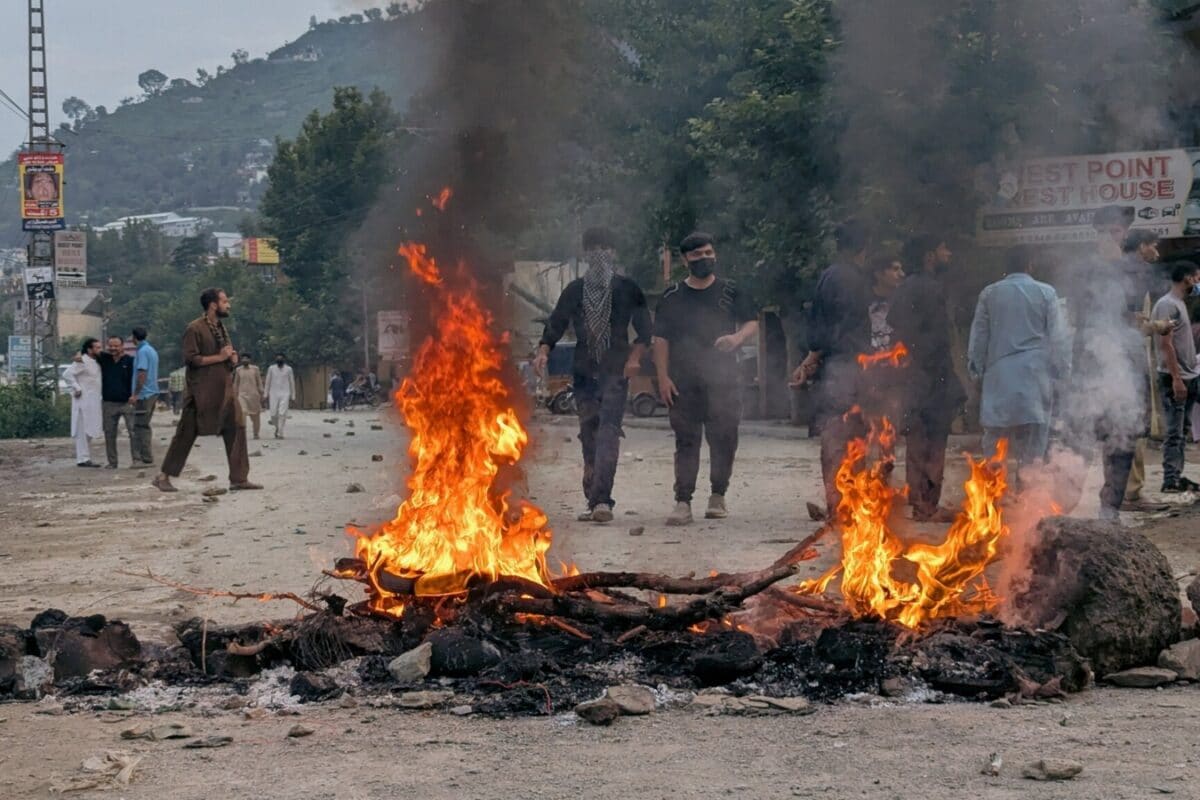
Seats Reserved For Refugees Are Not New In PoK. Why Are They Fuelling Deadly Protests Now? Published By, Last Updated: August 03, 2026, 11:16 IST Deadly violence and a sweeping security clampdown overshadowed the second phase of polling in Pakistan-occupied Kashmir. Rapid Read Supporters of JAAC set fire to block a road during a protest in Muzaffarabad, PoK. (REUTERS) The latest elections in Pakistan-occupied Kashmir have taken place amid deadly protests, allegations of rigging, political boycotts and a heavy security crackdown. The second phase of polling was held on August 2, with residents in parts of Muzaffarabad reporting burnt vehicles, rock-strewn roads and a strong presence of police, paramilitary forces and army personnel after clashes between protesters and security forces. At the heart of the unrest is a decades-old feature of the PoK Assembly — 12 seats reserved for refugees from Jammu and Kashmir living in Pakistan. The arrangement has existed for years, but this election it has emerged as the biggest political flashpoint. How Is The PoK Assembly Structured? The PoK Legislative Assembly has 53 seats. Elections are held for 45 of them, including 12 constituencies reserved for refugees from Jammu and Kashmir who live in different parts of Pakistan. The remaining eight seats comprise five reserved for women and one each for religious scholars, Kashmiris living overseas and technocrats. Polling for the 12 refugee constituencies was held on August 2 alongside nine constituencies in Muzaffarabad. The elections were originally scheduled for July 27 but were divided into three phases because of the security situation. Polling in two constituencies was also postponed amid the unrest. Who Elects The 12 Representatives?
The 12 seats are not elected by people living in PoK. They are contested and voted on by refugees from Jammu and Kashmir who settled in different parts of Pakistan after 1947. Seven constituencies are based in Punjab. One is based in Khyber Pakhtunkhwa, while the others combine refugee voters spread across Punjab, Islamabad, Sindh and Balochistan. Jammu-VI, for instance, includes voters in Punjab, Islamabad and Khyber Pakhtunkhwa; Valley-I covers Sindh and Balochistan; and Valley-V spans Punjab and Islamabad. The constituencies are distributed according to where the refugee population is settled. The arrangement has long been defended on the grounds that it preserves the political rights of displaced Kashmiris until the wider Kashmir dispute is resolved. A comparison is also drawn with the Jammu and Kashmir Assembly, where seats are earmarked for areas under Pakistan’s occupation. Those seats, however, remain vacant. In PoK, elections are held for the 12 constituencies and their representatives become members of the Assembly. Why Are The Seats So Controversial? The core grievance is that people living in PoK cannot vote for or contest the 12 seats, even though those elected from them can influence legislation and help determine who forms the government. The Jammu Kashmir Joint Awami Action Committee, or JAAC, has therefore made their abolition one of its main demands. According to The Indian Express, the seats generally go to whichever party is in power at the Centre. The JAAC has boycotted the elections, saying the arrangement gives Pakistan’s mainstream political parties a direct route to shape the balance of power in the PoK Assembly. Why Has The Issue Flared Up Now?
 The BriefWire