Forever loading, low-res struggle: How smooth are govt websites in India, the land of techies?
"We are experiencing a high load. Please try again later." The message flashed on Ranjan Kumar's phone for the third consecutive day, and just days
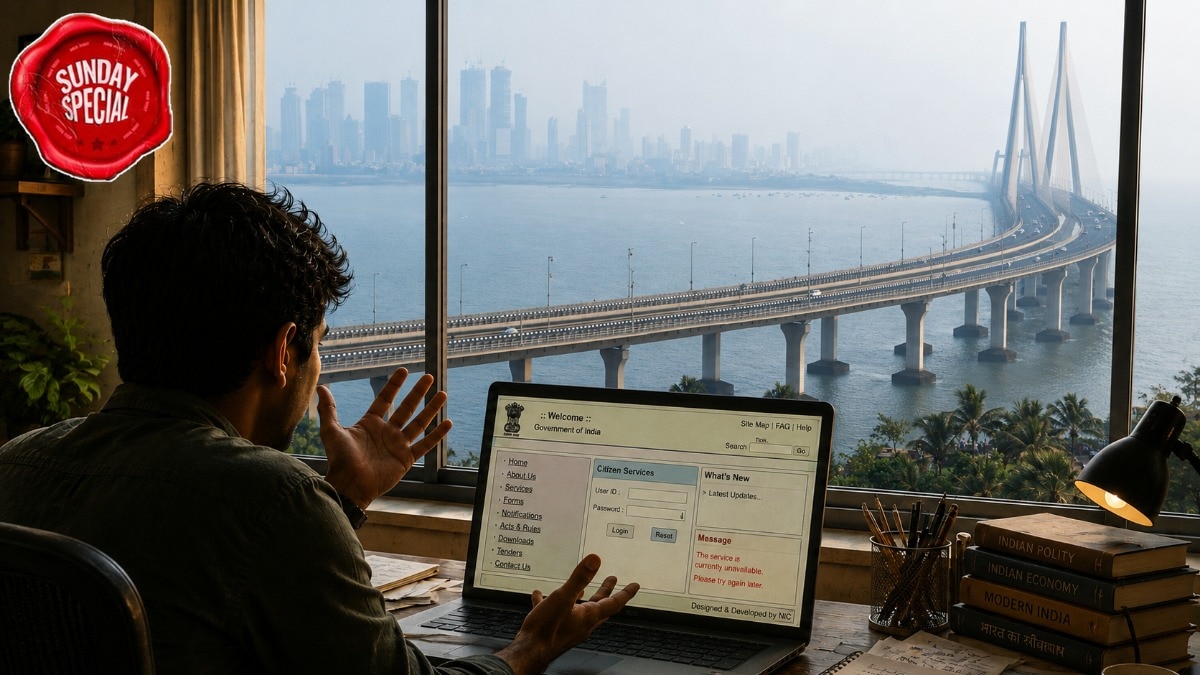
"We are experiencing a high load. Please try again later." The message flashed on Ranjan Kumar's phone for the third consecutive day, and just days before an exam that could shape his future. It was April 20, and the New Delhi-based civil services aspirant was trying to book a Tatkal ticket on the IRCTC app to travel to Patna for the Bihar Public Service Commission (BPSC)'s Assistant Education Development Officer examination. Read Full Story A Tatkal train ticket was Kumar's best bet, as the BPSC had released the exam centres just 10 days earlier. Kumar was no stranger to navigating government recruitment portals, having spent years uploading the same photographs, signatures, certificates and personal details in different formats, file sizes and resolutions. But this time, the system let him down. He never managed to book a ticket, and he couldn't appear for the exam. "As if battling the cumbersome exam portals several times a month isn't enough, we aspirants face another digital hurdle while trying to book a train to get to the exam centres," Kumar told India Today Digital. But what Kumar experiences is neither unique nor limited to the government websites he uses. Social media is awash with complaints about Indian government websites being slow, clunky, user-unfriendly and stuck in another era. Like Kumar, employees trying to withdraw their Provident Fund (PF) savings, journalists seeking court or police records, and citizens filing RTIs, have all complained of similar frustrations in dealing with government websites. They are the front-door to public services and are the primary touchpoints between citizens and the state. In cases such as visa applications, these portals become the first point of contact between the Indian government and people from around the world. While public services going online have eliminated countless queues and reduced paperwork, sub-par websites mar the user experience with endless spinning loading icons, unexplained and unclear error messages, and webpages that crash just when they are needed. That's what the people and stakeholders, India Today Digital spoke to, said. The Indian Railways is the country's biggest transporter, ferrying 23 million passengers every day. Obviously, millions end up using its ticketing website managed by the IRCTC. The booking woes on IRCTC have become a familiar refrain on social media, despite the platform improving significantly over the past few years. The collective agony over Tatkal bookings on IRCTC and also the Indian Railway's new offering, RailOne, could qualify as a meme genre in its own right. We also tested RailOne. While its design has been widely mocked online as "AI slop", we examined whether its functionality fares any better. The spotlight has turned to India's government websites after The Economist questioned in June why a country celebrated globally for its software engineers and digital public infrastructure continues to struggle with the usability of its official portals. The criticism by The Rconomist triggered reactions online. Many said the report's contents rang true. Others pointed to successes such as UPI, Aadhaar, DigiLocker and CoWIN, arguing that the London-based outlet painted an unfair picture of India. This debate prompted India Today Digital to ask what the everyday experience of ordinary users is. We spoke to people across professions and states, who told us what they liked and disliked about the portals they used. They rated them too. We also used some of the websites and spoke to experts to understand where India's digital governance succeeds, where it stumbles, and what steps are needed to fix the problems being faced by people. BAD GOVT WEBSITES: LESS OF TECH, MORE OF ACCOUNTABILITY ISSUE? The situation is such that a student hacked into the websites of IIT Kanpur and IIT Madras after being denied admission. These are just some of the users' experiences with Indian government websites over the past 48 hours. (Image: Author) Journalist and digital rights activist Nikhil Pahwa told India Today Digital that government websites in India suffer from the same structural problems that plague the country's public infrastructure.
 The BriefWire