How does eastern Europe commemorate the Roma Holocaust?
In 2015, the EU designated August 2 as the European Roma Holocaust Memorial Day. In Germany, the day is marked with memorial services, educational activites
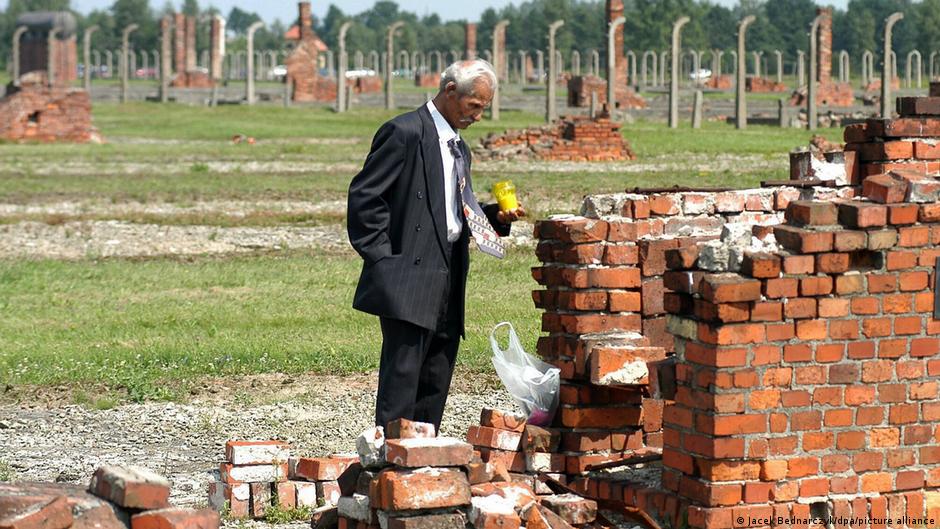
In 2015, the EU designated August 2 as the European Roma Holocaust Memorial Day. In Germany, the day is marked with memorial services, educational activites and public addresses. And in eastern Europe? It took decades before Germany recognized the Romani Holocaust — the Nazi genocide of 500,000 European Roma and Sinti during World War II. Several more decades passed before the European Holocaust Memorial Day for Sinti and Roma became an official German and European day of remembrance, celebrated each year on August 2. Based on initiatives by Polish Roma groups, the Nazi liquidation of the so-called "Gypsy Family Camp" in the Auschwitz-Birkenau Concentration and Extermination Camp on the evening of August 2-3, 1944, was first commemorated half a century later, in 1994. Germany marks the European Roma Holocaust Memorial Day on August 2 Image: Joerg Carstensen/dpa/picture alliance Thousands of deported Roma and Sinti had already been killed as a result of malnutrition and disease. That evening, thousands more were forced into gas chambers, shot and beaten to death by Nazi henchmen. In 2015, the European Parliament declared this date the European Roma Holocaust Memorial Day. In Germany and other European countries, the genocide is commemorated by officials with the participation of government representatives. In some cases, representatives of European governments travel to the memorial site in Auschwitz. In most cases, however, countries hold their own memorial services — particularly in central and southeastern Europe, where Nazi extermination commonly targeted Romani peoples. These days, such memorial days also take the opportunity to raise awareness for ongoing Antiziganism and the consequences it has. Roma, Sinti persecuted in WWII still fight for recognition To view this video please enable JavaScript, and consider upgrading to a web browser that supports HTML5 video Poland: 15 years of commemoration Poland, home to an estimated 30,000 Roma, has been observing August 2 since 2011. The ceremony routinely includes a visit by parliamentary and governmental representatives to the Auschwitz Memorial. Another important day of remembrance is observed each year in the village of Szczurowa, east of Krakow, on July 3.
It honors the memory of Polish Roma massacred by German troops in 1943. In 1956, Szczurowa became the first site of a European memorial for victims of the Romani Holocaust. Other small towns and villages across southeastern Poland also commemorate the killing of Polish Roma during Nazi German occupation. Czechia: A former pig farm turned memorial site In the Czech Republic, where nearly 250,000 Roma live, August 2 has been an official day of remembrance since 2015. The most important ceremony is held in Lety, south of Prague, where Roma organizations have been commemorating the genocide for decades. This is the site where German Nazis established a concentration camp in 1940, and began deporting and imprisoning Romani families from occupied Bohemia from 1942 onward. After the war, the site was used as a pig farm. It was closed in 2018, following a long controversy, and transformed into a place of remembrance. Czech President Petr Pavel and then-Prime Minister Petr Fiala both attended the opening ceremony in April 2024. Another memorial site is located in Hodonin north of Brno, at the location of a further Nazi concentration camp which imprisoned Romani people from Bohemia and Moravia. Here, one of the atrocities commemorated includes the mass deportation of Roma and Sinti to Auschwitz on August 21, 1943. The site of the former concentration camp in Lety had been used as a pig farm after World War II Image: Lubos Palata/DW Slovakia: Memorial Day established in 2005 Around half a million Roma live in Slovakia. Here, the Romani Holocaust Memorial Day has been observed on August 2 since 2005. The main ceremony is held at the Slovak Uprising (SNU) museum in Banska Bystrica in central Slovakia. The museum honors the 1944 armed uprising against Nazi occupation. It was one of the largest anti-fascist movements in Europe during World War II. The memorial ceremony is organized by the government's Plenipotentiary for Romani Communities and non-governmental Roma initiatives. Other representatives of the state or the presidential office also take part.
 The BriefWire