Spain’s 48-hour response: How authorities returned thousands of illegal migrants to Morocco
Authorities used water cannons, tear gas and warning shots to repel some crossings. Several migrants drowned or were killed in a stampede during the attempt
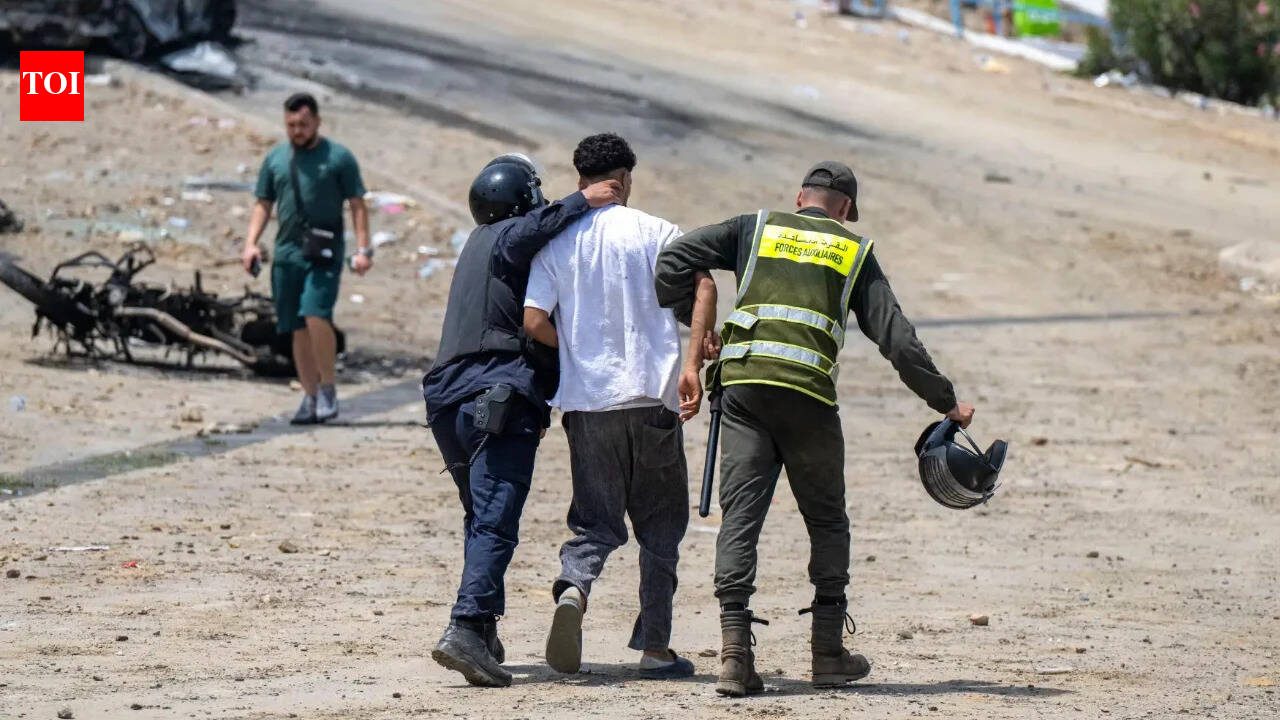
Authorities used water cannons, tear gas and warning shots to repel some crossings. Several migrants drowned or were killed in a stampede during the attempt Barriers, troops and tighter controls ‘Absolutely unsustainable’: Ceuta leaders blame smugglers Migrants warn others not to make the journey Why the surge happened Spain has sent tens of thousands of illegal migrants back to Morocco within 48 hours after an unprecedented surge of crossings into the North African enclave of Ceuta. The mass migration triggered what officials described as a humanitarian and security crisis.According to Spain’s interior ministry, around 60,000 migrants entered Ceuta on Thursday, a figure that amounted to roughly 70 per cent of the enclave’s population. By Saturday, about 48,000 had already returned to Morocco as Spanish authorities rapidly restored control of the border.Images from Ceuta showed large groups of North African migrants being escorted by Spanish soldiers towards the frontier with Morocco.While many left voluntarily or were returned by the authorities, others refused to depart, with some reportedly hiding in tunnels and abandoned areas while others wandered through the city’s streets.Spanish Prime Minister Pedro Sánchez said Spain had re-established border control, provided humanitarian assistance, returned “virtually all” of the migrants who entered irregularly and prevented unauthorised onward movement to other European countries in less than 48 hours.He said the operation had been carried out in coordination with Morocco.The Spanish government has also begun installing a 500-metre-long inflatable containment barrier as a temporary measure to prevent further crossings.The mass return operation followed one of the largest migrant surges ever recorded in Ceuta, where many migrants swam several miles from the Moroccan coast or attempted to cross a breakwater barrier near a border checkpoint.
Authorities used water cannons, tear gas and warning shots to repel some crossings. Several migrants drowned or were killed in a stampede during the attempt.Spanish armed forces and additional police units were deployed across Ceuta, while Moroccan security forces clashed with migrants on the other side of the border.Ceuta President Juan Jesús Vivas described the situation as “absolutely unsustainable” and condemned the influx as a “violation of Spain’s territorial integrity”. He blamed human smugglers for encouraging dangerous crossings and said they “deceive so many young people and ultimately lead many of them to their deaths”.The crisis has prompted wider concern across Europe. Italy temporarily reinstated border controls with Spain for air and sea travel, while France announced tighter checks on arrivals from Spain. Twenty-two European Union countries called for emergency talks on the sudden inflow of migrants.European Commission President Ursula von der Leyen said the scenes from Ceuta were “unacceptable”.“We cannot allow anyone to come to our Union without abiding by our rules,” she said. “Dangerous crossings must stop immediately.
 The BriefWire