Nepal restricts forest access after rare snake nest is found
The discovery has prompted authorities to limit public access to the region while conservationists monitor the nesting site. A curious discovery The only snake that
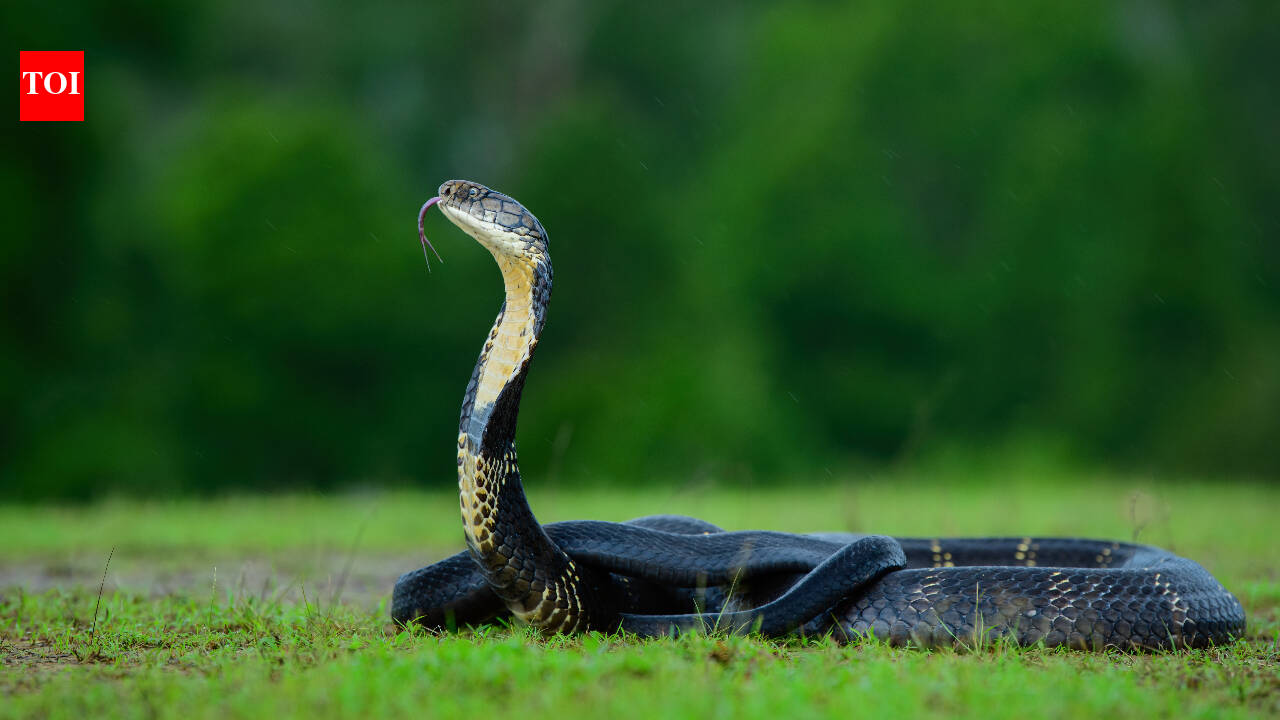
The discovery has prompted authorities to limit public access to the region while conservationists monitor the nesting site. A curious discovery The only snake that builds a nest Why king cobras matter In a routine search for wild mushrooms deep in a community forest in Nepal, extraordinary wildlife has been discovered. Local residents exploring the forest floor near Jhakri Sota in the Ambe Community Forest came across something few people ever get to see: a carefully built nest of a king cobra. For the uninitiated, the king cobra is one of the world’s most elusive reptiles, but it’s also the only known snake to build nests for its eggs. The discovery has prompted authorities to limit public access to the region while conservationists monitor the nesting site.According to a news report by The Cool Down website, the nest was found on July 15 by members of the Ambe Community Forest while they were collecting mushrooms in Ghorahi Sub-Metropolitan City, Nepal.
Recognising the importance of the find, the community immediately alerted local conservationists. With the help of snake rescuer and conservationist Kuldeep Neupane, who has been doing snake rescue and awareness in the region for the last four years, the area was secured quickly to minimize disturbance to the nesting female. The report also states that officials have temporarily closed off the forest around it to protect people and wildlife.Local residents have been told not to collect mushrooms, firewood or grass near the nesting site until the eggs hatch and the cobra departs naturally. The Division Forest Office has also increased surveillance and is working in close coordination with the community forest users committee to ensure the area remains undisturbed during this crucial breeding period.According to experts, the female king cobra collects dry leaves, twigs and other forest vegetation to build a nest, a behavior not seen in any other known snake. The female lays 30-40 eggs and stays in the vicinity to protect the nest until the eggs hatch in roughly two to three months.
Such an exceptional degree of parental care makes the species especially vulnerable to human disturbance during the breeding season. Then there’s the king cobra, the world’s longest venomous snake, measuring more than 18 feet (5.5 metres) long, which adds to its mystique.Unlike most snakes, they mostly eat other snakes, including venomous snakes. This helps them control snake populations, which helps maintain ecological balance, and may even reduce the chances of humans coming into contact with other dangerous snakes. It is believed that a decline in king cobra populations could upset this balance, Thus this finding serves as an important reminder that apex predators, although feared by many, often provide vital ecological services.Where human lives and wildlife collideThe incident also underscores an increasing problem across much of Asia: expanding encroachment of human activity into habitat of the wild. Community forests frequently contribute to rural livelihoods through access to mushrooms, medicinal plants, firewood and fodder. Meanwhile, these forests remain critical habitats for a multitude of wild species.
 The BriefWire