Trump rejects Iran link in Minnesota cyberattacks, blames Governor Tim Walz instead
US President Donald Trump Walz says Trump knows who is behind attacks Dozens of water systems targeted Federal agencies probe Iran link US President Donald
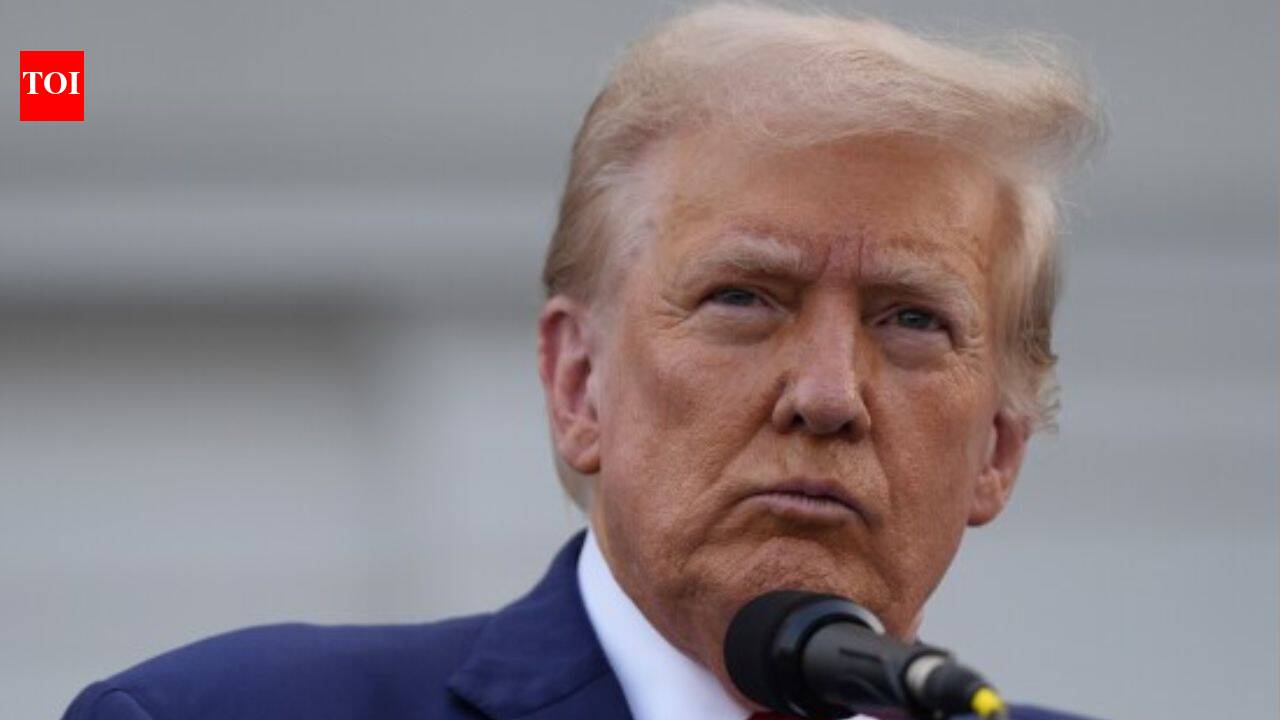
US President Donald Trump Walz says Trump knows who is behind attacks Dozens of water systems targeted Federal agencies probe Iran link US President Donald Trump on Friday rejected claims that Iran was behind a series of cyberattacks targeting Minnesota's water systems, instead blaming the state's Democratic leadership without providing evidence.Speaking during a Cabinet meeting at Camp David, Trump said reports linking the attacks to Iran were unconvincing."We heard in Minnesota there was a cyberattack and they blame it on Iran. I don't think so. I blame Minnesota because they're grossly incompetent," Trump was quoted as saying by news agency Reuters. He also described Governor Tim Walz as "corrupt."His remarks came even as US investigators continue examining whether the attacks were carried out by Iran or hackers linked to Tehran.
Officials have stressed that the assessment remains preliminary and could change as the investigation progresses.Governor Tim Walz rejected Trump's comments, saying the president was ignoring intelligence assessments and politicising a national security issue."Trump knows exactly who is responsible for this attack, and knows that other states were hit too. This is what modern warfare looks like," Walz said in a post on X.Walz also argued that staffing cuts to the Cybersecurity and Infrastructure Security Agency (CISA) under the now-defunct Department of Government Efficiency (DOGE) had weakened the country's cyber defences."DOGE took an axe to CISA and left the US exposed to cyberattacks. Thankfully, our experts in Minnesota were able to identify the vulnerability quickly and work with local communities to stop it," he said.Minnesota IT Services (MNIT) said more than 30 community water systems were targeted on July 26 and 27 in what it described as a coordinated cyberattack.According to state officials, attackers remotely accessed internet-connected equipment used to monitor and control water infrastructure, including programmable logic controllers (PLCs).
In several cases, passwords and IP addresses were altered, disrupting operators' ability to monitor systems.Authorities said there is no evidence of ongoing disruption to drinking water services, and no communities have been asked to change their water usage.Federal investigators have briefed state officials on the possibility that Iran or Iran-linked hackers could be responsible for the attacks, although no formal attribution has been made.The FBI and the Environmental Protection Agency (EPA) have warned that similar incidents have been reported
 The BriefWire