UEFA Accuses Gianni Infantino Of Striking ‘Back-Room’ Deal, Signals Rift
UEFA Accuses Gianni Infantino Of Striking ‘Back-Room’ Deal, Signals Rift Published By, Last Updated: August 01, 2026, 18:57 IST UEFA loses confidence in FIFA chief
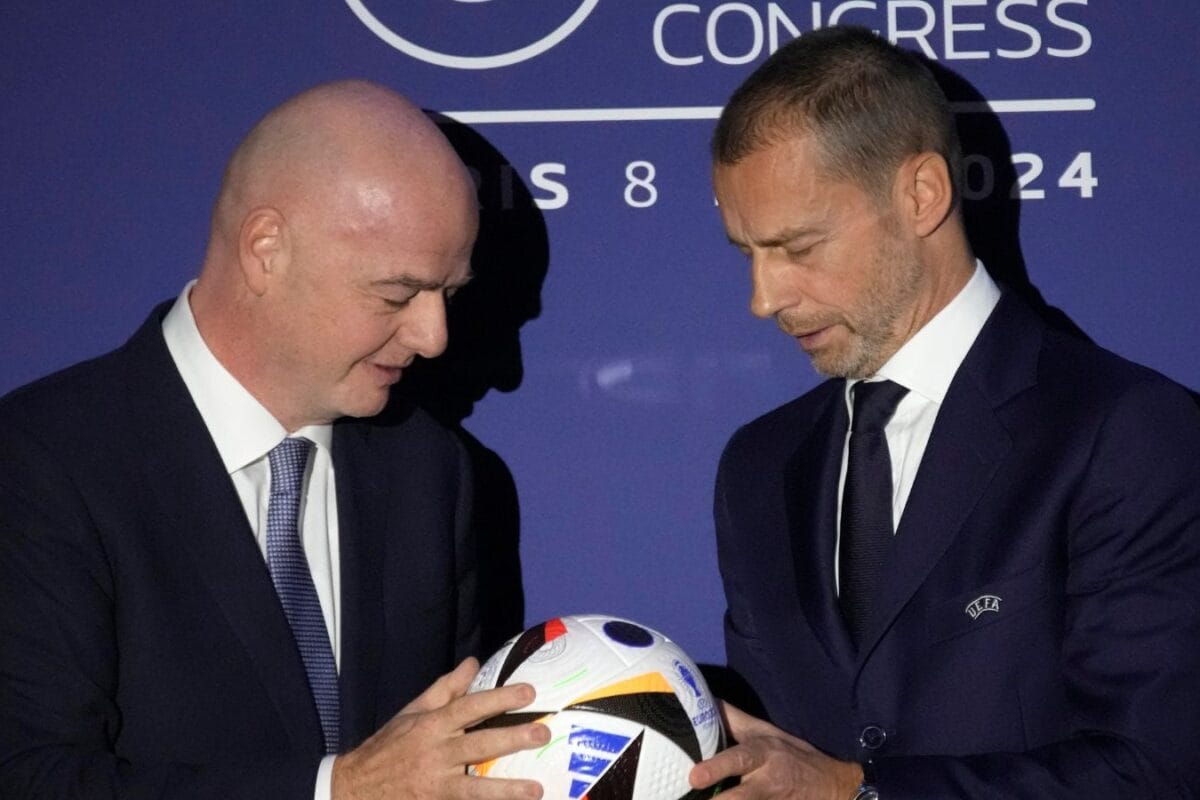
UEFA Accuses Gianni Infantino Of Striking ‘Back-Room’ Deal, Signals Rift Published By, Last Updated: August 01, 2026, 18:57 IST UEFA loses confidence in FIFA chief Gianni Infantino, accuses him of backroom deals. FIFA shelves World Cup stake sale after backlash. Rapid Read Aleksander Ceferin and FIFA President Gianni Infantino pose during the 48th UEFA congress in Paris in 2024 (Picture credit: AP) The Union of European Football Associations, UEFA, has lost confidence in FIFA chief Gianni Infantino and has accused him of a shabby and backroom deal, as a rift between the two world football bodies becomes clearer with every passing day. FIFA and Infantino performed a dramatic U-turn on Friday, shelving plans to sell stakes in the World Cup and other tournaments to private investors after widespread backlash.
The proposal drew strong opposition, including from UEFA, which had threatened to boycott the FIFA World Cup in protest. UEFA responded on Saturday, August 1, by saying that it would ‘devise a plan’ to ensure such proposals couldn’t resurface, adding that ‘no option should be off the table’. “We cannot keep going on like this with secret schemes on fast-track timescales, cooked up by faceless individuals and of dubious benefit to the game. We must identify those responsible and hold them to account," the statement said. “In the coming days and weeks, UEFA will work with its associations and in close cooperation with other confederations to reflect on how this happened and devise a plan to make sure that it can’t occur again," the statement added.
“The shabby, back-room, opaque deal he hatched and tried to force through was anything but transparent," the statement said. The English FA later backed UEFA’s stance, calling for a comprehensive review of FIFA’s leadership and governance to ensure the global game is run transparently, in the interests of all 211 member associations and with the long-term stewardship of football at its core. Lise Klaveness, president of the Norwegian Football Federation, criticised the proposal as well, saying: “We must acknowledge that the entire framework of international football cooperation was unnecessarily put at risk in pursuit of individual interests rather than the best interests of the game." Klaveness added that football must now prioritise governance reforms and work to ‘shift the internal culture away from fear and political positioning towards greater openness’.
 The BriefWire