Kale island vanished under rising seas; sculpture marks the site
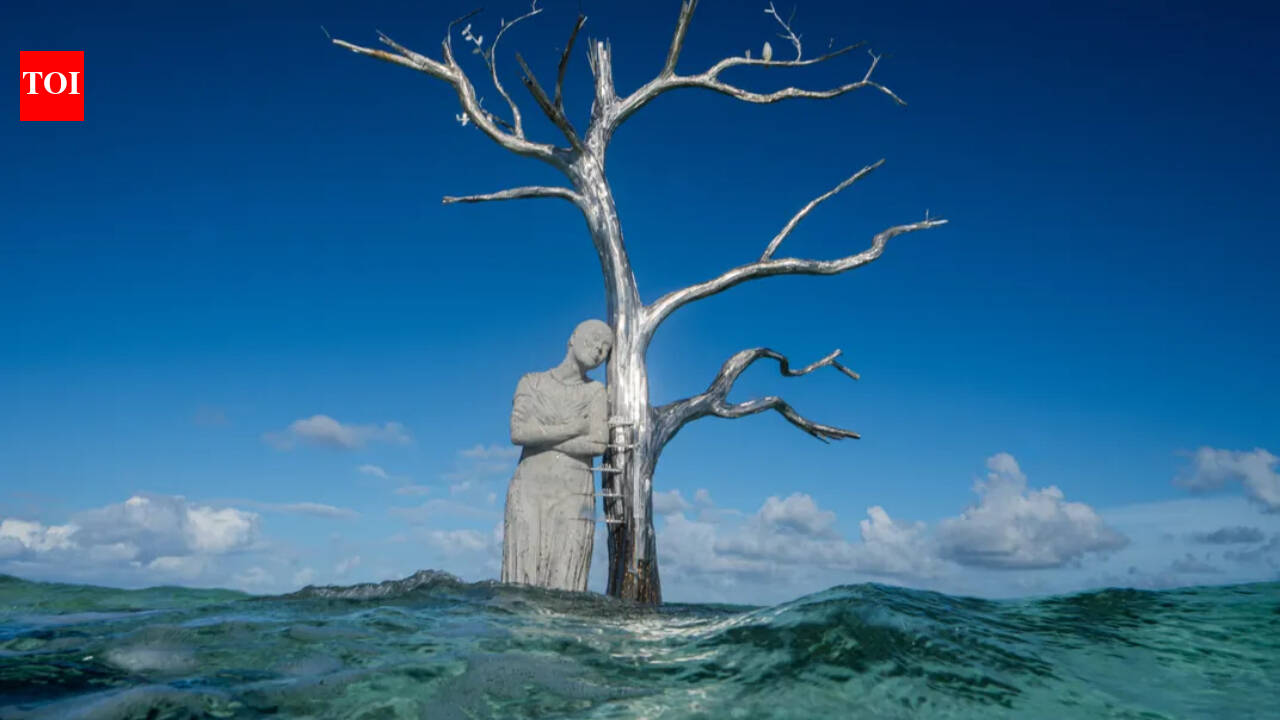
The figure and the tree together signify memory, resilience, and the ongoing relationship between people and place. The disappearing island A memorial driven by climate
The figure and the tree together signify memory, resilience, and the ongoing relationship between people and place. The disappearing island A memorial driven by climate resilience A sculpture meant to live A timeline penned by the sea Art that speaks for the sea The ocean has always been a symbol of life but now in many parts of the world it is also becoming a force for irreversible loss. Wondering how? Well, the sea has quietly erased an entire island from the map, in the remote Solomon Islands in the Pacific. Lush forests and white sandy beaches that once welcomed visitors are now replaced by waves only. But beneath those waters, a new landmark has risen, not to reclaim the lost land but to preserve memory and inspire action.Now there is a life-size sculpture called The Solomon Siren in the intertidal waters where Kale Island used to be. But the installation is more than a memorial. It’s designed to become a living ecosystem for marine life, a thriving artificial reef, to transform a symbol of climate loss.Kale, an island of 50,000 square metres in the Solomon Islands archipelago, officially disappeared under rising sea levels in 2016 after years of relentless coastal erosion. It was a small community at one time, but it was one of the first documented islands in the world that was lost completely to climate change-driven sea-level rise.
Kale’s disappearance was not an isolated incident. Throughout the Solomon Islands, sea level rise and more severe weather have changed coastlines and forced communities to relocate.Since 2008, more than 26,000 people have been forced to flee as rising waters engulfed homes, farmland and cultural landscapes.To the residents, Kale was far more than a geographical feature. It was renowned for its outstanding natural beauty, with unspoiled beaches, crystal-clear waters and dense tropical forests. The island was also of deep cultural significance for communities in Isabel Province, meaning its disappearance was both an environmental and emotional loss.To celebrate 10 years since Kale disappeared under the sea, renowned British marine artist Jason deCaires Taylor created The Solomon Siren. The sculpture, placed in the shallow waters where the island once stood, commemorates the vanished landscape and the resilience of the people who continue to confront the realities of climate change. The sculpture is based on Solomon Islands climate activist Gladys Habu Bartlett who has campaigned to raise awareness of environmental issues and gender equality around the Pacific. Taylor’s work is a tribute to Bartlett’s advocacy, and to the communities that are already on the frontlines of climate change.The life-size figure is leaning against a sculpted tree, which stands for the lush vegetation and natural resources that once flourished on Kale Island.
 The BriefWire