War in Ukraine: Why Crimea has become a strategic target
Ukraine has stepped up attacks on Russian logistics centers and energy facilities in Crimea. What are the consequences for local supplies, and how does Kyiv
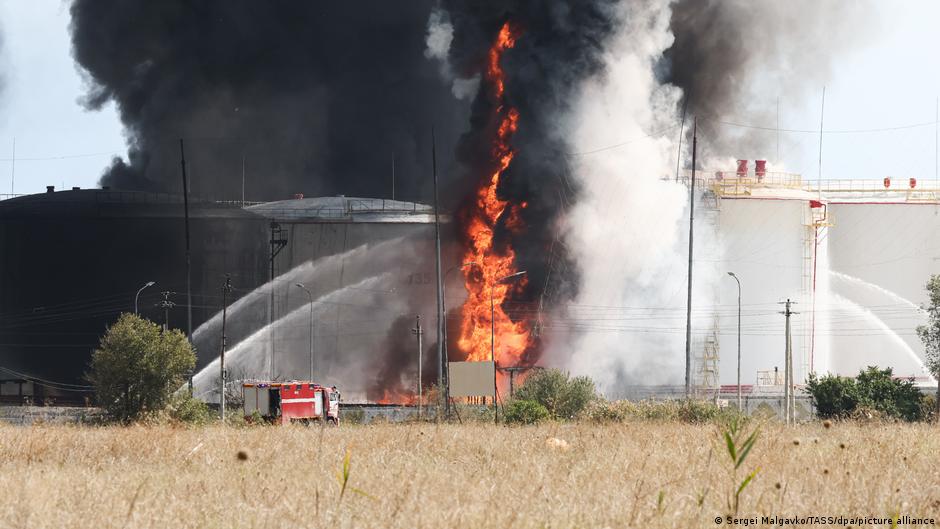
Ukraine has stepped up attacks on Russian logistics centers and energy facilities in Crimea. What are the consequences for local supplies, and how does Kyiv hope this strategy will affect the course of the war? In an attempt to isolate Crimea from the mainland, the Ukrainian armed forces have intensified their attacks on the peninsula, which was invaded and annexed by Russia in 2014. Ukraine is using long-range drones to attack transports on the M14 highway between the Russian city of Rostov-on-Don and Melitopol in occupied southern Ukraine. It is also targeting Russian shadow fleet ships in the Sea of Azov and the Black Sea, as well as energy facilities that supply the Russian military. Robert "Magyar" Brovdi, commander of the Ukrainian forces for unmanned systems, says 196 Russian ships and more than 100 energy facilities have been hit in the past month alone. His figures cannot be independently verified. Russia appears to be struggling to supply both its military and the civilian population in Crimea. Fuel coupons were issued at the end of May, but ran out after 24 hours, after which gasoline was being traded on the black market. A state of emergency was declared in Crimea, especially Sevastopol, in response to repeated disruption of the electricity and water supply, and of the internet and cellphone networks. What are residents in Crimea experiencing? Nina, a pensioner who lives in a village near Feodosiya, southeastern Crimea, told DW about the difficulties people there are facing: Residents there can't cook because of power cuts, and fuel shortages mean public transport only runs intermittently. Nina's worst fear, though, is not having electricity in winter. Russian-occupied Crimea hit by fuel shortages and power cuts To view this video please enable JavaScript, and consider upgrading to a web browser that supports HTML5 video The longest power cuts have been in the north of Crimea.
This is where Ivan lives [name changed]. He tells DW that for some time, people were unable to get hold of fuel with either coupons or cash. The only exceptions, he says, were police officers, state officials, and doctors. For several days, everything collapsed: Cars ran out of fuel and simply came to a stop; people didn't know how they were supposed to get to where they were going. Ivan said that most shops no longer stock perishable goods, because they can't run their fridges and freezers: "There are no milk products, or fish, or meat," he said. "There are only a few shops with electricity generators, but the prices there are much higher than before." Some small, private, volunteer initiatives are trying to help. The blogger Olena Gerasimenko works with companies in Simferopol to bring drinking water to people suffering from power cuts, and to hospitals and kindergartens. In her blog, she reports that people are complaining about the lack of help from the Russian-installed "authorities" in Crimea. On social media, people say that, because of the power cuts and having no means of communication, residents of northern Crimea are sending post by public bus. But the buses aren't running regularly either. What are Ukraine's tactics? Ukraine's efforts to block supply routes both in and to Crimea are directed primarily against the small Russian tankers and tugboats that transport oil to larger ships and fuel to the Crimean mainland. Parallel to this, it is also destroying transformer substations. But Commander Brovdi says Ukraine is deliberately sparing the Kerch Bridge, which spans the Kerch Strait, connecting the peninsula with the Russian region of Krasnodar. In a recent interview with the Irish journalist Caolan Robertson, Brovdi said the road and rail bridge should be maintained as a corridor for people to escape from Crimea.
 The BriefWire