Hunger, Chaos, No Shelter: Why Thousands Of Migrants Returned Within A Day Of Entering Spain
Hunger, Chaos, No Shelter: Why Thousands Of Migrants Returned Within A Day Of Entering Spain Published By, Last Updated: August 01, 2026, 14:29 IST Nearly
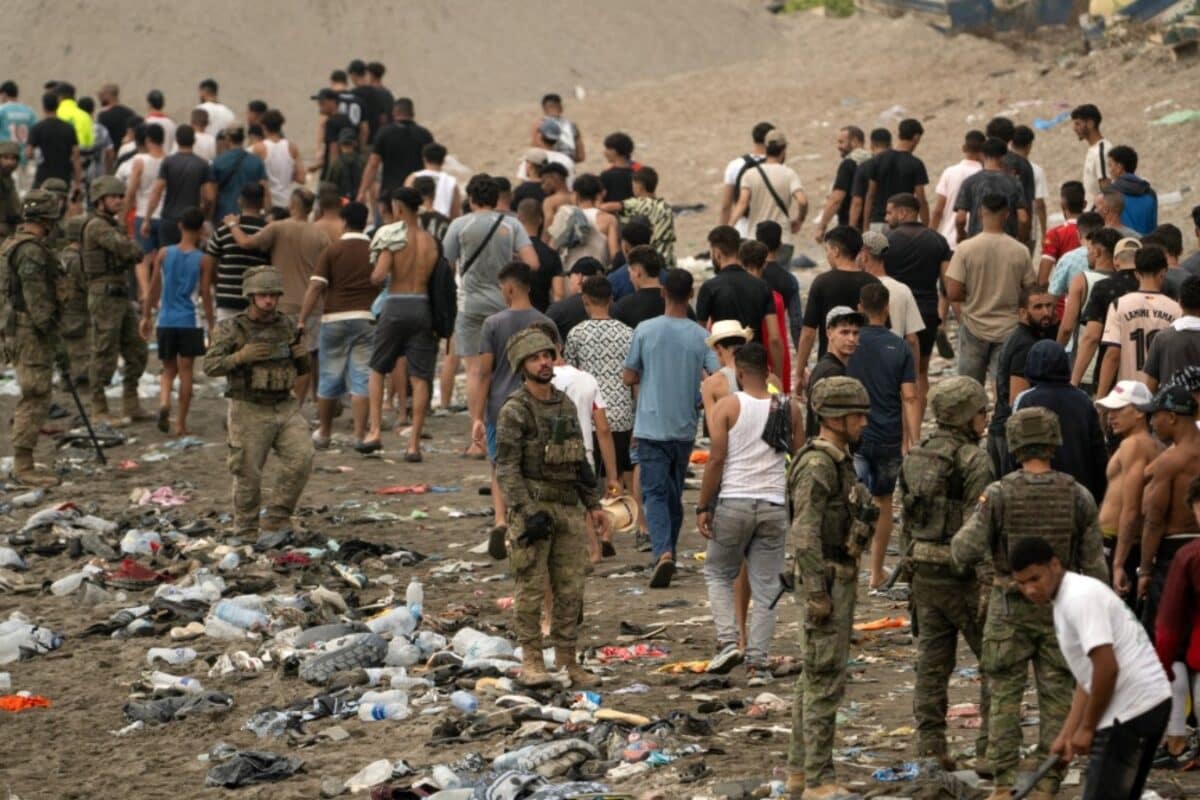
Hunger, Chaos, No Shelter: Why Thousands Of Migrants Returned Within A Day Of Entering Spain Published By, Last Updated: August 01, 2026, 14:29 IST Nearly 50,000 migrants surged into Ceuta. By Friday evening, more than 48,000 had already gone back to Morocco. Rapid Read Spanish soldiers control as migrants cross back to Morocco after they crossed the border to enter Spain's north Africa's Ceuta enclave on July 31. (AFP photo) Nearly 50,000 migrants crossed from Morocco into Spain’s North African enclave of Ceuta beginning Thursday, according to Spain’s Interior Ministry. Ceuta President Juan Jesús Vivas gave a higher estimate, saying as many as 60,000 people had entered over two days. Yet by Friday evening, the ministry said 48,300 had returned to Morocco. At least 57 migrants died during the crossings. Spanish authorities said some drowned, while others were crushed near the breakwater that forms part of the border barrier. So, why did tens of thousands enter Ceuta, and why did most return within a day? What Happened At The Ceuta Border? Thousands of migrants gathered near the Moroccan border before attempting to enter Ceuta by land and sea. Some swam around the border fence, while others tried to cross through gates, gaps in the barrier or over the breakwater. The Associated Press reported that migrants often swim from the Moroccan town of Fnideq, covering about five kilometres to reach Spanish territory. Others attempt the shorter crossing from Belyounech. Ceuta and Melilla are Spanish autonomous cities on the North African coast and form the European Union’s only land borders with Africa. Both regularly witness attempted crossings, but Reuters reported that the scale of the latest surge appeared unprecedented. Moroccan security forces used batons, tear gas and water cannons to stop further crossings. Rights groups in Morocco told the AP that police also fired warning shots into the air.
Spain deployed troops, military vehicles and additional police personnel along the border after the sudden arrivals overwhelmed local authorities. “The situation that Ceuta is going through is absolutely unsustainable," Vivas said. Why Did Most Migrants Return? Many migrants who entered Ceuta were unable to find food, shelter or work and soon began returning voluntarily. Rachid Sbihi, who heads a local workers’ association representing Civil Guard officers, told the AP that thousands of migrants, including unaccompanied children, were left sleeping in parks and on pavements. Several migrants said that the conditions inside Ceuta were not what they had expected. “Honestly, I don’t even know why I came, and now I’m going back," a young Moroccan man from Tangier told Reuters. “I haven’t eaten since lunch yesterday, even though I brought some money with me … What we’re doing is neither good nor enjoyable," he said. Ayman, a 20-year-old hairdresser from Larache, told Reuters that he had reached Ceuta after swimming for five hours. “There was no food inside Ceuta and we were kicked out badly by the (Spanish) army," he said. Another migrant, 21-year-old Abdulah Buji from Tetouan, told the AP that he had entered Ceuta in search of better work opportunities. “But I haven’t found any opportunities here either, so I have to go back," he said. Spanish authorities also accelerated the return of those who had entered irregularly. Prime Minister Pedro Sánchez said repatriations were being carried out with Morocco’s full cooperation. Did A Court Ruling Spark The Rush? Spanish authorities believe one factor behind the mass crossing was a recent Supreme Court ruling on migrants arriving by sea. Until now, migrants intercepted while trying to reach Ceuta or Melilla by sea were often immediately sent back. The court ruled that they could no longer be turned away on the spot and instead had to go through a legal process.
 The BriefWire