Petrol Would've Cost Rs 125/Litre In Delhi Without Ethanol Blending: Govt
Petrol Would've Cost Rs 125/Litre In Delhi Without Ethanol Blending: Govt Published By, Last Updated: August 01, 2026, 11:54 IST The ministry said consumers instead
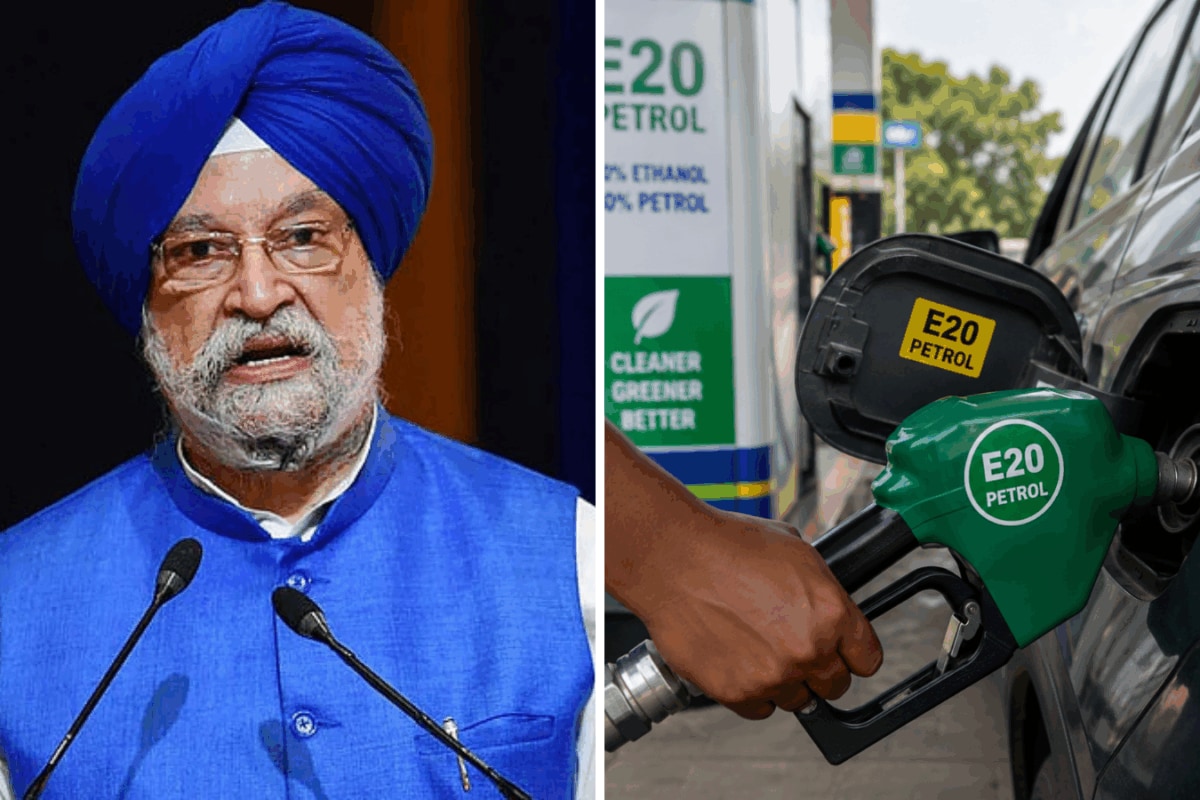
Petrol Would've Cost Rs 125/Litre In Delhi Without Ethanol Blending: Govt Published By, Last Updated: August 01, 2026, 11:54 IST The ministry said consumers instead paid Rs 94.77 per litre because ethanol, procured domestically at pre-agreed prices, made up 20% of every litre of fuel. File image of Petroleum Minister Hardeep Singh Puri and representative image of E20 petrol. (Source: PTI) Defending the government’s ethanol programme, the petroleum ministry on Friday said petrol prices in Delhi would have jumped to Rs 125 per litre had oil companies not blended ethanol into the fuel when global crude prices touched $135 a barrel, The Times of India reported. The ministry said consumers instead paid Rs 94.77 per litre because ethanol, procured domestically at pre-agreed prices, made up 20% of every litre of fuel. According to the government, E20 petrol not only helped shield retail fuel prices from the spike in global crude oil prices but also saved consumers nearly Rs 30 per litre at the peak of the crisis, TOI reported. The ministry also rejected allegations that foodgrain meant for the poor was being diverted for ethanol production or that subsidised FCI rice was being used to support the programme.
Retail fuel prices remained unchanged for about 75 days after the West Asia conflict erupted on February 28, with the government keeping petrol and diesel rates stable despite volatility in global crude markets. Prices were revised upward by Rs 7.5 per litre in May. At present, E20 (91-octane) petrol is priced at Rs 102.12 per litre in Delhi, while 100-octane petrol retails at Rs 169 per litre. Also Read: Mileage May Drop 6%, BS-III Rubber Parts At Risk: How E20 Petrol Could Affect Your Car Mileage May Drop 6%, BS-III Rubber Parts At Risk Road Transport and Highways Minister Nitin Gadkari on Thursday highlighted the issues car owners may face due to E20 fuel in the Parliament. The minister said vehicle owners may experience a drop in mileage and that certain rubber parts in older BS-III vehicles may require replacement, while reiterating that E20 petrol does not damage engines. In a written reply in the Lok Sabha, Gadkari said a joint study by the Automotive Research Association of India (ARAI), the Society of Indian Automobile Manufacturers (SIAM) and Indian Oil Corporation Ltd (IOCL) found that E20 may marginally reduce mileage.
Gadkari said E20 petrol can reduce vehicle fuel efficiency, lowering mileage by 2% to 6%. However, he added that the drop in mileage would depend on the vehicle category and its age. The study also found that ethanol-blended petrol improves acceleration, ride quality and lowers carbon emissions by around 30%. Gadkari said certain rubber parts and gaskets in older BS-III vehicles manufactured before 2016 may require replacement when running on E20 petrol, while maintaining that the blended fuel does not significantly affect overall vehicle performance or require engine modifications. Also Read: E20 Petrol May Be Harming Rubber Parts In Older BS-III Vehicles, Will Need Replacement: Nitin Gadkari Controversy Around Ethanol-Blended Fuel The rollout of E20 petrol, a fuel comprising 80% petrol and 20% ethanol, has drawn criticism from opposition parties and consumer groups over its compatibility with older vehicles. Critics have also raised concerns about reduced fuel efficiency, higher maintenance costs and potential liability in the event of engine or fuel system damage. The Centre, however, has defended the transition, saying it has been implemented in a phased manner and is backed by scientific studies.
 The BriefWire