Why Europe's wildfires are getting harder to stop
Wildfires may start with a single spark, but experts say climate change, drought and decades of forest management decisions have created the conditions for Europe's
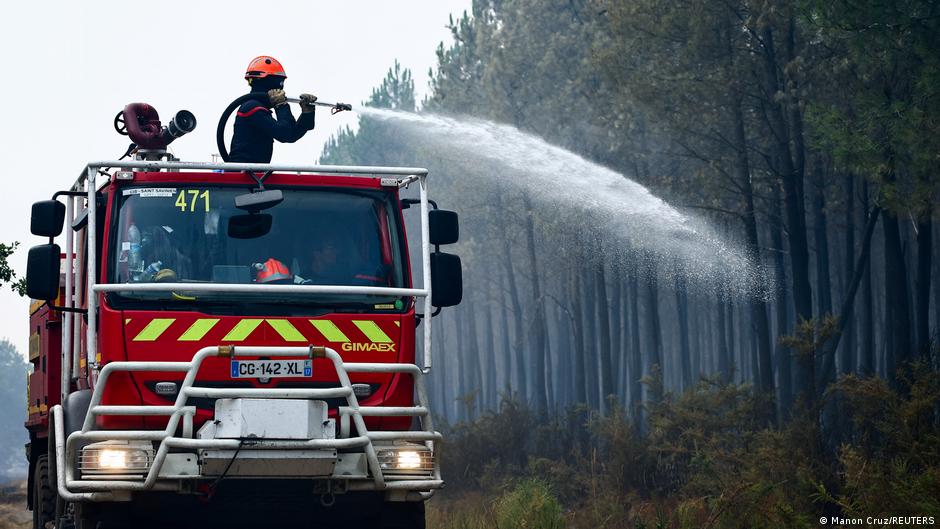
Wildfires may start with a single spark, but experts say climate change, drought and decades of forest management decisions have created the conditions for Europe's biggest blazes. Wildfires almost always need a spark to ignite, whether it's lightning, arson, or a car's hot exhaust pipe touching dry vegetation. In France's historic summer wildfires, authorities blamed a brush-clearing machine being operated around a high-voltage power line. Spanish investigators concluded that sparks from heavy machinery were behind major blazes there. But scientists say those findings only explain how Europe's historic wildfires began, not why they grew into the megafires that have devastated the continent this summer. Across Europe, a combination of human-caused climate change, insufficient planning and forests planted in ways that allow flames to spread quickly are fueling fires, say experts. "It's not that wildfires are magic and just start. You have to have the right climatic conditions," said Silvia Abruscato, coordinator of FoRISK, a pan-European forest risk management hub. Has Europe lost control of its wildfires? To view this video please enable JavaScript, and consider upgrading to a web browser that supports HTML5 video Climate change is loading forests with fuel Scientists point to three ingredients that determine whether a wildfire will spread rapidly: the amount of vegetation available to burn, how dry that vegetation is, and the weather conditions around a fire. "When all three of these conditions are very much fire-prone and they align, then you have this kind of fire event," said Francesca Di Giuseppe, a fire forecast project coordinator at the European Centre for Medium-Range Weather Forecasts. Climate change is making these conditions more common and intense. A rapid analysis from World Weather Attribution found global warming made the extreme weather behind Spain and France's summer wildfires much more likely.
Residents watch smoke rise near Lege-Cap-Ferret, one of many towns caught in a summer of 'hydroclimatic whiplash' Image: Julien De Rosa/AFP One reason is a phenomenon called hydroclimatic whiplash, where ecosystems suddenly swing between wet and dry conditions. Essentially, as the planet warms, the atmosphere holds more moisture, intensifying rainfall that fuels plant growth. "This has created an abundance of biomass that then has rapidly dried during a sequence of heat waves," Di Giuseppe said. In spring, a warmer atmosphere draws water from soil and plants. Drought worsens, vegetation dries out, and landscapes become far easier to ignite. In simple terms, wet winters grow fuel, and dry springs turn that fuel into perfect kindling. This summer, that's meant fires breaking out almost simultaneously in France, Spain, Greece, and Turkey — all driven by the same broad pattern of heat and drought. Making matters worse, the fires themselves add to the problem. This year's blazes have already emitted nearly 18 million tons of planet-warming CO2, according to EU figures. Spain turns to grazing to curb wildfires To view this video please enable JavaScript, and consider upgrading to a web browser that supports HTML5 video Some forests are built to burn Once a fire begins, it can take thousands of firefighters days or weeks of effort to contain the flames. That's partly due to the way forests have been managed over decades. Across parts of Europe, large areas have been planted as monocultures, dominated by a single species grown for quick timber. "Some of the fires we've been seeing in France and Spain are in places where you have these very flammable trees which are quite fine and they often are growing close together so fire spreads really easily," Doug Kelley, a land surface modeler at the UK Centre for Ecology and Hydrology, told DW.
 The BriefWire