From petitions to memes: How students made dissent visible
From imperial China to present-day India, student movements have repeatedly adapted the tools and symbols of their age to challenge authority. It was a clip
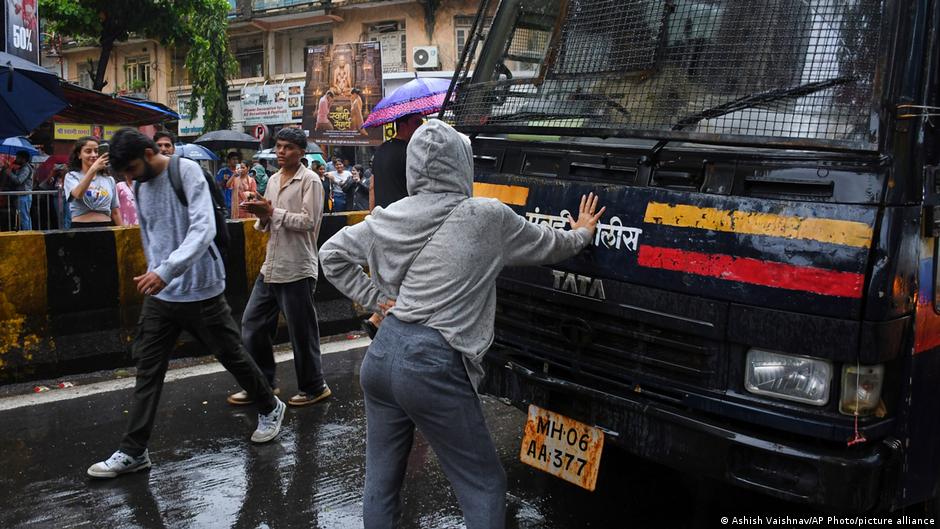
From imperial China to present-day India, student movements have repeatedly adapted the tools and symbols of their age to challenge authority. It was a clip destined to go viral. On July 22, 2026, in rainy Mumbai, a casually dressed young woman stepped in front of a slow-moving police van carrying detained students. She placed her palm on the hood, forcing the vehicle to stop. Mobile phones captured the moment from every angle. She too, raised her own phone and recorded the encounter. Within hours, the clip spread across India and beyond. It became one of the defining visuals of the Cockroach Janta Party protests, in which students demanded transparency and accountability, following leaks in India's medical entrance exams. But the power of the moment lay not only in what she did, but in how quickly it was seen. A single gesture, a young woman confronting authority, became a symbol shared across millions of screens. While the clip belongs to a generation raised on social media, the impulse behind it is much older. From court petitions and revolutionary posters to photographs, umbrellas and memes, student movements have repeatedly adapted the tools and symbols available to them, turning them into vehicles for dissent. India's Cockroach movement — and why it matters To view this video please enable JavaScript, and consider upgrading to a web browser that supports HTML5 video Communicating dissent at court Long before television or social media carried dissent across borders, students still found ways to make their grievances heard. In Eastern Han China for instance, scholars at the Imperial Academy (Taixue) aligned with reform-minded officials in opposing powerful eunuchs at court, whom many viewed as corrupt and politically overbearing.
They voiced their objections through public criticism, political networks and petitions. In an era when political communication moved through official channels, petitions were among the established ways of bringing grievances before the throne. Written in formal language and delivered through the bureaucracy, they carried student concerns directly into the state's communication system. Multiplying dissent through posters Centuries later, communication and protest mechanisms evolved. In Paris in 1968, students challenged university authorities and a conservative postwar social order. As demonstrations spread across the French capital and drew in workers, one of the movement's most enduring contributions emerged from a basement workshop at the Ecole des Beau Arts. The posters of the Paris 1968 protests were collectively created without credit to any one person Image: Philippe Gras/IMAGO The Atelier Populaire ("People's Workshop") printed thousands of posters during the protests, many of them overnight. Their bold graphics, silhouettes and slogans became the visual language of the movement. Produced collectively, many carried no individual author's name, helping transform protest into a shared public voice. The posters and their messages could appear in dozens of places overnight, giving the protest a wide local visual presence. When a photograph became global witness Protests also became more impactful when images could be transmitted across borders. In Soweto in June 1976, Black South African students marched against the apartheid system's education policies, rejecting Afrikaans as a compulsory medium of instruction in Black schools. Many saw it as the language of an oppressive state and a barrier to equal education. As thousands of students took to the streets, police opened fire. Amid the chaos, South African photographer Sam Nzima captured the image that would travel the world: 13-year-old Hector Pieterson being carried away from the scene after he was fatally shot.
 The BriefWire