India's 'Cockroach' protesters face ongoing legal pressure
After forcing the resignation of India's education minister, student activists say a crackdown continues despite government promises to drop criminal cases against protesters. A student-led
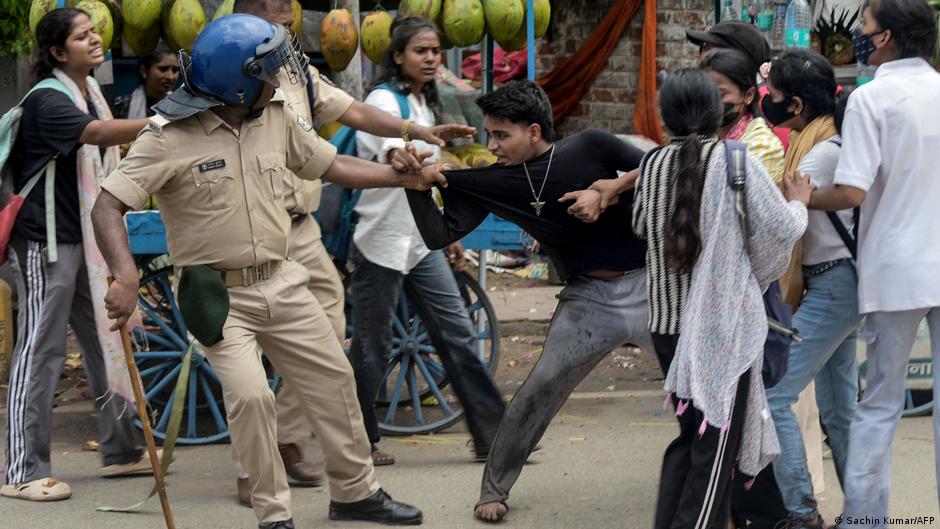
After forcing the resignation of India's education minister, student activists say a crackdown continues despite government promises to drop criminal cases against protesters. A student-led protest movement in Indiasatirically called the Cockroach Janata Party (CJP) scored a major political win when Education Minister Dharmendra Pradhan stepped down after weeks of protests calling for his removal. The movement began on social media as an activist campaign sparked by leaks of a question sheet for the NEET exam, a highly competitive entrance test for aspiring medical students, in early May. Along with the education minister stepping down, the government promised to withdraw police cases against peaceful protesters, compensate families affected by the NEET examination controversy and continue talks on the movement's five-point charter for reforming India's examination system. Now, student leaders, lawyers and activists say the battle has shifted from the streets to police stations, courtrooms and social media. Indian lawyer and politician Kapil Sibal told DW that the government's actions after the movement called off further protests have raised fresh questions about whether its public assurances are being honored. "The way Dharmendra Pradhan was celebrated after his resignation shows the government has learned nothing from the protests or the message the students were trying to convey," Sibal said. Authorities seek legal wiggle room with protesters The agreement that ended the protests appeared straightforward. Governments in Delhi, Bihar, Assam, Maharashtra and West Bengal announced that protest-related police cases would be withdrawn and detained students released. But some of those orders included an important caveat. The protection does not extend to protesters whom police describe as having "criminal antecedents," a condition that student leaders say was never discussed during negotiations. Senior advocate Rebecca Mammen John told DW that government assurances alone do not automatically end criminal proceedings.
"There is a prescribed legal process for withdrawing criminal cases. An oral assurance from the government counts for nothing unless that process is followed," John said. "Ultimately, it is the courts that decide whether prosecutions are withdrawn or whether police cases are closed." For the CJP, that legal distinction has become a new battleground. Its leaders argue the "criminal antecedents" clause risks leaving room for selective prosecution even after the movement agreed to suspend its protests. Government officials, meanwhile, insist peaceful protesters have nothing to fear and that investigations will continue only against those accused of violence or other criminal offenses. India's Supreme Court, led by Chief Justice of India Surya Kant, said that both police and protesters would be held accountable for violations of the law. "Whoever has committed excesses and taken [the law into their own hands], and whoever has committed atrocities, they must be brought under the law," the court said in a hearing on Tuesday regarding the police response to the protests. A legal battle continues Sibal told DW that the government's position before the courts appears inconsistent with the commitments it made while negotiating with the students. "On the one hand, the government promised that no cases would be foisted on students. On the other, investigations against those said to have criminal records continue," he said. "Who allowed criminal elements to enter the protests? Who allowed trucks carrying stones to reach the protest sites? Certainly not the students. "My fear is that innocent students will end up in jail while the real criminal elements walk free." In Kolkata, lawyers Raja Sengupta and Syed Nafirul Islam, who have represented detained protesters pro bono, said the legal fight is far from over. "Oppression of protesters by governments is not new," Sengupta told DW.
 The BriefWire