How did modern terrorism take shape? Former IPS officer Anju Gupta traces the geopolitical roots in 'Booked'
Was modern terrorism born out of ideology alone, or was it shaped by global power politics? That is the central question explored in the latest
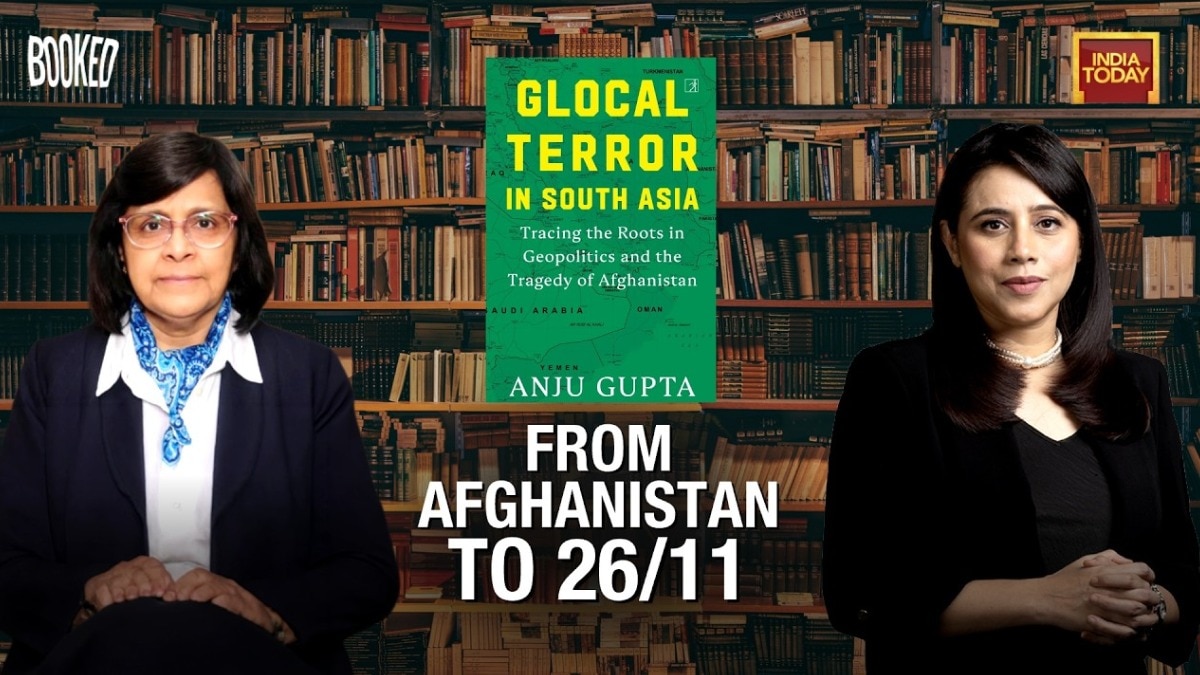
Was modern terrorism born out of ideology alone, or was it shaped by global power politics? That is the central question explored in the latest episode of Booked, where India Today’s Marya Shakil sits down with former IPS officer, strategic affairs expert and author Anju Gupta to discuss her latest book, Glocal Terror in South Asia: Tracing the Roots in Geopolitics and the Tragedy of Afghanistan. Read Full Story Drawing upon declassified intelligence records, diplomatic cables and extensive historical research, Gupta revisits one of the most consequential decades in modern history—the Soviet invasion of Afghanistan and the Cold War rivalry between the United States and the Soviet Union. According to her, the decisions taken during that period did not merely alter the course of Afghanistan’s future but fundamentally reshaped the security landscape of South Asia and, eventually, the world.
The conversation examines why Pakistan chose to become the frontline state in the anti-Soviet campaign under General Zia-ul-Haq and how that decision served both strategic and domestic political interests. Gupta argues that the period also witnessed the institutionalisation of networks that would later evolve into some of the world’s most notorious extremist organisations. One of the interview’s most compelling segments focuses on the origins of Al-Qaeda. Gupta explains how the Afghan Mujahideen movement evolved, the role played by Abdullah Azzam, Osama bin Laden and Ayman al-Zawahiri, and how the concept of a “global jihad” emerged during the conflict. She also discusses distinctions between local armed resistance and transnational extremist movements, placing them within their historical and geopolitical context.
The discussion moves beyond Afghanistan to examine Pakistan’s long-term strategic objectives, the emergence of the Taliban, and the continuing impact of these developments on regional security. Referring to declassified American records, Gupta outlines how Washington assessed the evolving situation and what those documents reveal about its understanding of Pakistan’s role. The interview also explores the connections between regional militancy and major terror incidents, including the IC-814 hijacking and the 2008 Mumbai attacks, while examining how the networks behind these events evolved over time. Gupta further discusses Pakistan’s changing approach in Kashmir and the broader geopolitical implications of developments in West Asia, including the enduring significance of the Palestinian question. Throughout the conversation, Gupta emphasises that understanding terrorism requires looking beyond individual organisations and examining the geopolitical calculations that enabled their rise.
 The BriefWire