Military flare-up between Houthis and Saudi Arabia challenges relative calm in Yemen
Riyadh and Yemen's Iran-backed Houthi rebels are on the brink of renewed conflict. Could war-ravaged Yemen be drawn into a wider Middle East war? Military
Riyadh and Yemen's Iran-backed Houthi rebels are on the brink of renewed conflict. Could war-ravaged Yemen be drawn into a wider Middle East war? Military strikes between Yemen's ruling Houthi militia and Saudi Arabia have flared for the first time since the Saudi-backed Yemeni government and the Houthis agreed to a truce in 2022. Tensions rose earlier in July when the Iran-backed Houthi group claimed that Saudi Arabia had struck the airport in Sanaa to prevent Houthi leaders from returning after the funeral of Iran's late Supreme Leader Ayatollah Khamenei. Saudi Arabia, for its part, has denied the attack and claimed that the Houthis were spreading false claims. Since then, the Houthis have struck facilities owned by Saudi Arabia's national oil company, Aramco, forcing the Jazan production site to shut down. The blow hit Saudi Arabia particularly hard as Jazan has been serving as an export hub to circumvent Iran's ongoing blockade of the Strait of Hormuz. The Houthis also announced that they would block Saudi-linked commercial vessels from passing through the Bab el-Mandeb Strait — which connects the Red Sea to the Gulf of Aden — prompting several ships to turn back this week. The narrow strait has become more significant for Saudi oil exports due to the blockade of the Strait of Hormuz. The Houthis said they fired missiles at the oil tanker NCC Ghazal. Riyadh, meanwhile, confirmed it had struck Houthi targets in response to the threats to Red Sea shipping. On Thursday, Saudi Arabia's Foreign Ministry announced that it was establishing a multinational defense maritime coalition to protect key shipping routes.
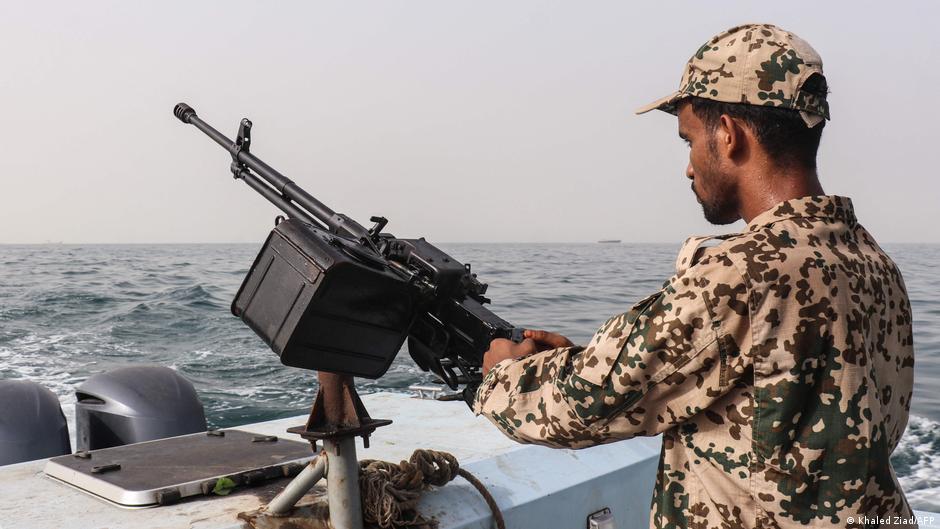
According to the statement on X, 14 countries had already confirmed participation. Will Yemen be dragged into the wider US-Israel war in Iran? "The current escalation appears to be driven primarily by the Houthis," Elham Manea, a political scientist and adjunct professor at the University of Zurich specializing in Middle East and Gulf studies, told DW. For her, it is increasingly obvious that the Houthis, who are part of Tehran's "Axis of Resistance" — Iran's paramilitary proxy groups including Hamas in Gaza, Hezbollah in Lebanon and Shiite militias in Iraq who all call for the elimination of the United States and Israel — have abandoned their strategy to refrain from joining the wider US-Iran war. The conflict, which began with US-Israeli attacks on Iran in late February, has since engulfed much of the Middle East. This week, Saudi Arabia also joined US forces in striking infrastructure used by Iranian-backed militias in Iraq. "The Houthis are now using the wider US–Iran confrontation to revive unresolved issues with Saudi Arabia," Manea said, noting that "the Houthi strategy is to raise costs for Riyadh and strengthen their own bargaining position." She added that Houthi leader Abdulmalik al-Houthi's recent speeches are quite revealing in this respect. "While they express solidarity with Iran, they increasingly justify escalation through specifically Yemeni demands directed at Riyadh." Above all, the Houthis want Saudi Arabia to end its air and sea blockades on Houthi-held territory which have not been fully lifted despite the truce in 2022. Yemen's Houthi group declared a maritime embargo on Saudi Arabia, and reportedly attacked vessels Image: Khaled Ziad/AFP Some hesitation to return to a full-scale war Despite the current escalation, it is still too early to conclude that Saudi Arabia has abandoned its policy of restraint in Yemen, Manea cautioned.
 The BriefWire