Bengaluru Is Reclaiming Its Footpaths After The Supreme Court Ruling. Can Delhi, Mumbai Follow?
Bengaluru Is Reclaiming Its Footpaths After The Supreme Court Ruling. Can Delhi, Mumbai Follow? Published By, Last Updated: July 31, 2026, 16:29 IST Weeks after
Bengaluru Is Reclaiming Its Footpaths After The Supreme Court Ruling. Can Delhi, Mumbai Follow? Published By, Last Updated: July 31, 2026, 16:29 IST Weeks after the Supreme Court declared safe footpaths a fundamental right, Bengaluru has launched a pedestrian safety drive. Could it become a model for other cities? Rapid Read Bengaluru continued to record the highest number of pedestrian deaths among India’s mega cities in 2024. (PTI Photo) Walking in most Indian cities often means stepping off the pavement and into traffic. Footpaths disappear beneath parked vehicles, utility poles, open drains, construction debris and illegal encroachments, forcing pedestrians to compete with speeding cars and motorcycles for space on the road. The consequences are deadly. More than 1.8 lakh pedestrians lost their lives in road crashes between 2019 and 2024, with government data showing that nearly 54% of pedestrian deaths involved collisions with cars and two-wheelers. Now, Bengaluru is attempting to reverse that trend. Within weeks of the Supreme Court declaring the right to walk safely on a footpath a fundamental right, Karnataka has launched one of India’s most visible pedestrian safety drives. Authorities have removed encroachments across hundreds of kilometres of pavements, proposed steeper penalties for riding motorcycles on footpaths and ordered civic agencies to clear poles, cables and other obstructions from walkways. The developments raise a bigger question: Could Bengaluru become the blueprint for other cities after the Supreme Court’s landmark ‘Right to Walk’ judgment? What Changed After The Supreme Court Judgment The Supreme Court ruled in June that the right to walk on safe, well-demarcated footpaths is not merely a civic convenience but a fundamental constitutional right. The judgment arose from the tragic death of a five-year-old boy who was struck by a tanker while walking to school with his father after being forced onto the road. While deciding the compensation case, the court went much further, recognising that India’s legal framework had historically focused on vehicles rather than pedestrians. The Bench held that the right to walk flows directly from the freedoms guaranteed under Article 19(1)(d) and the right to life under Article 21.
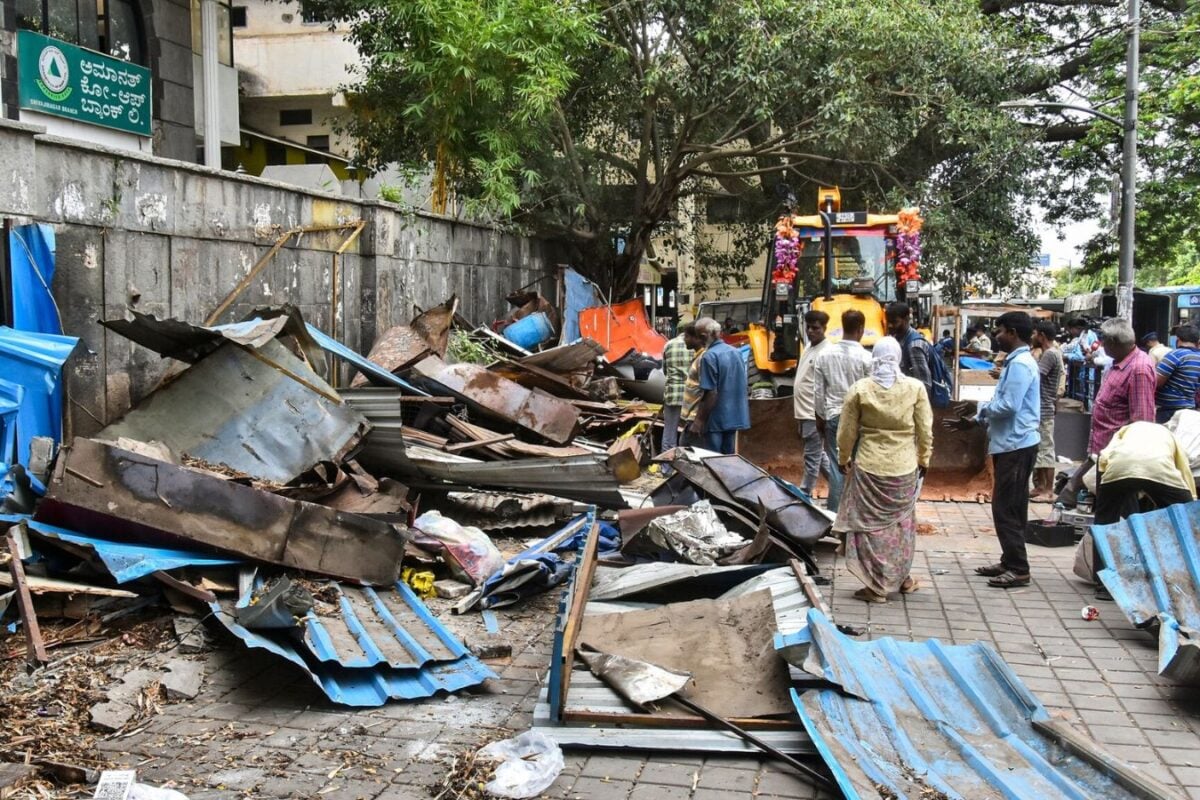
It declared that where a road exists, governments have a corresponding duty to provide safe, clearly demarcated and well-maintained footpaths. Even more significantly, it said pedestrians’ right to walk takes priority over the movement of motorised vehicles. The court also directed the Centre to work towards a national legal and institutional framework for pedestrian safety, recognising that fragmented municipal rules have failed to protect walkers across India’s cities. Why Bengaluru Is Moving First Bengaluru has become the first major metropolitan city to visibly respond to the Supreme Court’s verdict. The Karnataka government launched a citywide ‘Safe Footpath Campaign’ in July, describing pedestrian safety as a governance priority rather than a cosmetic civic exercise. The campaign aims to reclaim pavements, improve walkability and reduce pedestrian deaths by restoring footpaths to their intended purpose. Within the first 10 days of the drive, authorities reported clearing 490 km of footpath encroachments across Bengaluru. Officials have simultaneously proposed significantly higher penalties for riding motorcycles on footpaths and directed civic agencies to remove utility poles, cables, transformers and other permanent obstructions that force people off pavements. The effort goes beyond removing street vendors or parked vehicles. One of Bengaluru’s longstanding problems has been fragmented pedestrian infrastructure. In many parts of the city, footpaths abruptly end, are blocked by electric poles, or disappear beneath ramps built by private property owners. Even roads designed under modern urban improvement projects often fail to provide uninterrupted pedestrian access. Urban planners have long argued that a footpath is only useful if it functions as a continuous network. A broken pavement every few hundred metres effectively pushes pedestrians back into traffic, defeating its purpose. Bengaluru continued to record the highest number of pedestrian deaths among India’s mega cities in 2024, according to the Crime Records Bureau (NCRB). However, the city saw some improvement, with pedestrian fatalities falling from 292 in 2023 to 246 in 2024. Why Other Cities Still Struggle To Make Walking Safe In Delhi, pedestrians routinely navigate broken pavements, parked vehicles, open drains and construction material that occupy whatever walking space exists.
 The BriefWire