Congress Vs BJP Over ‘Manusmriti’: What Is The Text & Why Does It Spark Repeated Debates?
Congress Vs BJP Over ‘Manusmriti’: What Is the Ancient Text and Why Does It Keep Sparking Controversy? Published By, Last Updated: July 31, 2026, 15:30
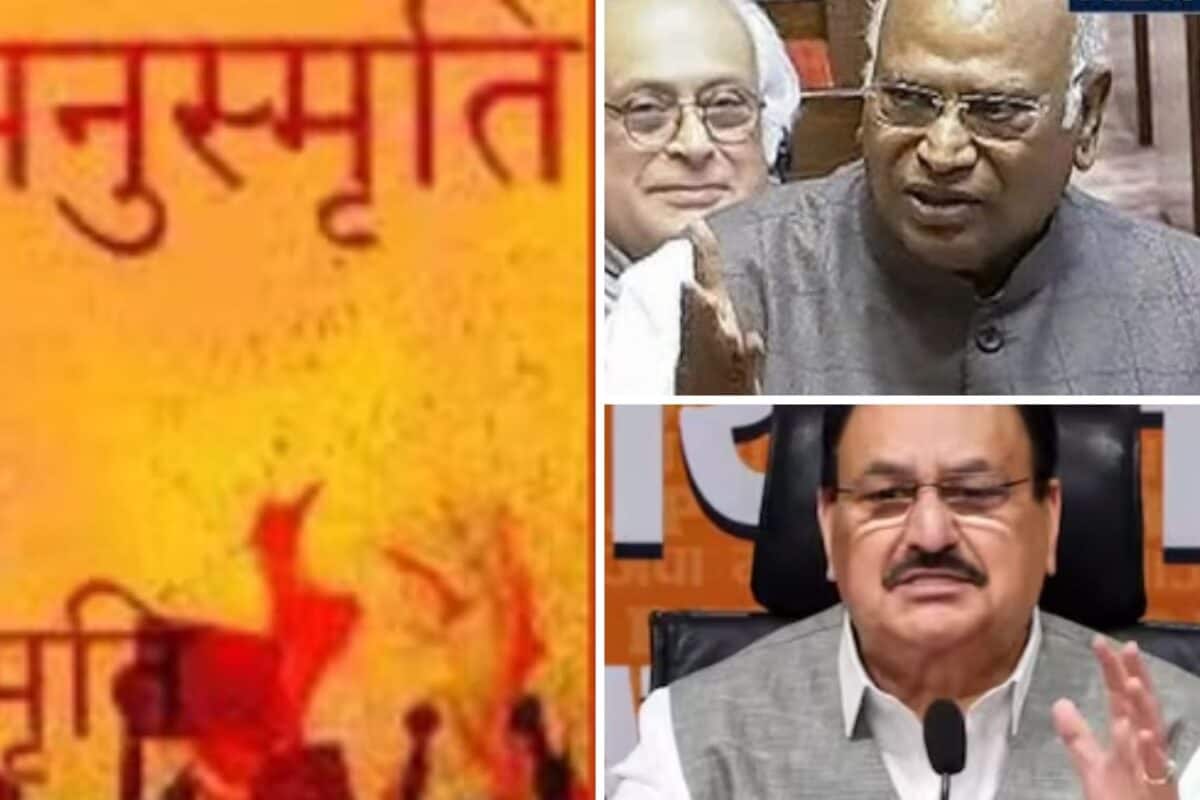
Congress Vs BJP Over ‘Manusmriti’: What Is the Ancient Text and Why Does It Keep Sparking Controversy? Published By, Last Updated: July 31, 2026, 15:30 IST The Manusmriti, officially known as the Manava-Dharma-Shastra (The Laws of Manu), is an ancient Sanskrit text composed between the 2nd century BCE and 2nd century CE Rapid Read Mallikarjun Kharge's Manusmriti remark led to a heated debate in Rajya Sabha on Thursday. (File) During a Rajya Sabha debate on the Anti-Paper Leak Bill on Thursday, Congress President and Leader of the Opposition Mallikarjun Kharge accused the Bharatiya Janata Party (BJP) government of promoting “Manuvadi thinking" and incorporating parts of the Manusmriti into the educational curriculum. He alleged that the growing presence of Manusmriti followers in educational institutions is systematically depriving lower castes of their right to education. What is Manusmriti about and why is it so political? The text is highly political in modern India because it codifies a rigid social hierarchy (the caste system) and prescribes unequal, patriarchal rules for women and lower castes. This makes it a central flashpoint in debates over social justice, discrimination, and secularism. News18 explains. WHAT MALLIKARJUN KHARGE SAID While criticising the government’s education policies, Kharge read out a Hindi translation of a contested passage from the Manusmriti regarding Shudras (lower castes). He stated the text dictates that if a Shudra listens to the Vedas, their ears should be filled with molten lead and zinc. He claimed that if they pronounce or read the Vedas aloud, their tongue should be cut off. He added that if they memorize or retain the Vedic mantras, their body should be dismembered.
THE PARLIAMENT UPROAR Kharge’s comments triggered an immediate, 20-minute showdown in the Upper House. JP Nadda, the Leader of the House, strongly challenged the statements as baseless, warning that they could spark social discord, and demanded that Kharge produce the “original manuscript" for verification. BJP MP Sudhanshu Trivedi slammed Kharge’s narrative by citing historical references and the writings of Dr B.R. Ambedkar to argue against the claims. As the clash escalated, Rajya Sabha Chairperson C.P. Radhakrishnan questioned what the ancient text had to do with a modern anti-paper leak bill. The Chair ultimately directed that Kharge’s controversial references to the Manusmriti be expunged (officially erased) from the Parliament records. WHAT IS MANUSMRITI? The Manusmriti, officially known as the Manava-Dharma-Shastra (The Laws of Manu), is an ancient Sanskrit text composed between the 2nd century BCE and 2nd century CE. It is fundamentally a treatise on Dharma, outlining social codes, cosmic laws, and moral duties for individuals and rulers. The text consists of 2,694 verses divided into 12 chapters attributed to Manu, the legendary first man and lawmaker. It covers four major thematic areas Cosmology: The creation of the universe, time cycles, and the origin of life. The Varna System: The strict division of society into four classes—Brahmins (priests), Kshatriyas (warriors), Vaishyas (traders), and Shudras (labourers). It outlines the specific occupations, duties, and social boundaries for each. Ashramas (Stages of Life): Guidelines for the four life stages: student, householder, forest hermit, and ascetic renouncer. Statecraft and Civil Law: The duties of a king, the administration of justice, taxation, military strategy, and laws regarding property, marriage, and inheritance.
 The BriefWire