In 2003, a retired man planted trees on forgotten land alone; 20 years later, it had become one of Sao Paulo's largest urban forests
PC: AI generated How one retired man turned an abandoned space into a growing forest How years of planting transformed a concrete landscape The man
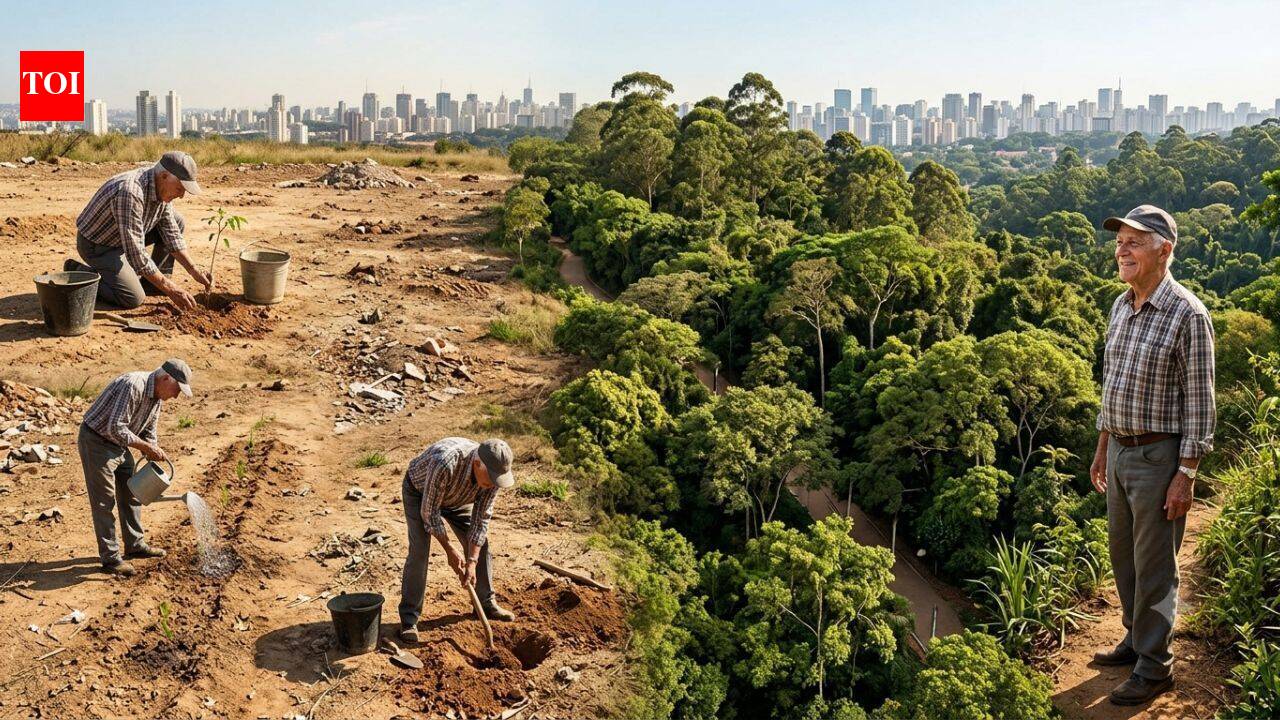
PC: AI generated How one retired man turned an abandoned space into a growing forest How years of planting transformed a concrete landscape The man who still cares for the forest he created Why urban forests matter in a city of millions The man who turned tree planting into a lifelong mission Between crowded roads and layers of concrete in São Paulo, a long strip of greenery now breaks up the city’s urban landscape. The area was not always a place where people came to walk beneath trees or watch birds. For years, it was an abandoned stretch of land known for neglect and insecurity. According to Forbes India, in 2003, Helio da Silva began planting there with little more than his own determination and personal savings. Many people thought the retired food industry executive had taken on an impossible task. Two decades later, thousands of trees stand where there was once little life, creating one of the city’s most unusual examples of grassroots urban restoration.Da Silva’s connection with the land began during a walk with his wife, Leda, through an overlooked part of São Paulo. The area between two busy avenues had become a place few residents wanted to visit.
Instead of seeing only its problems, he saw the possibility of creating something different.At the time, he had no official support, no large team and no organised funding behind him. He began by purchasing and collecting plant cuttings, then putting them into the ground himself.The work was slow and repetitive, but he continued returning to the site.The former executive used money from his own pocket to maintain the project, spending around $7,000 a year by his estimate. He planted trees, cared for young saplings and gradually changed the appearance of the neglected land.His approach was simple: keep planting and allow the landscape to evolve.The transformation eventually caught the attention of local authorities. Five years after Da Silva began his efforts, São Paulo officially recognised the area as the city’s first linear park.Today, Tiquatira Park stretches for about 3.2 kilometres, covering a narrow corridor of land around 100 metres wide. It contains thousands of trees representing around 160 species, creating a green pathway through one of the world’s largest cities.The park has also become home to wildlife that was once absent from the area. Municipal surveys have recorded dozens of bird species living among the trees, adding another layer of life to a space that was previously considered degraded.For residents who use the park regularly, the change is visible.
 The BriefWire