Only Indians have Indian passport: Govt answer amid citizenship document debate
Amid an ongoing debate over which government-issued documents constitute proof of Indian citizenship, the Centre on Thursday told Parliament that only Indian citizens are eligible
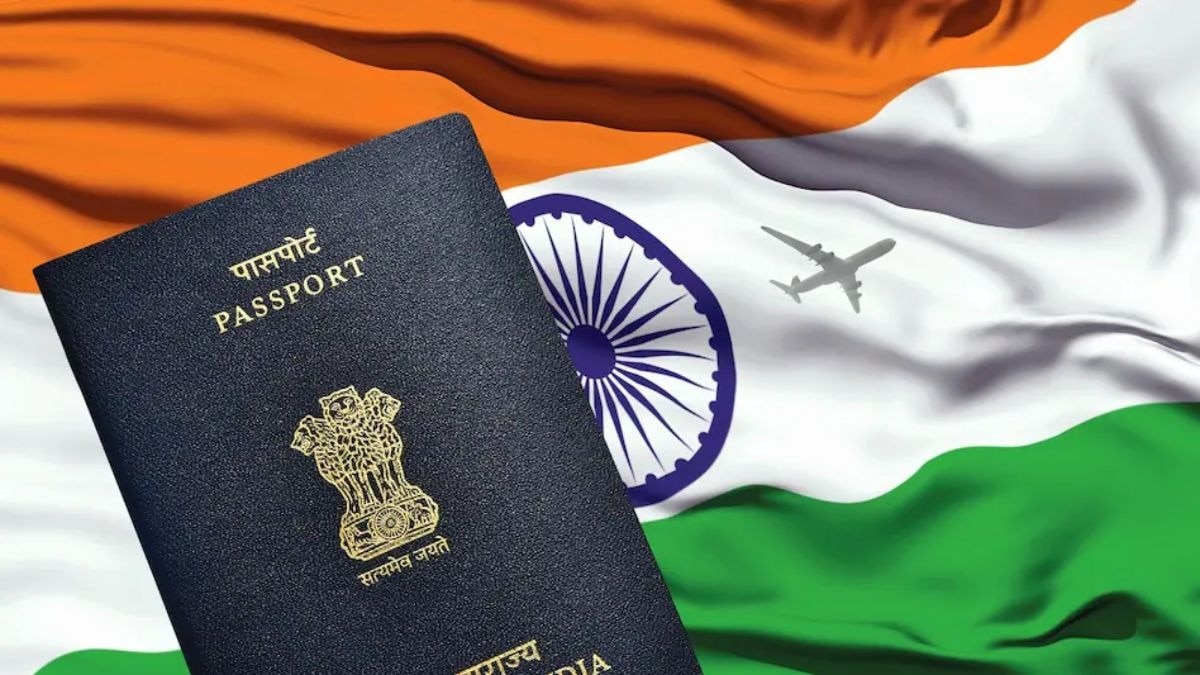
Amid an ongoing debate over which government-issued documents constitute proof of Indian citizenship, the Centre on Thursday told Parliament that only Indian citizens are eligible to be issued an Indian passport. At the same time, it reiterated that a passport is a travel document issued to regulate the departure of Indian citizens from the country, without stating whether it constitutes conclusive proof of citizenship. Read Full Story In a written reply to questions raised by Rajya Sabha MP Shri Abdul Wahab, Minister of State for External Affairs Kirti Vardhan Singh said an Indian passport is issued by the Government of India under the Passports Act, 1967, after due verification through an established process. Wahab had sought clarification on whether an Indian passport constitutes conclusive proof of citizenship, the eligibility criteria for passport issuance, the impact of acquiring foreign citizenship on Indian nationality, the process by which foreign nationals acquiring Indian citizenship become eligible for a passport, and whether the government planned to review the citizenship and passport framework. The government, however, did not provide a direct yes-or-no answer on whether an Indian passport is conclusive proof of citizenship.
"An Indian passport is issued as per the Passports Act, 1967 by the Government of India to regulate the departure from India of citizens of India. It is issued after due verification laid out by an established process," Singh said in his written reply. The response marks another instance where the government has avoided explicitly declaring an Indian passport as conclusive proof of citizenship. Instead, it reiterated that passports are travel documents issued under the Passports Act to regulate the departure of Indian citizens from the country after due verification of an applicant's eligibility. CENTRE SAYS ONLY INDIAN CITIZENS CAN BE ISSUED WITH INDIAN PASSPORTS The minister also clarified that India does not recognise dual citizenship, citing Articles 9 and 11 of the Constitution along with Section 9 of the Citizenship Act, 1955. "The provisions of Article 9 and 11 of the Constitution of India read with Section 9 of the Citizenship Act, 1955 do not allow dual citizenship," Singh said. For context, under the Citizenship Act, 1955, an Indian citizen who voluntarily acquires the citizenship of another country ceases to be an Indian citizen.
Consequently, the Indian passport held by such a person becomes invalid and must be surrendered. Going by Kirti Vardhan Singh's reply, it is thus obvious that only an Indian citizen can acquire a passport. That being said, having a passport does not automatically grant someone Indian citizenship. Even so, the government has not specified whether any single document issued by it constitutes definitive proof of Indian citizenship. Responding to questions on the verification process for issuing passports, the Ministry of External Affairs said passports are issued under the Passports Act, 1967, and the rules framed under it after completion of the prescribed verification process. For context, Section 6 of the Passports Act, 1967 sets out the grounds on which passport authorities must refuse to issue a passport. Among them is the applicant not being an Indian citizen, reinforcing that Indian citizenship is a prerequisite for obtaining an Indian passport. But then again, the passport is not a standalone proof of citizenship. As Group Consulting Editor of India Today Digital Group, BV Rao summed up, "Those of us who think we are Indian, have a bunch of documents that prove essentially nothing." The Centre's latest clarification comes amid an ongoing debate on whether passports are proof of citizenship or not.
 The BriefWire