Bengaluru 1-BHK Row: Can Societies Deny Gym, Pool Access Over Flat Size? Law Explained
Bengaluru 1-BHK Row: Can Societies Deny Gym, Pool Access Over Flat Size? Law Explained Published By, Last Updated: July 31, 2026, 10:50 IST A Bengaluru
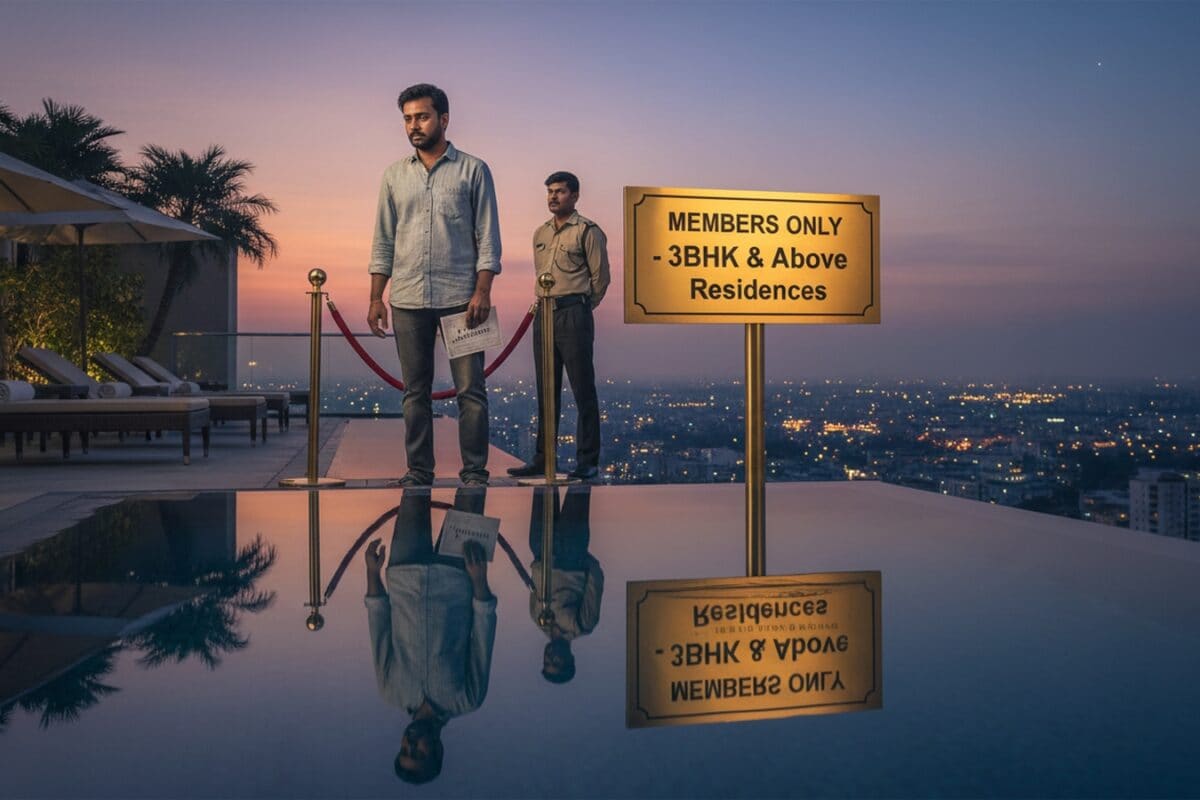
Bengaluru 1-BHK Row: Can Societies Deny Gym, Pool Access Over Flat Size? Law Explained Published By, Last Updated: July 31, 2026, 10:50 IST A Bengaluru resident's claim that his society barred 1-BHK owners from the gym and pool despite full maintenance payments has raised a legal question — here's what experts say. Bengaluru 1-BHK Row: Residents are usually entitled to use them, though societies can impose reasonable, uniformly applied rules. Can a housing society stop you from using the gym or swimming pool simply because your flat is smaller than your neighbour’s? The question has resurfaced after a Bengaluru resident claimed his society barred 1-BHK and 1RK owners from common amenities despite them paying maintenance charges as per the rules. The resident’s account, which went viral on social media, said the society had denied 1-BHK and 1RK residents access to the gym and pool even though they were charged maintenance based on their flat’s size, and that they were instead asked to pay separate “guest charges" to use these facilities. A report by NDTV quoted legal experts as saying such restrictions generally do not hold up — maintenance amounts can legitimately vary by flat size, but that financial calculation does not create different classes of residents when it comes to shared facilities.
Does Maintenance Amount Decide Who Gets Access? Apartment ownership laws vary by state, but one principle holds largely consistent across India: larger flats often have a higher undivided share in a property and so pay more towards upkeep. However, according to the NDTV report, that arithmetic is purely financial and does not extend into “tiered citizenship" within a society. Kshitij Bishnoi, Partner at CMS INDUSLAW, was quoted as saying that facilities such as lifts, security, open spaces and clubhouses are jointly owned by all flat owners as part of their undivided interest in the property, and that managing committees do not have the legal authority to selectively restrict these rights based on flat size. What Counts As A Common Amenity? Swimming pools, gyms, clubhouses, parks, children’s play areas, internal roads, lifts and security infrastructure are typically classified as common areas in most apartment projects. Residents are usually entitled to use them, though societies can impose reasonable, uniformly applied rules — such as timings, booking slots or safety norms. What they cannot do, per the report, is bar an entire category of residents purely on the basis of a smaller flat.
Can Societies Frame Their Own Rules On This? Housing societies do have the power to draft bye-laws governing how amenities are used, but those rules cannot be arbitrary or discriminatory. A restriction based solely on flat size or maintenance amount is likely to face difficulty surviving judicial scrutiny, especially where the facilities in question are classified as common property in the society’s governing documents. What Can A Resident Do If Access Is Denied? The first step, per legal experts cited in the report, is a written representation to the Resident Welfare Association (RWA) or apartment owners’ association. If the matter remains unresolved, residents can approach a civil court, and in some cases, a consumer forum — particularly if the denial amounts to a deficiency in promised services. Should Residents Stop Paying Maintenance In Protest? No, experts caution. The obligation to pay maintenance generally continues under apartment laws and society bye-laws regardless of a dispute, and withholding payments could invite penalties, interest or recovery proceedings. The recommended course, per the report, is to keep paying while challenging the restriction through the appropriate legal channel.
 The BriefWire