End Of ‘Panchayat Pati’ Culture? Govt Mulls Disqualification To Curb Proxy Rule | Exclusive
End Of ‘Panchayat Pati’ Culture? Govt Mulls Disqualification To Curb Proxy Rule | Exclusive Reported By, Last Updated: July 31, 2026, 08:19 IST A task
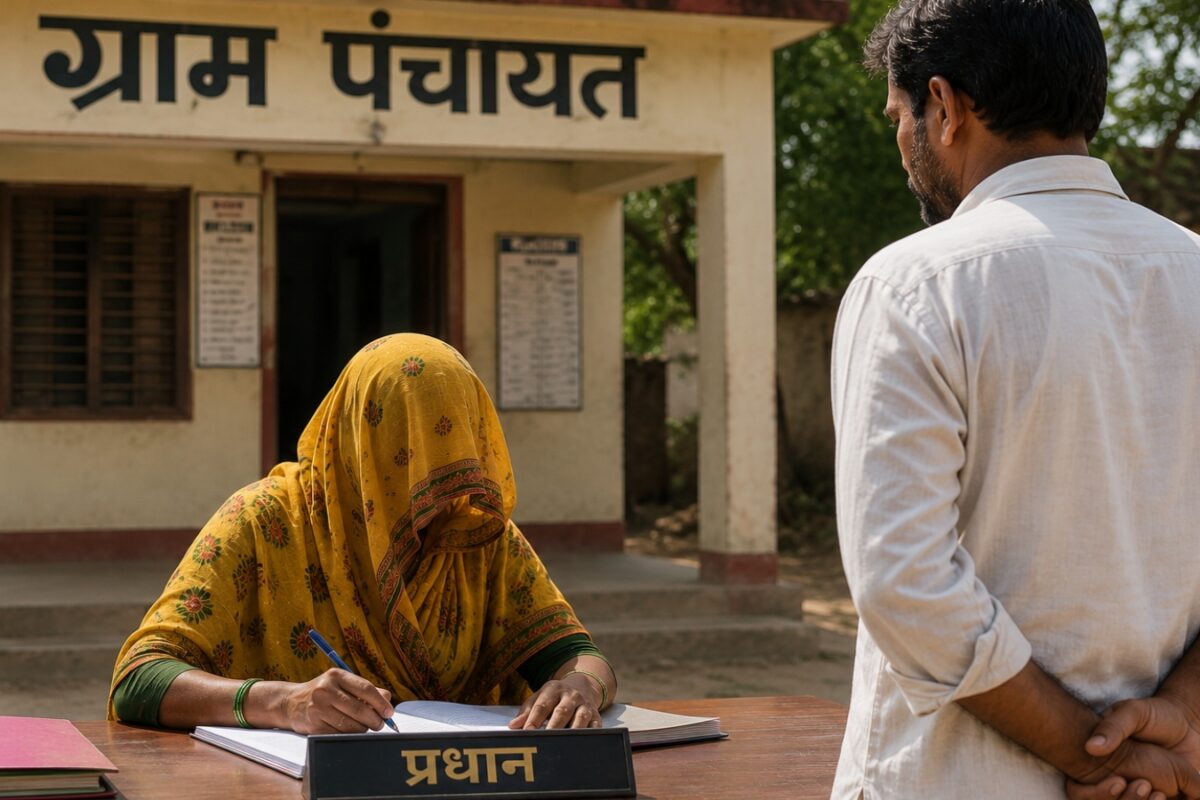
End Of ‘Panchayat Pati’ Culture? Govt Mulls Disqualification To Curb Proxy Rule | Exclusive Reported By, Last Updated: July 31, 2026, 08:19 IST A task force has recommended action not only against proxy husbands but also against officials who enabled the parallel power structure. The report awaits ministerial approval. Rapid Read The recommendations stem from growing concerns that constitutional reservations for women lose their very purpose if decision-making remains in the hands of unelected family members. (AI-generated image) For nearly two decades, India has celebrated the rise of women in grassroots democracy through political reservation in gram panchayats. But in thousands of villages, the elected woman has often remained only the face of power. The authority has been exercised by someone else — a man, most commonly her husband — giving rise to the now-familiar phrase ‘Panchayat Pati’. That may finally be headed for its toughest legal challenge yet. A task force constituted to implement the recommendations submitted by an advisory committee submitted its report to Union Panchayati Raj Minister Rajiv Ranjan Singh, popularly known as Lalan Singh, earlier this week. The report recommends one of the strongest deterrents considered so far: the disqualification of elected representatives if governance is found to be run by proxy, News18 has learnt.
The recommendations are currently awaiting ministerial approval before the government decides the next course of action. What makes the report significant is that it goes beyond merely targeting the so-called Panchayat Pati. It recognises that proxy governance has survived because of institutional acceptance. Any officer found encouraging or allowing such practices would also be taken to task. A senior officer involved in the process said, “The task force has recommended action against husbands, relatives or any individual found exercising authority on behalf of an elected representative. More importantly, it has also proposed disciplinary action against government officials who entertained, encouraged or failed to prevent such practices despite being aware of them." The message, however, is clear: proxy governance is not merely a social problem; it is also an administrative failure, the senior officer added. The recommendations stem from growing concerns that constitutional reservations for women lose their very purpose if decision-making remains in the hands of unelected family members. Across several states, photographs of husbands presiding over official meetings, signing documents informally, negotiating contracts or directing officials have become symbols of a parallel power structure that has operated in plain sight. If accepted, the task force’s recommendations could fundamentally alter how women’s political reservation functions at the grassroots.
 The BriefWire