EU aims to build AI gigafactories of its own
The EU has unveiled a plan to raise state and private funds to hyperscale AI capabilities and gain independence from non-European governments. The plan calls
The EU has unveiled a plan to raise state and private funds to hyperscale AI capabilities and gain independence from non-European governments. The plan calls for the construction of seven new sites across the bloc. The European Commission on Thursday announced a call for tenders designed to generate over €30 billion ($34 billion) in state and private funding for the construction of seven so-called AI gigafactories to boost the European Union's computing independence. Of the funds, €10 billion will come from the EU and member states while private investors put up the remaining €20 billion. The funds are to be collected and distributed by the European High Performance Computing Joint Undertaking (EuroHPC JU), which was launched in 2020 to develop "a world class supercomputing ecosystem by pooling the resources of the European Union, European countries and private partners." Consortia and special purpose vehicles (SPVs) made up of technology and cloud service providers, public entities and investors are all eligible to apply for funding. Chipmakers AMD, Nvidia and Qualcomm have all signed letters of intent to provide chips to groups involved in the projects, according to the Commission. The Commission said the scheme will "expand Europe's AI computing capacity and give start-ups, scale-ups, small and medium-sized enterprises, industry, academia and public authorities access to infrastructure." Speaking of the construction of the facilities — which will produce advanced AI processors, software and cloud technology stacks, high-speed connectivity and energy-efficient data centers — Henna Virkkunen, the European Commission's executive vice-president for Tech Sovereignty, Security and Democracy, called the moment "a milestone." "Access to the raw scale of computing power within AI gigafactories is a strategic necessity for Europe as AI development accelerates," she said in a statement.
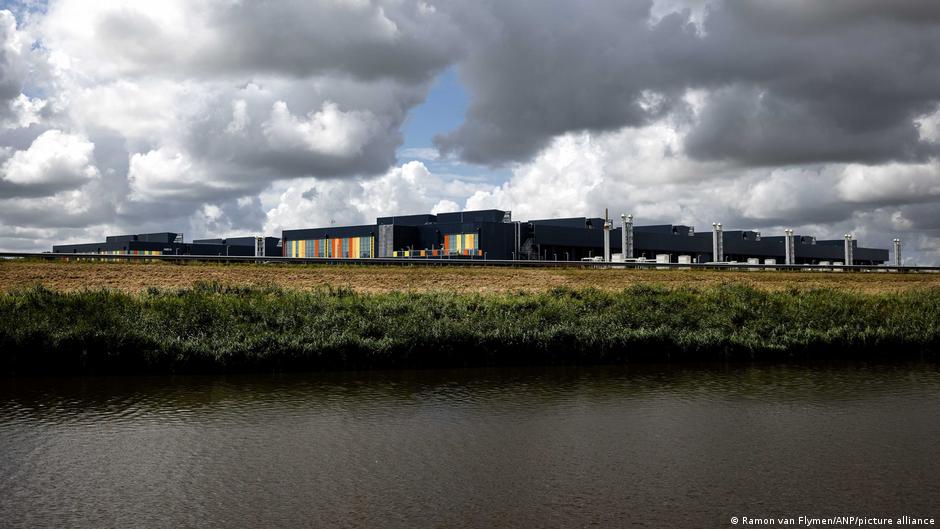
Can Germany and Europe hold their own in AI race? To view this video please enable JavaScript, and consider upgrading to a web browser that supports HTML5 video EU beholden to US and China when it comes to tech Currently, the EU operates 19 data centers located between Spain and Finland. The bloc remains heavily reliant upon foreign actors for its tech, however, something that makes it and its member states extremely vulnerable to the whims of outside forces. US President Donald Trump, for instance, has made clear his intention to leverage American economic heft to influence how the bloc and its members regulate US tech. For its part, China has limited the supply of minerals critical to the sector. The EU now hopes to triple data center capacity within five to seven years in order to gain independence but sees challenges when competing with the US and China, where, among other things, energy is far cheaper. A recent report issued by the European Commission and presented to the EU Parliament was bleak in its outlook should the situation remain as it is, warning, "European businesses and public authorities will continue to rely on US AI providers to the detriment of European service providers struggling to work at the frontier." "Dependence on hyperscale cloud and AI computing service providers, particularly for highly critical use cases," the report said, "will continue to expose data to third-country access and carry risks to service continuity, endangering operational autonomy." EU selling tech, are citizens willing to buy?
 The BriefWire