Japan's latest earthquake damages Kumamoto Castle, the 400-year-old fortress still battling nature after centuries of survival
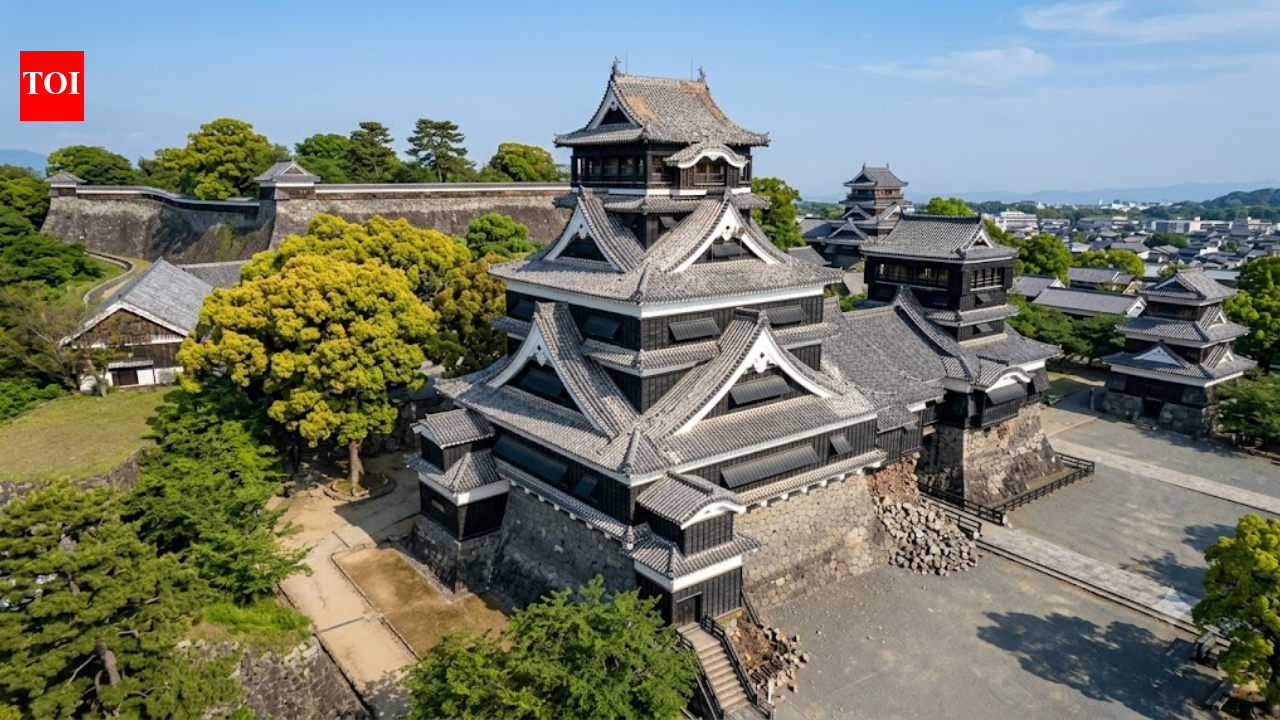
Image: ABC News/AI Refined Built by a legendary samurai, Kumamoto Castle became one of Japan's strongest fortresses The fortress survived wars but suffered devastating damage
Image: ABC News/AI Refined Built by a legendary samurai, Kumamoto Castle became one of Japan's strongest fortresses The fortress survived wars but suffered devastating damage during the 2016 earthquakes The recent 2026 earthquake damaged the castle once again Restoring Kumamoto Castle has become one of Japan's largest conservation projects Over the past 400 years, Kumamoto Castle has been an ever-present landmark in Kumamoto City and has gained the reputation of being one of the best castles in Japan and a masterpiece of samurai warfare architecture. The castle was built to withstand the attacks of armies with stone walls and a complicated design that could not be easily attacked. However, throughout this time, the castle has had to withstand much more than battles: earthquakes. The devastating 2016 Kumamoto earthquakes left the centuries-old landmark badly damaged, triggering one of Japan's largest cultural restoration projects. A decade later, another powerful earthquake struck the region in July 2026, once again damaging the historic fortress and highlighting the constant challenge of preserving cultural heritage in one of the world's most seismically active countries. Kumamoto Castle remains a powerful symbol of resilience despite repeatedly being tested by history and nature alike.Kumamoto Castle was constructed under the orders of one of the best warriors in Japan, Katō Kiyomasa, in the year 1601 and was completed mainly in 1607.Instead of building an imposing abode, he built the entire structure with an intent of making it a defensive fortress.
The castle is most renowned for its curved stone walls referred to as musha-gaeshi, which mean "warrior-deflecting slopes".These walls became increasingly steep towards the top, making them virtually impossible to climb.At its peak, the castle complex stretched across nearly one million square metres, containing dozens of turrets, gates, storehouses, residences and defensive structures. It soon became one of the most formidable castles in feudal Japan.Kumamoto Castle proved its military strength during the Satsuma Rebellion of 1877, when government troops successfully defended it against thousands of samurai led by Saigō Takamori. Although the defenders held the fortress, much of the castle was later destroyed by fire during the conflict, leaving only a handful of original structures standing.As reported by the BBC, its greatest modern disaster arrived in April 2016, when a magnitude 6.5 foreshock was followed just 28 hours later by a 7.3 mainshock, devastating Kumamoto Prefecture. The earthquakes caused widespread destruction across the castle complex. Stone walls collapsed in hundreds of locations, roof tiles crashed from historic buildings, decorative roof ornaments were dislodged, and several important turrets suffered severe structural damage.All 33 major buildings on the castle premises were damaged, along with more than 800 units of stone walls that either fell down or were made unstable by the earthquake.
 The BriefWire