12 Chinese J-20 stealth jets deployed at bases facing India, satellite images show
Commercial satellite images have revealed that China has deployed at least 12 of its most advanced J-20 stealth fighter jets at two airbases facing the
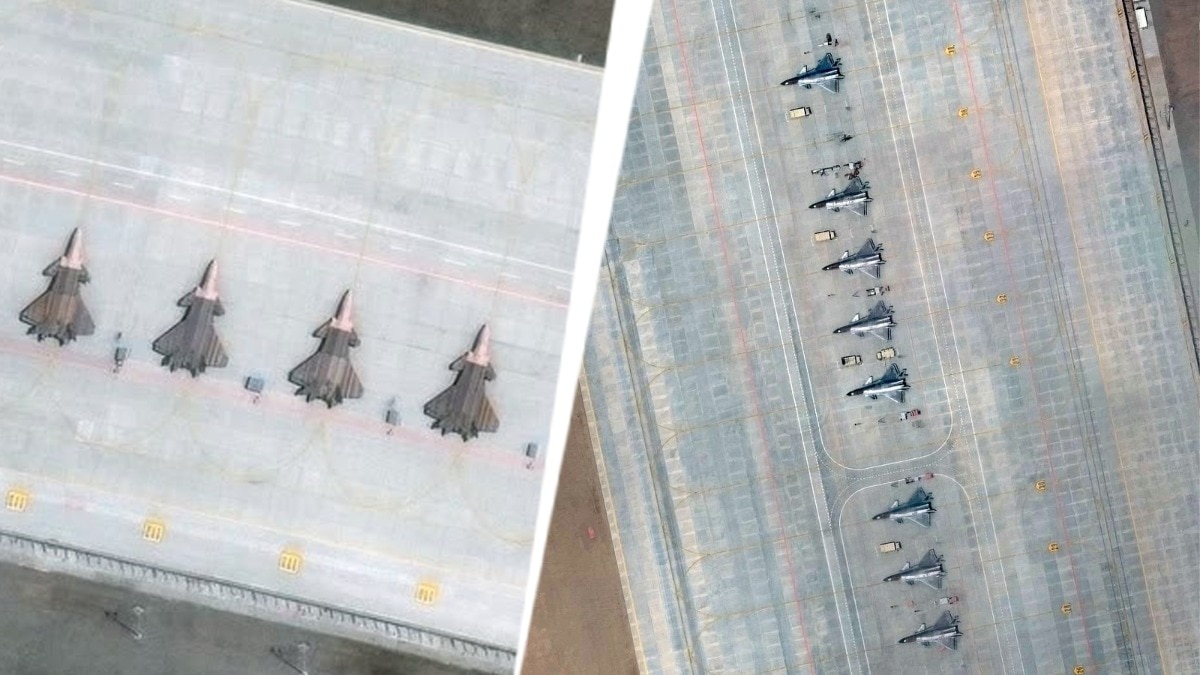
Commercial satellite images have revealed that China has deployed at least 12 of its most advanced J-20 stealth fighter jets at two airbases facing the Indian border, marking one of the biggest known concentrations of the fifth-generation aircraft along the Line of Actual Control (LAC) in recent years. The images, captured by commercial satellite firm Vantor and shared with India Today, show the People's Liberation Army Air Force (PLAAF) positioning the aircraft at Hotan airbase in Xinjiang and Damxung airbase in Tibet. Read Full Story According to the imagery, eight J-20 "Mighty Dragon" stealth fighters were seen parked on the tarmac at Hotan airbase on July 9. Hotan, a dual-use civil-military facility in China's Xinjiang Uyghur Autonomous Region, lies around 245 km from the Indian Air Force's forward airbase at Daulat Beg Oldie in northern Ladakh and about 389 km from Leh.
(Imagery: Vantor, dated July 9, 2026) A separate set of satellite images, dated June 25, showed four more J-20s stationed at Damxung airbase in Tibet's Lhasa prefecture. The aircraft were parked under protective canopy covers. Damxung is located roughly 344 km northwest of Tawang in Arunachal Pradesh. (Imagery: Vantor, dated June 25, 2026) Taken together, the two locations account for at least 12 J-20 stealth fighters photographed within a span of about two weeks, making it one of the largest such deployments observed at Chinese airbases opposite India in recent years. WHY THE DEPLOYMENT MATTERS The J-20 is China's premier stealth fighter and is designed to evade radar detection through its low-observable airframe. It is considered one of the most advanced combat aircraft in the PLAAF's inventory.
Defence sources said repeated sightings of J-20s at high-altitude airbases opposite India indicate that such deployments are increasingly becoming a regular feature of China's military posture along the border, rather than a temporary move linked to any specific event. The development also comes at a time when the Indian Air Force is grappling with a shrinking fighter squadron strength. The indigenous LCA Tejas Mk1A programme has been delayed by more than two years, while the proposed acquisition of 114 multi-role fighter aircraft, including additional Rafale jets, is still moving through procurement procedures. PART OF CHINA’S MILITARY BUILD-UP Hotan and Damxung have figured in previous assessments of Chinese military activity along the LAC, but earlier satellite images generally showed fewer J-20s rotating through these bases.
 The BriefWire