Kyiv’s clear message to New Delhi: Not a single Ukrainian drone sent to Pakistan
“I nearly escaped the jaws of death a few days ago when a Shahed landed near my apartment,” a friend from Kyiv texted me, barely
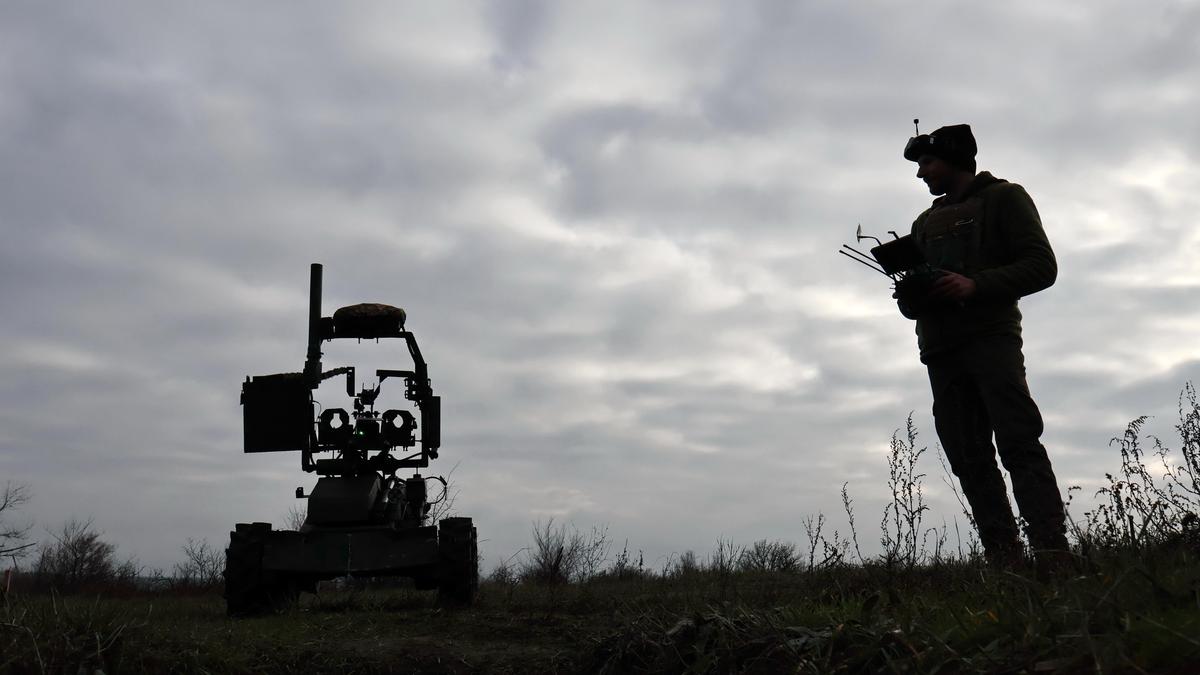
“I nearly escaped the jaws of death a few days ago when a Shahed landed near my apartment,” a friend from Kyiv texted me, barely two weeks after I left the city. Her message was not unusual. In today’s Ukraine, people have learned to identify the threat not by sight, but by sound. They know the whirring of a reconnaissance quadcopter, the low growl of a Russian Orlan-10, or the menacing chainsaw-like buzz of the Iranian-origin Shahed kamikaze drone. The sky tells its own story every night and Ukrainians have learned to read it for survival. Almost four-years into the full-scale invasion by Russia, one unmistakable transformation defines this war: its high-tech, drone-driven nature. To use a cliché; it was described as the weapon of David in the battle between David vs Goliath. Drones are no longer the preserve of militaries alone; they are part of everyday vocabulary. The residents of Kyiv can distinguish which direction a loitering munition is coming from. Residents instinctively move away from windows when they hear the now-familiar mechanical hum overhead. I became particularly interested in the subject because nearly si months ago, my own native region was pulled into the shadow of drone warfare. From May 7-10, in the tense days following the 2025 Pahalgam terrorist attack, India and Pakistan exchanged drones across the border. For four nights, sleep became impossible for many of us who had direct or indirect connection with the border areas. Most of the damage occurred after the drones were shot down, when high-velocity debris fell and struck the surrounding buildings. I knew a few families whose rooftops were torn open, whose windows shattered, whose children woke in terror at sounds they could not comprehend. And yet, to be precise, what unfolded was not drone warfare in the true sense as it was merely a glimpse, a faint and unsettling preview of what the future may hold.
Luckily, no one was injured or died as a result of drones. Following Russian President Putin’s State visit, Prime Minister Narendra Modi reportedly prepares to welcome Ukrainian President Zelenskyy to India. In view of this, Kyiv has conveyed a message to New Delhi with striking clarity. I was told in Kyiv by a senior official in the Ukraine military investment portfolio, who knew the exact details, was categorical: no Ukrainian drone has ever been supplied to Pakistan. “Like many countries, including Pakistan, Islamabad had expressed a letter of intent in earlier years to buy UAV technology and this is where the matter stands.” But the official insisted that the conversations never materialised into any export, transfer, or co-production. In their telling, at no point did Ukraine’s drone industry, or its political leadership, authorise the sale of military-grade UAVs to Pakistan. This assertion becomes particularly important, especially in light of reports during Operation Sindoor alleging that Pakistani forces were being supplied with drones originating from Ukraine. This claim has circulated but remained difficult to independently verify. This assurance helps put into perspective the complexities of a defence industry that, especially after 2022, has become one of the world’s most scrutinised. It is a fact that the Ukrainian battlefield experience has ignited global interest, as drones have arguably emerged as the single most transformative instrument of warfare in the Russia–Ukraine conflict. For countries like India, where drone production is expanding rapidly in the private-public space, the implications are particularly significant or important to factor in. No other weapon system has risen to prominence as swiftly, nor reshaped battlefield calculations as dramatically. With each passing month, refinements in drone technology, from first-person-view kamikaze units to long-range strategic systems, have redrawn the contours of the conflict. What might have once been a lopsided confrontation, given Russia’s overwhelming superiority in tanks, armour and infantry numbers, has been fundamentally altered.
 The BriefWire