'Rienzi': Why this Wagner opera is so relevant today
Even before opening night, expectations of how the themes of Richard Wagner's "Rienzi" would be handled were running high — not least because the opera
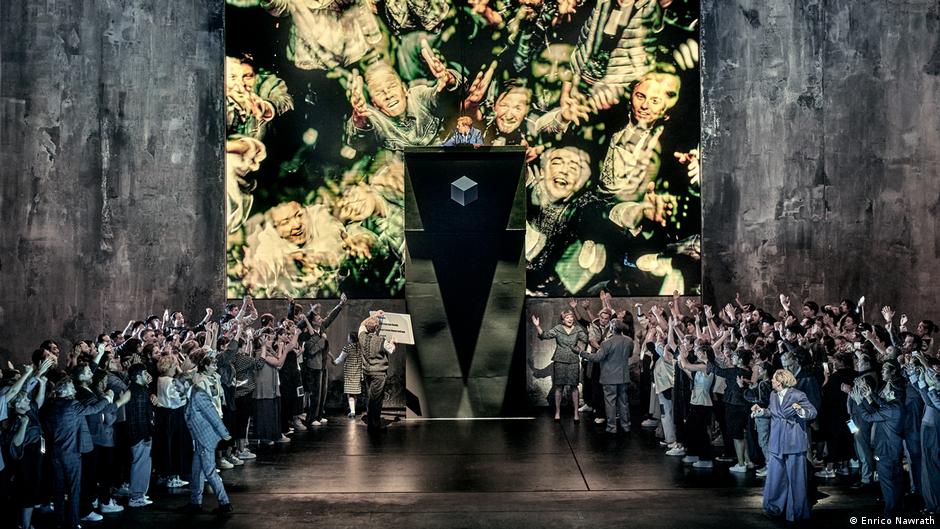
Even before opening night, expectations of how the themes of Richard Wagner's "Rienzi" would be handled were running high — not least because the opera had never been staged at the Bayreuth Festival. Now it has opened the festival's 150th anniversary. One aspect that fueled the debate: The close relationship between Wagner's descendants and Adolf Hitler — "Rienzi" was one of Hitler's favorite operas. "It's a piece that's highly contaminated," director Alexandra Szemerédy told DW. "When Katharina Wagner [the festival's director] first approached us, my initial excitement was definitely a bit dampened." Nonetheless, the production received enthusiastic applause at its premiere — conductor Nathalie Stutzmann and the Bayreuth Festival Orchestra were given standing ovations, and Hungarian directors Alexandra Szemerédy and Magdolna Parditka were warmly celebrated for their interpretation of the work. The directors tell the tale of the rise and fall of the 14th-century Roman tribune Rienzi in the present day. Rienzi, who initially seeks to free the people of Rome from aristocratic rule, is ultimately consumed by power and becomes a dictator himself. A glimpse of the surveillance state: Everyone knows everything about everyone else Image: Enrico Nawrath The production opens with a stark landscape of identical concrete apartment blocks that later break off into individual units. Through the windows, neighbors watch each other's lives unfold. Every apartment contains screens broadcasting the same news. Whatever can't be seen through the windows is shared through smartphones, social media and omnipresent screens. From utopia to dystopia In this new production, Rienzi initially doesn't defeat the aristocracy with violence. He calls for democratic elections — and wins. Afterward, he lavishly celebrates with the elites. But that changes when the same aristocrats attempt to assassinate him.
Rienzi survives, imposes a military dictatorship and begins executing his enemies in the streets. Increasingly consumed by paranoia and delusion, he loses his grip on power and ultimately dies. The directors said they were particularly interested in how someone can inspire the masses and, fueled by populism, become an authoritarian ruler. "He's considered a reference figure in the study of populism because of this first major citizens' uprising in Rome," Szemerédy said. The charisma of the real historical figure Cola di Rienzo, who lived in the 14th century, had also fascinated Adolf Hitler. A controversial choice Musicologist and theater scholar Anno Mungen criticized the decision to stage "Rienzi" for the first time during the Bayreuth Festival's 150th anniversary, calling it "historically tone-deaf." Wagner himself chose not to include "Rienzi" in the repertoire of his new Festspielhaus in Bayreuth in the 1870s, citing musical considerations. In his book on the intersections between the festival and the Holocaust, Mungen writes about the deportations from Bayreuth to Auschwitz, which included Jewish members of the Bayreuth Festival Orchestra. "When we look at 'Rienzi,' it would have been both meaningful and necessary to place the production within the context of a major academic conference," Mungen said. "The University of Bayreuth would have been very willing to participate." The path to the Kingdom of Heaven: a favorite theme of Wagner's. But just before reaching his destination, Rienzi collapses Image: Enrico Nawrath From 1940 to 1944, in what are now known as the "Wartime Festivals," Bayreuth kept running thanks to Hitler's financial support. Performances were held for selected audiences only, including wounded soldiers and workers from the arms industry. History students are currently exploring that period in an exhibition at the Steingraeber piano factory in Bayreuth.
 The BriefWire