New Singham in town? Maharashtra FDA Chief defends crackdown on Mumbai eateries
Maharashtra Food and Drug Administration (FDA) Commissioner Tukaram Mundhe has defended the department’s ongoing crackdown on restaurants, clubs, hotels and other food establishments across the
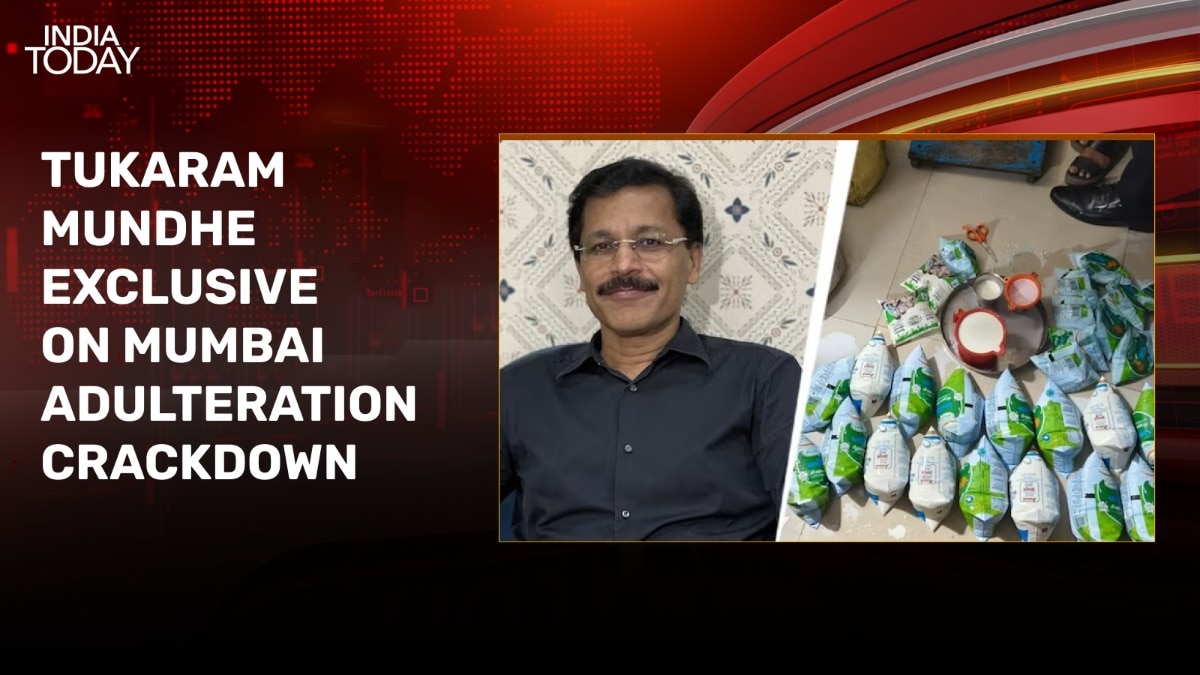
Maharashtra Food and Drug Administration (FDA) Commissioner Tukaram Mundhe has defended the department’s ongoing crackdown on restaurants, clubs, hotels and other food establishments across the state, saying the exercise is aimed at ensuring safe and standard food and is not a personal campaign against any business. In an exclusive conversation with India Today TV, Mundhe responded to criticism over the suspension of licences of several well-known eateries. “I am actually a food safety commissioner of Maharashtra, and my expectation is that this becomes a public movement where everybody of us eats safe, standard and healthy food,” Mundhe said. Read Full Story Asked about being described as the “new Singham” of Mumbai over the crackdown, Mundhe said enforcement action was part of his responsibility as the state’s food safety regulator. “Absolutely, that’s my role,” he said, stressing that the objective was to ensure citizens are not exposed to unsafe food. The IAS officer’s remarks come amid a major enforcement drive by the Maharashtra FDA, which has suspended licences of nearly 100 food establishments following inspections across Mumbai and other parts of the state. MAJOR CHANGE IN FOOD SAFETY REGULATION Addressing criticism that decades-old establishments were suddenly facing action, Mundhe said the regulatory framework itself had changed significantly over the years. He explained that before the implementation of the Food Safety and Standards Act, 2006, the focus was primarily on preventing adulteration.
However, from 2011, when the new law was implemented, the approach shifted towards ensuring overall food safety standards. “Before 2011, there was a provision of the Food Adulteration Act. The whole focus was on preventing adulteration. In 2011, as per the 2006 Act, food standards and safety came in. So this is a 180-degree change,” he said. Mundhe said the transition from checking adulteration to enforcing broader safety norms would naturally create resistance among businesses and regulators. “When we change the system to a large degree, from preventing adulteration to safe and standard food, there is going to be some noise. We have to accept that,” he added. He said the FDA’s approach was based on three principles: empowering consumers, enabling businesses to comply with regulations, and enforcing the law where violations put public health at risk. “The goal is safe food, safe work, safe Maharashtra,” Mundhe said. ACTION NOT AGAINST BUSINESSES Defending the suspension of licences, Mundhe said the FDA does not shut down establishments for every deficiency. Businesses found with issues that do not compromise food safety are issued improvement notices, while stricter action is taken when violations can affect consumers’ health. “It is not about 100 per cent compliance. It is about the type of non-compliance. We issue improvement notices where food safety is not compromised,” he said. “But if food safety is compromised, which is going to affect the health of the person who is going to consume it, that is where the severity goes up and that is where we take action like suspension,” he added.
 The BriefWire