Who can authorise police to use force against protesters? What the law says
Can police use force simply because a protest has turned unlawful? Does the imposition of prohibitory orders automatically permit a lathicharge or the use of
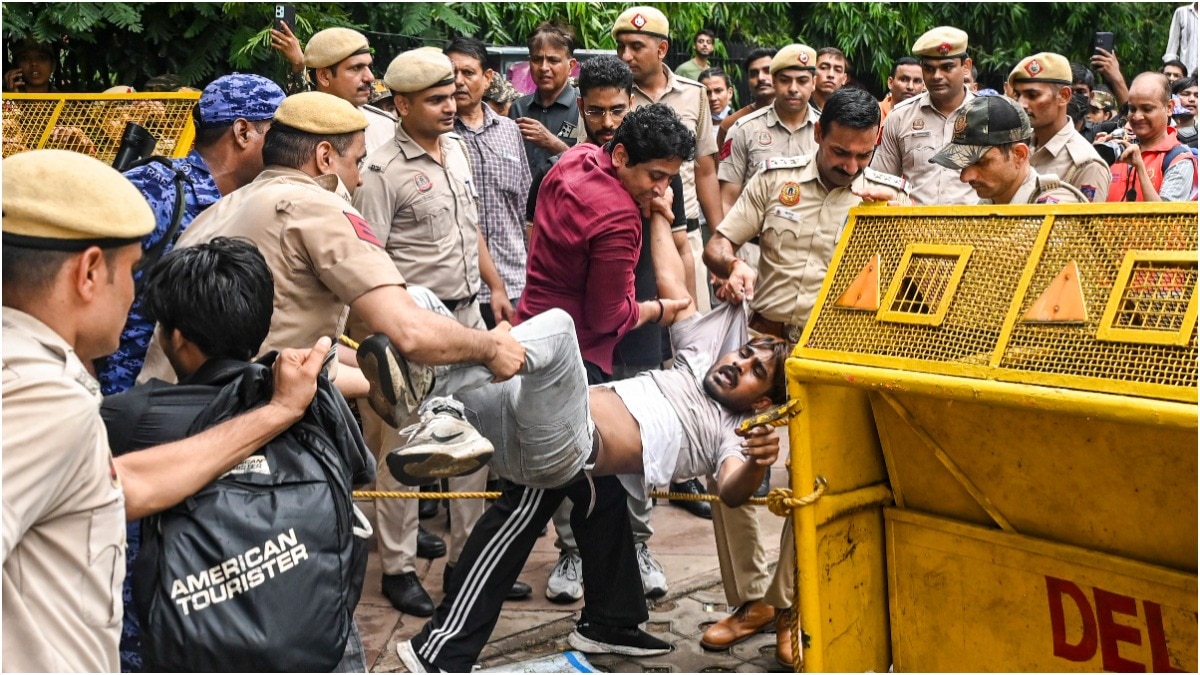
Can police use force simply because a protest has turned unlawful? Does the imposition of prohibitory orders automatically permit a lathicharge or the use of tear gas? And who ultimately decides when force becomes lawful? The answers to these questions lie in a combination of statutory provisions, court rulings and police regulations. While the Bharatiya Nagarik Suraksha Sanhita (BNSS) empowers authorities to disperse unlawful assemblies, it also prescribes when force may be used, who can authorise it and the procedural safeguards that must be followed. Read Full Story Judicial precedents have consistently held that force is a measure of last resort and must remain proportionate to the threat faced. WHO CAN ORDER THE USE OF FORCE? The primary authority rests with an Executive Magistrate, the officer in charge of a police station, or any police officer not below the rank of a sub-inspector. Section 148 of the BNSS empowers these officers to order an unlawful assembly, or an assembly of five or more persons likely to disturb public peace, to disperse. If the assembly refuses to comply or clearly shows that it will not disperse, they may use civil force to disperse it. This is substantially the same framework that existed under Sections 129 to 131 of the CrPC. DOES SECTION 163 AUTOMATICALLY ALLOW POLICE ACTION?
No. Section 163 of the BNSS allows Executive Magistrates to issue preventive orders restricting assemblies or activities. However, merely imposing prohibitory orders does not automatically authorise the police to use physical force. Force becomes legally permissible only after a lawful order to disperse has been issued and disobeyed. WHAT DOES 'USE OF FORCE' MEAN? The law distinguishes between different levels of force. Initially, authorities may use civil force – reasonable, non-lethal physical force – to disperse an unlawful assembly. Only where the civil force proves inadequate and public security faces a serious threat can stronger measures be considered. Under the earlier CrPC, the armed forces could be requisitioned by an Executive Magistrate in exceptional circumstances, with independent deployment by military officers permitted only when public security was in "manifest danger" and no magistrate could be contacted. The BNSS retains this approach. FORCE MUST BE THE LAST RESORT Indian policing rules consistently emphasise that persuasion should come before coercion. The Ministry of Home Affairs' Code of Conduct for the Police in India states that police should first rely on persuasion, advice and warnings. Force should be used only when unavoidable, and even then only the minimum necessary. The same principle appears in the United Nations Code of Conduct for Law Enforcement Officials, which permits force only when strictly necessary and only to the extent required to perform official duties.
 The BriefWire