From Pajero culture to street protests: The struggle for accountability in Pakistan-occupied Kashmir
In January 2006, I stayed at Kashmir House in Islamabad’s posh F-5 Sector, a neighbourhood of broad avenues framed by hills, a rare sight for
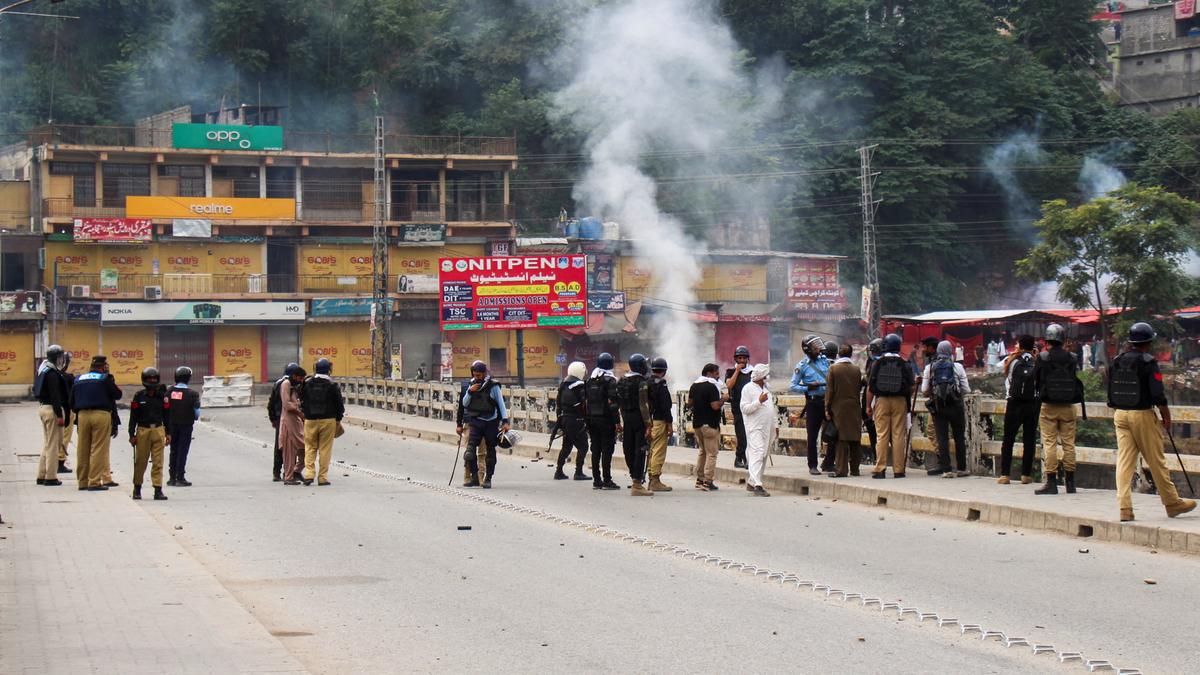
In January 2006, I stayed at Kashmir House in Islamabad’s posh F-5 Sector, a neighbourhood of broad avenues framed by hills, a rare sight for a South Asian capital. Having spent much of my college life at Delhi University visiting Kashmir House in Chanakyapuri, I could not help but notice the contrast. In New Delhi, the compound was lined with ageing Ambassador cars, while in Islamabad the political elite showcased their clout with fleets of Pajeros, SUVs that were still a rarity in South Asia at the time. When I remarked on this to one of my hosts, a young journalist from Bagh, situated in central Pakistan occupied Kashmir (PoK) and based in Islamabad, he quipped that it was the “Pajero culture” that ruled the region, a telling reflection of the elitism that has long defined its politics. For decades, the Pakistani state has diplomatically showcased Pakistan-occupied Kashmir to the world as if it were a separate country, complete with its own constitution, a Prime Minister as Chief Executive, and a President as constitutional head. In actual practice, the diverse political unit of Jammu and Kashmir that came together because of a confluence of many factors in the 19th century, has propounded many myths. One such myth relates to PoK, a sliver of the undivided princely state that has been controlled by Pakistan since 1947, which has often escaped popular discussion. Pakistan refers to this area as “Azad Jammu and Kashmir”, meaning independent Jammu and Kashmir. Its legislative assembly has the power to elect its prime minister and president. At international fora, the nomenclature of executive positions and a separate Constitution are presented as evidence by Pakistan that the region is an independent entity. However, the reality is a lot different. Global spotlight on the territory Yet, the recent violent developments in the region have once again turned the global spotlight on the territory, underscoring the failure of a political structure devoid of accountability and transparency to the local people. According to independent sources, at least eleven protesters and three policemen have been killed in days of clashes, even as the government urges demonstrators to return to dialogue. There is communication blackout in the region. The protests are being spearheaded by the Jammu Kashmir Joint Awami Action Committee (JKJAAC), which has mobilised around demands for ending special allowances to government officials and securing subsidised electricity and wheat, as provided in other parts of Pakistan. The JKJAAC leadership accuses authorities of reneging on promises. Its leaders draw members from traders, transporters, lawyers, students, and other grassroots groups. Formally established around September 2023, it emerged as a cross-regional platform to channel extensive public discontent over economic misgovernance, inequities, and the concentration of power in elite circles. JKJAAC’s demands fall broadly into two interlinked categories: immediate economic relief and structural/constitutional reforms. The JKJAAC has called for immediate economic relief in the form of subsidised electricity and wheat prices, on a par with other regions of Pakistan. It also demands the removal of elite perks and privileges for Ministers and bureaucrats, alongside free and equitable access to education and health care. Longer-term reforms include judicial and governance restructuring as well as improved infrastructure, including the establishment of an airport. Beyond economic relief, the JKJAAC has also pressed for structural reforms, including the abolition of 12 reserved “refugee seats” in the PoK Legislative Assembly, widely viewed as a tool of Islamabad’s control. It also calls for a reduction in the size of the executive, the rollback of elite perks and bureaucratic privileges, and guarantees that local communities benefit from PoK’s hydropower and natural resources. Finally, the movement seeks the elimination of quota-based allocations that disadvantage the region’s residents. In the recent violent protests, JKJAAC leaders claim that at least 11 protesters have been killed and more than 200 injured; “all suffering gunshot wounds.” These claims, however, have been denied by the authorities, who insist that their offers to meet the demands have been ignored. Officials claim that about 90% of the demands were accepted during talks, including electricity and local government reforms, and withdrawal of protest cases. Rejecting this, JKJAAC leader Syed Hafeez Hamdani, in a written statement, asserted: “The claim that our demands have been accepted is contrary to the facts… If our demands had been accepted, we would have had no reason to keep protesting.” In reality, the protests are not merely about local grievances; they reflect the deeper structural control exercised by Islamabad through constitutional provisions that have long shaped the uneasy relationship between Islamabad and Muzaffarabad since 1947. This layered history, with all its nuances, is often reduced to a simplistic binary. As a result, any critique of the system is too readily dismissed as “India-.” Political demand for abolition of refugee seats At the heart of the current stalemate is the political demand for the abolition of refugee seats. The Prime Minister of PoK Chaudhry Anwar ul Haq has openly acknowledged that “there is a deadlock on the seats of the refugees, which cannot end in the context of the Kashmir movement.” To understand why these seats have become such a flashpoint, the issue must be examined through a historical and constitutional lens.
 The BriefWire