World Cup sell off: Has FIFA finally gone too far?
A new FIFA proposal to sell off a stake in the World Cup has been met with fury in the football world. Under Gianni Infantino’s
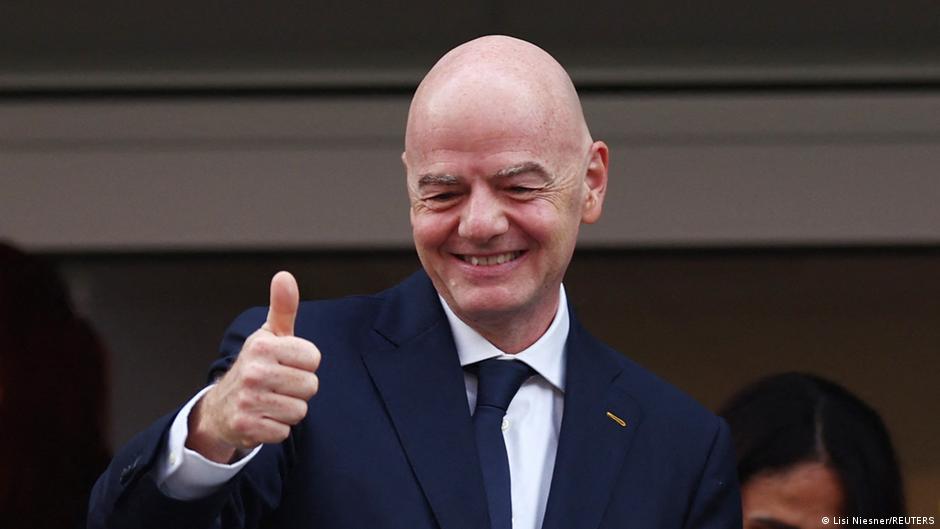
A new FIFA proposal to sell off a stake in the World Cup has been met with fury in the football world. Under Gianni Infantino’s presidency, FIFA has become increasingly profit-driven, but is this too much? "While you divide, we unite," Gianni Infantino wrote on social media on Monday, in a long missive aimed at his detractors. By Tuesday, he had united the football world — albeit in opposition to his latest scheme. Shortly after reports emerged in UK newspapers The Times and the Financial Times on Tuesday, FIFA confirmed its plans to create a new subsidiary, named FIFA Forward Enterprise (FFE). This would enable it to sell a minority stake in the World Cup's operations to private investors for an estimated $20 billion (roughly €17.5 billion). Chief among FIFA's proposed investors is the investment vehicle, Thrive Eternal, headed by Joshua Kushner — younger brother of Jared Kushner, US President Donald Trump's son-in-law. Why is FIFA's new World Cup plan controversial? Other than the potential conflict of interest connection to Trump, with whom Infantino has grown close, there are significant concerns about transparency, corruption and whether FIFA has the remit to make such a move unilaterally. "The World Cup is one of the few truly global sporting events, and that comes with a responsibility beyond maximizing revenue," Bret Myers, a professor of sports business practices at Villanova University in Pennsylvania, USA, told DW. The US connection is important, with the model echoing the way that many US sports operate. Formula 1 too went through a similar process when it was bought by Liberty Media in 2017. Greg Maffei, a former Liberty CEO, has been a "key commercial adviser" to FIFA on the FFE plan. "North American sports have long operated within a more commercial framework, where private ownership, franchise valuations, and investor involvement are widely accepted," Myers added.
"Football, particularly in Europe, has a much stronger tradition of clubs and competitions being viewed as cultural institutions rather than purely commercial assets." USA striker Folarin Balogun's red-card ban during the World Cup was suspended after Infantino got a call from Trump Image: Matthew Huang/Icon Sportswire/IMAGO More fundamentally, the concern is that this is the first step towards the World Cup, football's biggest prize, becoming privately owned. "A minority investment is very different from relinquishing control," Myers said. However, it does represent a significant shift in how the World Cup is financed and managed commercially." World football's global governors are a nonprofit organization but sit on cash reserves of an estimated $8 billion after a World Cup that saw ticket prices skyrocket. Given FIFA's remit lies in developing football, rather than purely profiting from it, there is a sense that this is a move designed to shore up Infantino's power and, perhaps, encroach on the turf of the continental football federations he failed to include in the planning. How do Infantino and FIFA aim to sell the plan? FIFA has promised to invest profits back into the game, mostly by offering all 211 member associations a flat fee of $20 million in 2027, rising to 24 million by 2035. Associations must decide whether to accept those payments by September 19 or risk them being reduced or retracted. "The president controls this huge pot of money and uses it to reward those that are loyal to him, that support him, and punish those that are not supportive of him," Miguel Maduro a former chairman of FIFA's Governance, Audit and Compliance Committee, told DW. "FIFA could do lots of good things with money. But there is no system of checks and balances and accountability to make us sure that the money is actually going to be well spent by all national football associations.
 The BriefWire