Myanmar at crossroads: crisis, aid and fight for stability
At dawn on November 28, 1885, King Thibaw and Queen Supayalat were escorted out of Mandalay Palace by British troops, marking the fall of the
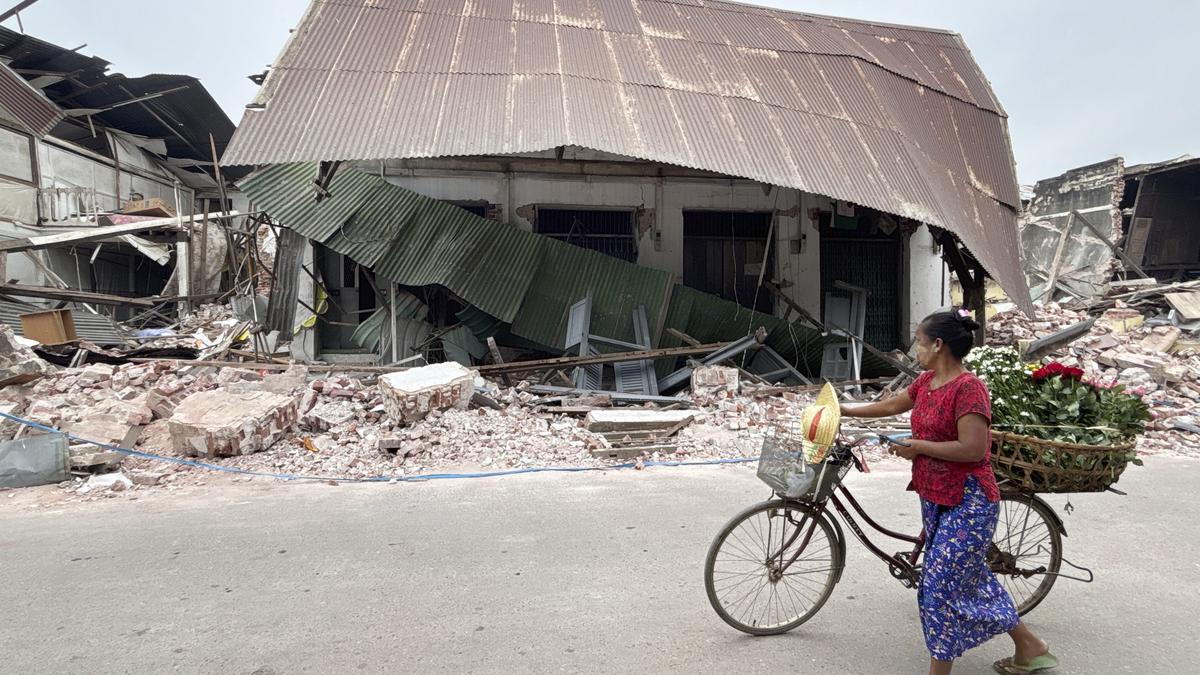
At dawn on November 28, 1885, King Thibaw and Queen Supayalat were escorted out of Mandalay Palace by British troops, marking the fall of the Konbaung Dynasty and Burma’s (now Myanmar) annexation into British India. As portrayed in the novel The Glass Palace, their exile to India symbolised the collapse of a once-powerful empire. Mandalay — with an estimated population of approximately 1.6 million, the country’s second-most populated city after Yangon — is again at the centre of a tragedy, devastated by a shallow 7.7-magnitude earthquake that has claimed at least 2,000 lives and left countless others homeless. Also read:Quad grouping ‘coordinating efforts’ for relief to Myanmar after earthquake The destruction of buildings and infrastructure comes at a time when Myanmar is already battling internal conflict. The country is fragmented, with over 40 percent of its territory outside the military’s control, and fierce fighting raging in peripheral regions since 2021 military coup. Most of the causalities are in and around Mandalay, which remains under the control of military junta in the ethnic Burman heartland. Ethnic Burmans are the majority in Mandalay and it hosts the largest Chinese-origin community in Myanmar. Reshaping landscape Earthquakes have often reshaped a nation’s political and social landscape. A key example is Turkey’s 1999 earthquake, which killed over 17,000 people and exposed severe mismanagement in disaster response. Public anger over the government’s inefficiency played a significant role in the rise of Recep Tayyip Erdoğan, who later won the 2002 elections on promises of better governance and reform. However, Turkey’s 2023 earthquake reignited similar dissatisfaction, with criticism over building regulations and relief efforts influencing political debates ahead of national elections. Yet, crises can also foster resilience, with grassroots organisations stepping in where governments falter. While reporting for this paper, I spent nearly a week in a makeshift camp, adjoining a flattened residential complex, in Muzaffarabad, the capital of Pakistan-occupied Kashmir — three months after the October 8, 2005, earthquake that claimed at least 87,000 lives — witnessing the crucial role local civil society organisations play in everyday relief and rehabilitation work. However, power vacuums can also be exploited by harmful actors. Also read:Who is helping Myanmar after the earthquake? In the case of Myanmar, understanding the broader societal and political landscape on the ground is crucial for effective relief efforts. Building on past experiences, the international community should formulate concrete recommendations to enhance aid delivery and coordination. First of all, given that much of the earthquake-affected region remains under the control of the military, the military leadership will inevitably serve as the main interlocutor for any large-scale humanitarian response. This reality complicates efforts by the Unity Government (NUG), government-in-exile formed in response to Myanmar’s military coup in February 2021, and international actors to deliver aid independently. While the NUG has declared a ceasefire to facilitate relief operations, its limited access to the impacted areas poses significant challenges. As a result, humanitarian agencies may be compelled to engage with the military. The military, in the past, strategically used aid in the past — both to consolidate power and to control populations, especially during or after crises. Similar fears are being voiced. Second, unlike many other countries affected by earthquake, there is a serious deficit of overt civil society organisations capable of guiding foreign aid. Civil society organisations in Myanmar remain weak due to decades of military rule and the dominance of state agencies, particularly the feared military intelligence.
 The BriefWire