Meet The Wolf Snake Of Great Nicobar: Endangered From Day One, You Won't Find It Anywhere Else On The Planet
Meet The Wolf Snake Of Great Nicobar: Endangered From Day One, You Won't Find It Anywhere Else On The Planet Written By, Last Updated: July
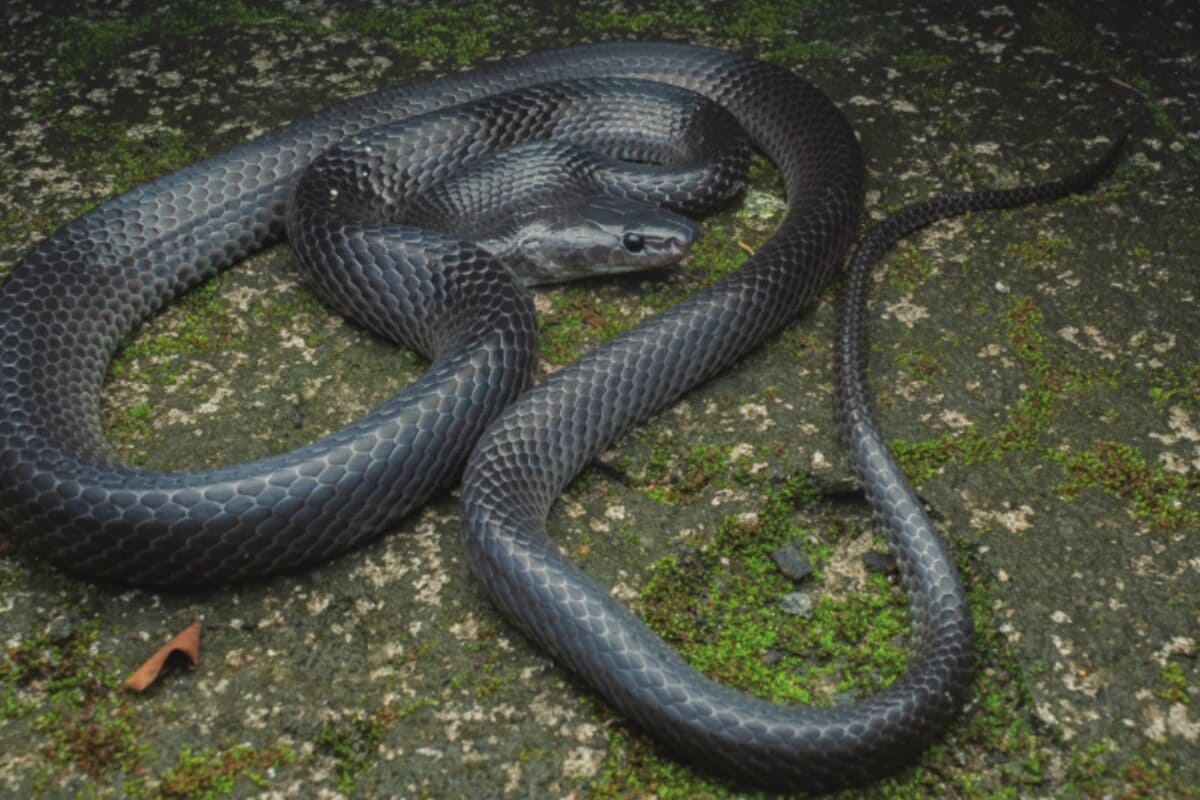
Meet The Wolf Snake Of Great Nicobar: Endangered From Day One, You Won't Find It Anywhere Else On The Planet Written By, Last Updated: July 29, 2026, 18:15 IST Meet Lycodon irwini, a new wolf snake on Great Nicobar Island, named after Steve Irwin. It is non-venomous, glossy black, and classified as endangered due to habitat threats. Very 'Gorgeous' Lycodon irwini sp. nov., dorsolateral view of an adult female in life. (Image Courtesy: Girish Choure/Evolutionary Systematics 9 2025, 221–228) While researching the Great Nicobar Island Development Project, and reading about leatherback sea turtles, and all the aspects of the project (at least, in an environmental sense), I realized that I did not possess the required knowledge to even comment on it, let alone write an article on it. So, I asked around on famous herpetologists of India, and the most recommended person on the subject was Mr. Romulus Whitaker – Padma Shri. Whitaker, or Rom, as he asked me to call him, was, and is, a treasure trove of knowledge (they don’t call him the snake-man of India for nothing). Through calls, texts and mails, we got familiar with each other, as did he, with my ideas and projects, and then one day, in late Feb, sent me a mail regarding the discovery and naming of a ‘wolf snake’ on Great Nicobar. I would have published it back then, but having negligible knowledge on the island, nor the proposed project, I had to wait. The American attacks on Iran in the middle of talks shifted the news focus, and the rest, while in the present, is history. As the war rages on, and the Strait of Hormuz remains blocked, I decided that I had waited, and delayed enough, and that it was now finally time, to start my article. The ‘Proverbial’ Introduction Of The Wolf Snake Of all the environmentalists I have spoken to, all of them live for wildlife and the environment, it’s their passion, their babies. Rom is no different. Despite this particular communication being on text, you could almost hear the proverbial excitement in his voice, as he told me of a “gorgeous new species of wolf snake" discovered recently on Great Nicobar.
“Finding an endemic snake species is the proverbial tip of the biodiversity iceberg on Great Nicobar." ‘Lycodon Irwini’: The Gorgeous Wolf Snake Of Great Nicobar Herpetologists have confirmed a new snake species from the rainforests of Great Nicobar Island and named it after Steve Irwin, the Australian conservationist who died in 2006. The species, Lycodon irwini, was described on 7 November 2025 in the peer-reviewed journal Evolutionary Systematics by R. S. Naveen, Zeeshan A. Mirza of the Max Planck Institute for Biology in Tübingen, and Girish Choure R. Chandramouli of Pondicherry University. The snake is non-venomous, grows to nearly 1.2 metres and carries a uniform, glossy black colouring the authors likened to polished obsidian. This author feels that the snake looks almost like pure carbon fibre. It had gone unrecognised as a distinct species for at least two centuries, mistaken until now for a Southeast Asian relative found thousands of kilometres away. The paper is titled “A ‘Crikey’ New Snake," a nod to Irwin’s catchphrase. The species epithet, irwini, is a formal patronym. The authors wrote that the name honours Irwin because his dedication to wildlife education and conservation “have inspired naturalists and conservationists worldwide, including the authors of this paper." Irwin died on 4 September 2006 after being struck in the chest by a stingray barb while filming a documentary on the Great Barrier Reef. He was 44. Lycodon irwini joins a short list of species named for Irwin, including Irwin’s turtle (Elseya irwini) and a snail, Crikey steveirwini. The Wildlife Society put the new snake on its December 2025 cover, using a photograph taken by co-author Girish Choure. Citation for the paper titled, A ‘Crikey’ New Snake: R.S, Naveen & Mirza, Zeeshan & Choure, Girish & S.R., Chandramouli. (2025). A ‘Crikey’ new snake: An insular Lycodon Fitzinger, 1826 (Squamata, Colubridae) from the Nicobar Archipelago, India. Evolutionary Systematics. 9. 221-228. 10.3897/evolsyst.9.170645. What Sets It Apart L. irwini belongs to the family Colubridae, a group of mostly nocturnal, largely harmless snakes frequently mistaken for venomous kraits, a confusion that gets wolf snakes killed by people. The species examined by the authors measured 71 to 84 centimetres in snout-vent length, with the largest specimen, an adult female holotype, reaching 119.7 centimetres including its tail.
 The BriefWire