Why are cockroaches silent on paper leaks in Punjab and Jharkhand?
The Cockroach Janta Party (CJP), which built its identity around demanding accountability for examination failures, is now facing questions over whether that outrage has been
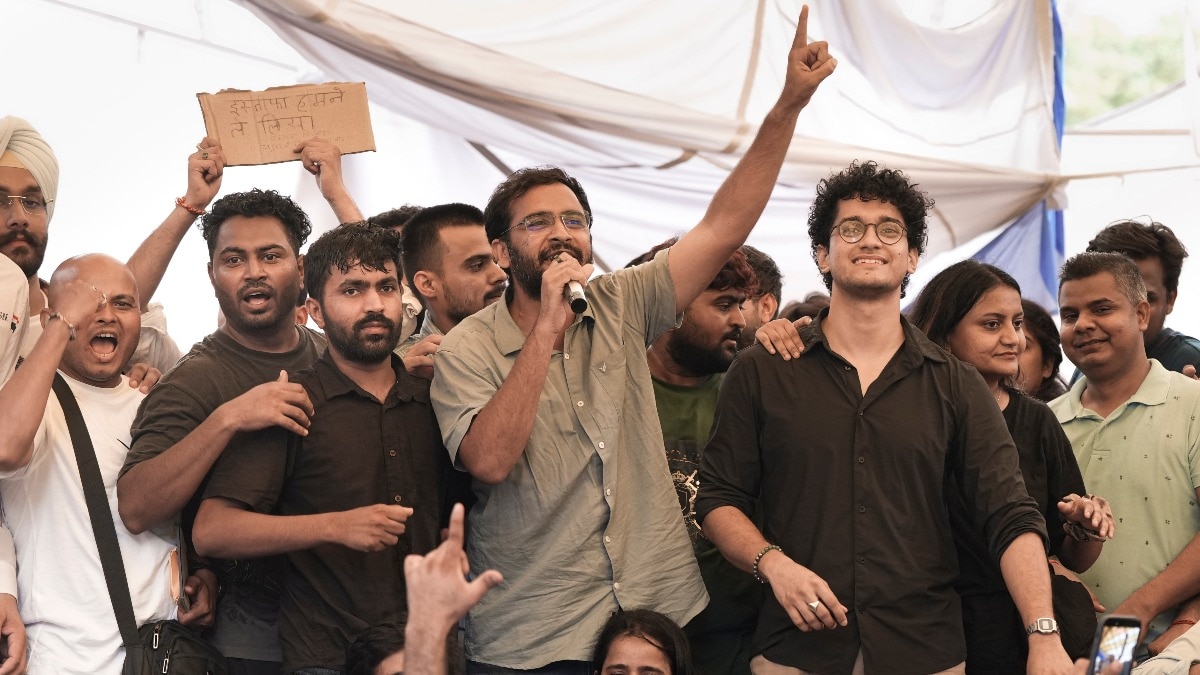
The Cockroach Janta Party (CJP), which built its identity around demanding accountability for examination failures, is now facing questions over whether that outrage has been applied selectively. While the student-led platform mounted a sustained nationwide campaign over the NEET-UG paper leak that culminated in the resignation of the Union Education Minister Dharmendra Pradhan, it has remained conspicuously quiet on examination controversies in Punjab and the ongoing Jharkhand Public Service Commission (JPSC) irregularities probe. Read Full Story The contrast has fuelled criticism from political opponents and has raised broader questions about the consistency of CJP's activism. BJP Rajya Sabha MP Swati Maliwal has accused the CJP of functioning as the Aam Aadmi Party's (AAP) "B team", alleging that it has ignored allegations involving the AAP government in Punjab while aggressively targeting the Centre. The outfit, founded by activist Abhijeet Dipke, has rejected such characterisations in the past, but on the Punjab and Jharkhand cases, its public response so far has been limited to saying it is "planning its response". The scrutiny comes after CJP enjoyed strong media attention following its launch in mid-May 2026. What began as online satire after a courtroom remark by the Chief Justice of India () quickly evolved into a nationwide student movement centred on the NEET paper leak and broader examination failures. Abhijeet Dipke, Ashutosh Ranka and Saurav Das became familiar faces as students travelled from across the country to join weeks-long protests at New Delhi's Jantar Mantar. That rapid mobilisation stands in sharp contrast to the party's response to two Punjab and Jharkhand examination controversies unfolding around the same time.
MULTIPLE PAPER LEAKS IN AAP-RULED PUNJAB, BUT NO REACTION BY CJP In Punjab, where the AAP has been in power for more than four years under the leadership of Chief Minister Bhagwant Mann, opposition leaders have listed multiple alleged paper leaks and cheating scandals. BJP Rajya Sabha MP Swati Maliwal recently claimed six major paper leaks in five years and pointed to large-scale cheating detected in a pharmacy officers' examination on July 19. Maliwal accused AAP's Convenor Arvind Kejriwal of remaining silent on the issue, and alleged that CJP was created by Kejriwal's associates and amplified through paid social-media campaigns. The Punjab government has firmly rejected the charge of paper leaks, describing the pharmacy episode as a detected cheating racket involving electronic devices. Chief Minister Bhagwant Mann has said no recruitment paper has been leaked under AAP rule. The factual dispute continues, but the allegations themselves have been public for days and weeks. Punjab is set for Assembly elections in early 2027, barely six months from now. The AAP, which won a decisive majority in 2022, is seeking a second term amid opposition attacks on governance, recruitment, and examination integrity. Paper-leak allegations, whether proven or contested, are already being framed as a test of the government's credibility with young voters. In this charged pre-election climate, any political outfit claiming to speak for students and exam aspirants faces heightened scrutiny over consistency. The CJP's decision to study the Punjab situation rather than mobilise with the same urgency it showed on the NEET issue therefore carries extra weight.
 The BriefWire