Cockatoo regains sight after 10 years, raises $33,674 and wins title
The story of survival of Virginia cockatoo From darkness to light A revolutionary surgery Two survivors found each other Inspiring a new vision of animal
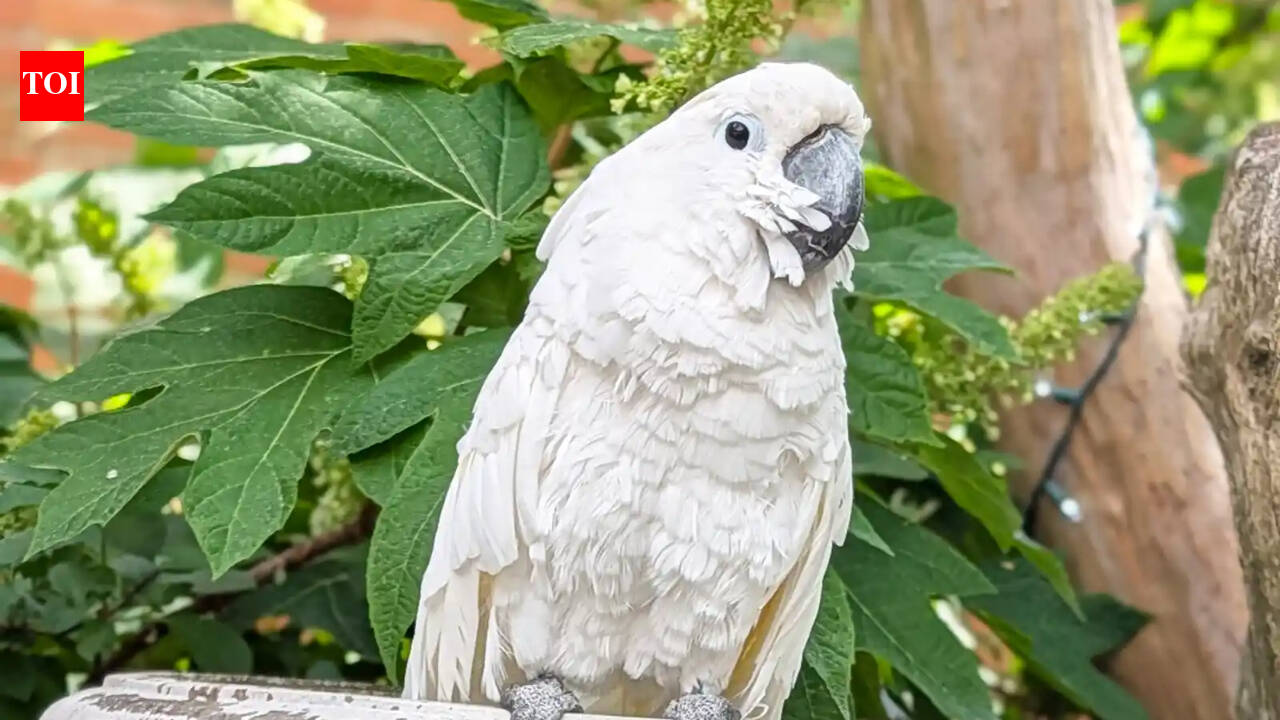
The story of survival of Virginia cockatoo From darkness to light A revolutionary surgery Two survivors found each other Inspiring a new vision of animal therapy Pet of the Year Sometimes life throws us into the most difficult times, only to make us stronger and shine through in the future endeavors. While you might think that this rule of universe applies only to humans, the reality is beyond that. Today we will tell you the story of the Virginia cockatoo and his story of survival. Boo had lived in the dark for years. Blind, neglected and deprived of feathers and dignity, the umbrella cockatoo seemed destined for a miserable life. He couldn’t perch, could barely eat and was condemned to sleep in a dog bed at the bottom of a cage, his future looked painfully bleak.But Boo's story didn't end there. Instead it became one of resilience, compassion, second chances. Today, thanks to a life-changing surgery, the 41-year-old umbrella cockatoo can see again and has become a certified therapy bird who comforts children, seniors, hospital patients and people with disabilities. His amazing journey has now been recognized nationally after raising a record-breaking $33,674 to be named Pet Partners’ 2026 Pet of the Year, becoming the first bird ever to earn the prestigious title.A report by People states that Boo’s childhood was impossibly tough.
He was reportedly smuggled into the US illegally, rescued in a police raid, and misidentified as an aggressive bird before finding a loving home. He was locked up in a cage for a year before ending up with an owner who couldn’t care for him anymore.Amy Hurst (Boo's handler) and Boo met through a local bird club, and the cockatoo was in a heartbreaking condition. “He was just horrible looking,” Hurst recalled in conversation with People. He was half-feathered when he got back. He wasn't a muscular bird. He couldn't even perch because he was so bad from being blind and not being able to eat. For the uninitiated, Boo had been blind for close to ten years, and another bird had taken much of his plumage.Caring for Boo, Hurst learned about a new procedure at North Carolina State University’s veterinary school that could restore the cockatoo’s vision. She went ahead with the operation without a thought. The results were immediate and emotional: “He saw us right away,” Hurst said. “It worked." For the first time in years Boo was able to see the world around him.
But his eyesight was restored and one thing was never lost: his wonderful affection for people.Hurst thinks she and Boo bonded because of their shared common ground. In conversation with People she revealed that she was a breast cancer and personal abuse survivor and understood resilience on a very personal level. Purpose had come to her in the birds, in staying present through the hard days of cancer treatment. She returned to school at age 58 to learn about animal-assisted therapy, inspired by their healing power, and became an Animal-Assisted Intervention Specialist. I was destined to meet Boo. "“Our stories were linked,” she said.Boo’s success also led Hurst to develop the Prism Bird Program, a program that pairs companion birds with neurodivergent children and those experiencing emotional or mental health challenges. Parrots can live for decades, unlike many therapy animals, which allows them to bond for life with their caregivers. Birds, Hurst believes, are uniquely equipped with emotional intelligence that helps them relate to people in a different way than traditional therapy animals.Boo’s amazing journey took him to a historic win at the annual Pet Partners Pet of the Year competition.
 The BriefWire