Vijay vs DK Shivakumar: Why Tamil Nadu, Karnataka clashing again over a river?
The decades-old Cauvery water dispute has once again flared up after the Cauvery Water Regulation Committee (CWRC) directed Karnataka to ensure a flow of 3,500
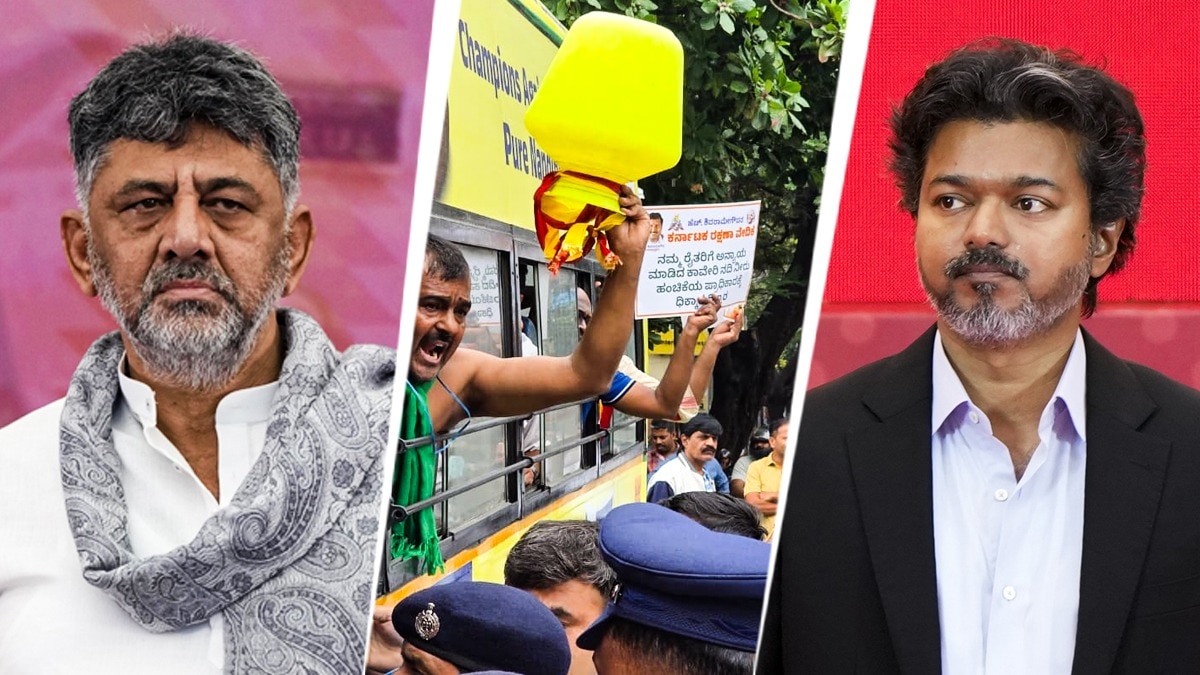
The decades-old Cauvery water dispute has once again flared up after the Cauvery Water Regulation Committee (CWRC) directed Karnataka to ensure a flow of 3,500 cusecs of water daily for 15 days to Tamil Nadu from July 29. The order has sparked fresh political and legal confrontation, with Karnataka indicating it will challenge the directive before the Cauvery Water Management Authority (CWMA), citing deficient rainfall and critically low reservoir levels. Read Full Story Farmer groups and pro-Kannada organisations have also hit the streets, arguing the state cannot spare water when its own drinking water and irrigation needs are under threat. Tamil Nadu, on the other hand, has demanded immediate implementation of the order, saying it has received only a fraction of its scheduled share, leaving the Kuruvai crop severely affected and the upcoming Samba cultivation at risk. The latest confrontation also comes ahead of a proposed chief minister-level meeting between Tamil Nadu Chief Minister Vijay and his Karnataka counterpart DK Shivakumar in Bengaluru on August 3, aimed at exploring an amicable resolution to the Cauvery water-sharing issue. While both governments have projected the talks as an effort to ease tensions, the meeting has drawn political criticism, with opposition parties in Tamil Nadu arguing that bilateral negotiations cannot override the Tribunal award and Supreme Court judgment. WHAT IS THE CAUVERY DISPUTE? The Cauvery water dispute is a long-running disagreement over the sharing of the Cauvery River between Karnataka and Tamil Nadu. Kerala and the Union Territory of Puducherry are also basin states, but the principal conflict has always been between Karnataka, the upstream state and Tamil Nadu, the downstream state. The river originates in Karnataka's Kodagu district and flows through Karnataka before entering Tamil Nadu and finally emptying into the Bay of Bengal. Because Karnataka controls the upstream reservoirs, it regulates how much water flows downstream, making water releases a recurring point of conflict, particularly during years of poor rainfall. For Tamil Nadu, Cauvery water is the lifeline of the fertile delta districts, where lakhs of farmers depend on timely releases for paddy cultivation.
Karnataka, meanwhile, argues that it must first secure drinking water supplies and irrigation needs for its own people before releasing water downstream. HOW DID THE DISPUTE BEGIN? The origins of the dispute date back to the colonial era. In 1892, an agreement was signed between the Madras Presidency and the princely State of Mysore governing irrigation projects in the Cauvery basin. A more comprehensive agreement followed in 1924, allowing Mysore to construct the Krishna Raja Sagar (KRS) dam while recognising irrigation rights in the Madras Presidency. The agreement was valid for 50 years and expired in 1974. After its expiry, Karnataka argued that the colonial-era arrangement heavily favoured Tamil Nadu and began expanding irrigation projects to meet the growing needs of its farmers. Tamil Nadu maintained that its long-established irrigation systems depended on assured water releases and should not be disrupted. As negotiations repeatedly failed, the Centre constituted the Cauvery Water Disputes Tribunal (CWDT) in 1990 under the Inter-State River Water Disputes Act. WHAT DID THE TRIBUNAL DECIDE? After nearly 17 years of hearings, the Tribunal delivered its final award in 2007, allocating the Cauvery's annual utilisable water among the basin states. The allocation was that Tamil Nadu gets 419 Thousand Million Cubic feet (TMC), Karnataka gets 270 TMC, Kerala gets 30 TMC and Puducherry gets 7 TMC. The remaining quantity was earmarked for environmental protection and inevitable flows to the sea. Although challenged by all parties, the award was finally notified by the Centre in 2013, making it legally enforceable. WHAT CHANGED AFTER THE SUPREME COURT VERDICT? In 2018, the Supreme Court delivered its landmark judgment, slightly modifying the Tribunal's award. Recognising Bengaluru's growing drinking water requirements, the court increased Karnataka's allocation by 14.75 TMC, reducing Tamil Nadu's share by the same amount. Under the revised arrangement, Karnataka's allocation increased to 284.75 TMC and Tamil Nadu's allocation was reduced to 404.25 TMC. The court also directed Karnataka to ensure that 177.25 TMC of water reaches Tamil Nadu every year at the interstate measuring point at Biligundlu, according to a monthly schedule.
 The BriefWire