Adani can rewrite India's colonial past
Adani Ports and Special Economic Zone Ltd may be preparing for one of the most ambitious and historically resonant overseas acquisitions ever attempted by an
Adani Ports and Special Economic Zone Ltd may be preparing for one of the most ambitious and historically resonant overseas acquisitions ever attempted by an Indian company.ET has reported today that the Adani Group company is evaluating the acquisition of a controlling stake in Associated British Ports (ABP), the largest ports operator in the United Kingdom. Adani has not officially confirmed the information yet. The transaction, if completed, could likely be worth nearly $10 billion and rank among the biggest UK acquisitions by an Indian company.Also Read: Adani eyes controlling stake in UK's Associated British PortsHowever, the true significance of the deal may not lie in its size. Unlike previous landmark acquisitions by the Tata Group, involving tea brands, steel mills or luxury automobiles, this one concerns a network of ports that lies at the heart of Britain's maritime history. In symbolic terms, it could prove even more resonant than Tata Steel's celebrated takeover of Corus for $12 billion nearly two decades ago.When empire begins to buy backSalman Rushdie famously coined the phrase 'The Empire Writes Back' to describe how writers from former colonies appropriated the English language and spoke back to the imperial center on their own terms. Today, that idea lends itself to a striking economic parallel. The empire is not just writing back anymore but 'buying back' too. From Tetley and Corus to Jaguar Land Rover and now potentially Associated British Ports (not to mention several lower-valuation acquisitions in the past two decades), Indian capital is moving from the margins of the old empire into some of the most symbolic assets of the former imperial power.The story began in 2000 when Tata Tea acquired Tetley. At the time, the transaction was viewed as a remarkable moment in corporate history. Here was an Indian company taking control of one of Britain's most recognisable consumer brands. The symbolism was impossible to miss as tea was deeply intertwined with daily British life as well as the history of the empire, with Britain's colonial relationship with India and with the East India Company's commercial dominance.Also Read: Indian companies tighten grip on UK economyThe acquisition was seen as a reversal of historical roles. The former colony was now buying a company that had flourished within the commercial architecture of the empire. Tetley became an early sign that economic power was beginning to move in directions that would have seemed improbable a generation earlier.The much larger Corus acquisition in 2007 transformed that narrative.
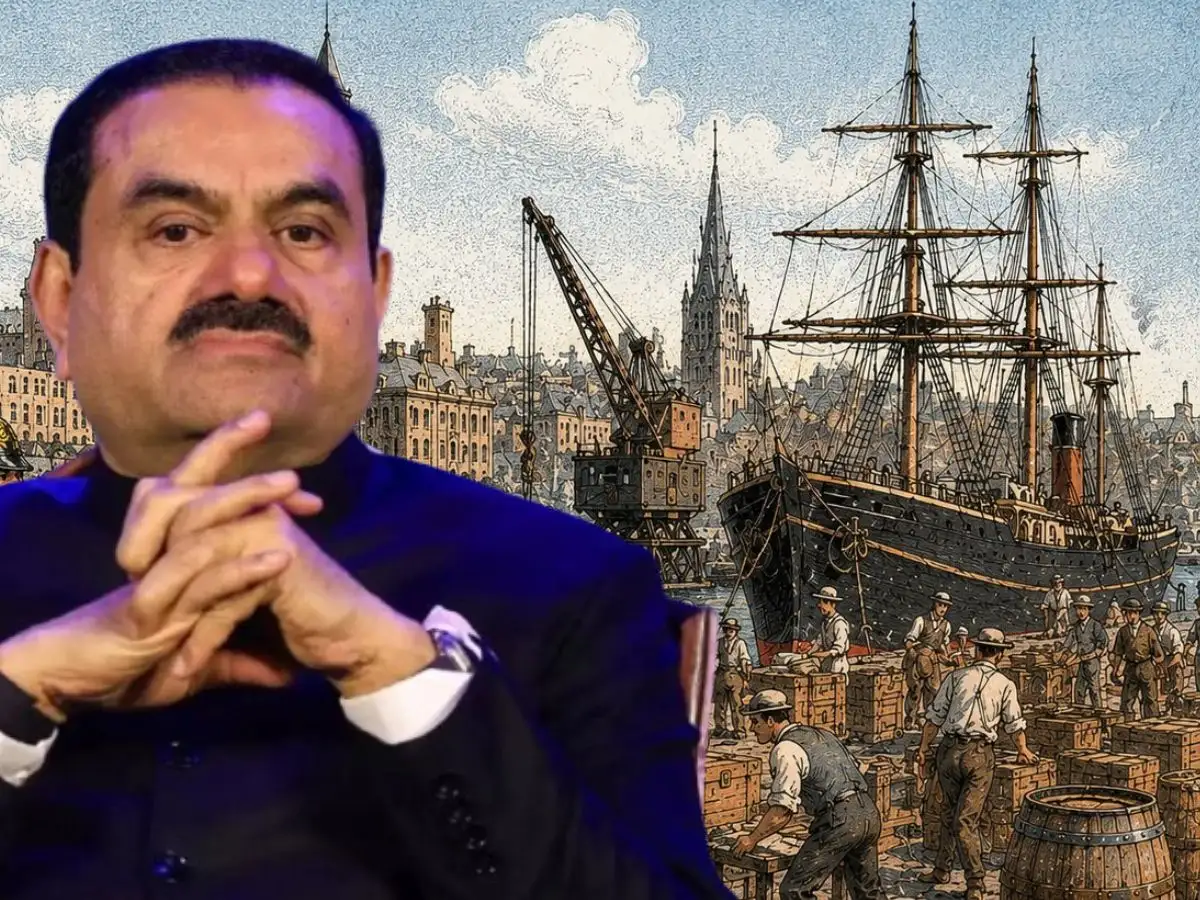
Tata Steel paid roughly $12 billion to acquire Corus, then one of Europe's largest steelmakers and the successor to iconic British Steel. It was the acquisition of an industrial institution and not just a company. British Steel occupied a place in the national imagination that few manufacturing firms could claim. It was linked to the Industrial Revolution, to Britain's rise as a global power and to the country's image as the workshop of the world.The Tata-Corus deal was seen as "reverse colonization". Commentators drew direct parallels between the age of the empire and the arrival of the Indian capital in Britain. The deal appeared to invert an established hierarchy. Capital was flowing from a former colony into the industrial heartland of the former imperial power.When Tata Motors acquired Jaguar Land Rover from Ford in 2008, the symbolism shifted again. Jaguar and Land Rover represented some of the most prestigious names in British manufacturing. The acquisition generated extensive discussion about national identity, industrial decline and the rise of emerging-market multinationals. Over time, the success of the deal strengthened Tata's reputation in Britain. Rather than stripping assets, Tata invested in the brands and helped expand their global reach.Other transactions followed. Wipro acquired the London-based consulting firm Capco. Reliance acquired Hamleys. Mahindra revived BSA motorcycles. TVS acquired Norton Motorcycles. But none of these deals generated the same level of historical commentary as Corus or Tetley. Corus remained the centerpiece because it combined scale, symbolism and timing. It arrived at the height of the "India Rising" narrative, when rapid economic growth was fueling confidence about India's place in the world.Why Adani-ABP deal is differentIf Adani succeeds in acquiring control of Associated British Ports, it will be seen through a different lens. ABP is not just an iconic brand like Tetley, Corus or Jaguar and Land Rover. It operates 21 ports across the UK and handles roughly a quarter of the country's seaborne trade. It is one of the most important pieces of logistics infrastructure in Britain.Ports occupy a unique place in Britain's imperial story. The British Empire was fundamentally a maritime empire. Ports connected Britain to India, Africa, Southeast Asia and the rest of the world. They served as gateways for commerce, migration, military power and administration. The movement of goods that sustained imperial prosperity passed through docks, harbours and shipping networks.For that reason, an Indian acquisition of ABP would be a different kind of historical event.
 The BriefWire