How Iran, Ukraine wars and El Nino could fuel world hunger
The wars in Ukraine and the Middle East haven't yet crippled global food supplies. Add a powerful weather pattern like El Nino, however, and the
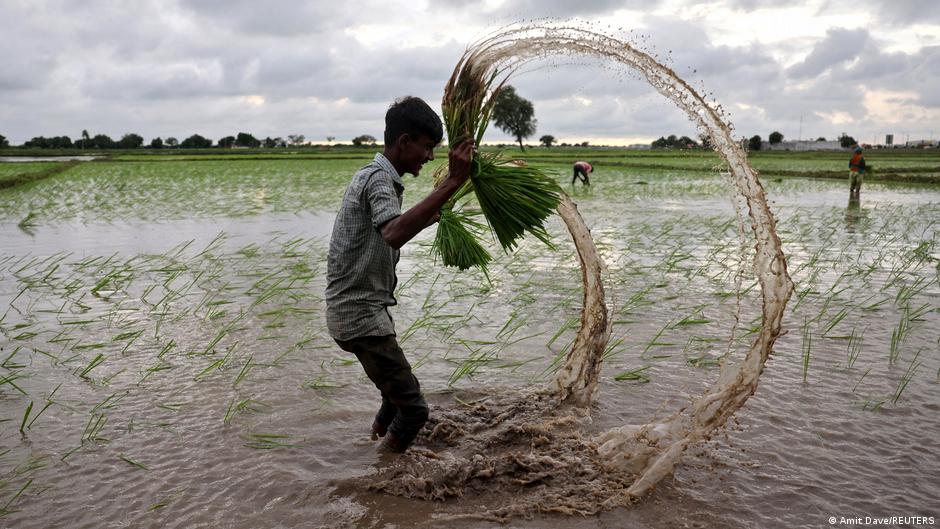
The wars in Ukraine and the Middle East haven't yet crippled global food supplies. Add a powerful weather pattern like El Nino, however, and the risks multiply. A potentially record-strength El Nino is now intensifying across the Pacific, bringing either drought or flooding to the world's key farming regions. Earlier this month, the US Oceanic & Atmospheric Administration (NOAA) predicted a 63% chance that the unusual weather pattern could be "very strong" this year. JP Morgan, meanwhile, warned last week that El Nino, combined with $100 (€88) oil prices, could spike food inflation by up to 1.5%. The arrival of El Nino follows two major conflicts, in Ukraine and the Middle East, during which global food supplies have held up remarkably well. So, could this third crisis bring the perfect storm that tips the balance? Are African nations underestimating the risks of El Nino? To view this video please enable JavaScript, and consider upgrading to a web browser that supports HTML5 video Triple blow to global food security Russia's war in Ukraine still hangs over one of the world's major grain-exporting regions, where repeated attacks on ports and farmland continue to threaten one of the planet’s key breadbaskets. The Iran war has driven up energy and fertilizer prices, raising the cost of growing food worldwide and causing temporary supply disruptions for key soil nutrients. El Nino, which shifts rainfall and temperature patterns worldwide, is expected to be so strong that the World Bank warned recently it could cut rice output by 20% to 50% in affected regions.
Maximo Torero, chief economist of the UN's Food and Agriculture Organization (FAO), warned of a "compound effect" that could create "a very complex situation" by the end of the year. "We are very concerned about El Nino and the delay of the monsoon... in India," Torero told DW. El Nino is expected to slow down and weaken India’s monsoon season, a vital time for rice planting. June already saw around 40% less rainfall than normal, according to local media. India produces nearly a third of the world’s rice, the vast majority of which is consumed domestically. Aside from South Asia, the FAO thinks the El Nino risks are highest in Africa's Sahel region, southern Africa, Southeast Asia and in the Dry Corridor of Central America. The UN food agency warned this month that some of these regions face a more than 50% chance of drought in the next few months. World producing more food than ever Despite the geopolitical strife, food prices remain nearly 20% below their 2022 peak, according to the FAO Food Price Index. The world brought in the biggest grain harvest in history last year. This is because farmers planted more land, the weather has been favorable and the crops produced more per acre. While this year is expected to be slightly smaller, the harvest will still be the second-largest ever. “We are seeing improvements in agricultural productivity," Simone Bunse, senior researcher at the Stockholm International Peace Research Institute (SIPRI), told DW, citing India and Latin America as notable examples.
 The BriefWire