Germany: How weather extremes impact local agriculture
Heat, drought, heavy rain and late frosts are taking a toll on German farmers. They increasingly respond with adapted varieties, new crops, modern breeding techniques
Heat, drought, heavy rain and late frosts are taking a toll on German farmers. They increasingly respond with adapted varieties, new crops, modern breeding techniques and modified farming methods. For many German farmers, the heat wave in late June couldn't have come at a worse time. While barley was already ready for harvest across much of Germany, the drought struck other crops during a particularly vulnerable stage of development. "This year is another difficult one for farms," Horst Gömann of Germany's North Rhine-Westphalia Chamber of Agriculture told DW. Corn has been particularly hard hit, as the extreme heat coincided with the flowering period, he said. "We're already seeing some corn plants failing to form cobs. That, of course, essentially amounts to a total crop failure," Gömann said. In corn, the energy is concentrated in the cobs. If they're missing, yields plummet dramatically. The heat wave in June, with peak temperatures exceeding 40 degrees Celsius, hit other European growing regions even harder. According to a recent analysis by Coceral, the European association of grain traders, this reduced the value of the grain harvest in Europe by more than €2 billion ($2.3 billion), with France and Hungary suffering the greatest losses. Due to the heat wave, Coceral lowered its expectations for grain production in the European Union and the United Kingdom by just under 9 million metric tons, a decline of 3%. The London-based research institute Energy and Climate Intelligence Unit (ECIU) even expects a 5% decline. Corn accounts for the largest share of the downward revision in Europe's grain forecast, representing about half of the adjustment. A heat wave in late June impacted this year's harvest in Germany negatively Image: Boris Roessler/dpa/picture alliance German farmers need to diversify The weather also took its toll on wheat and barley.
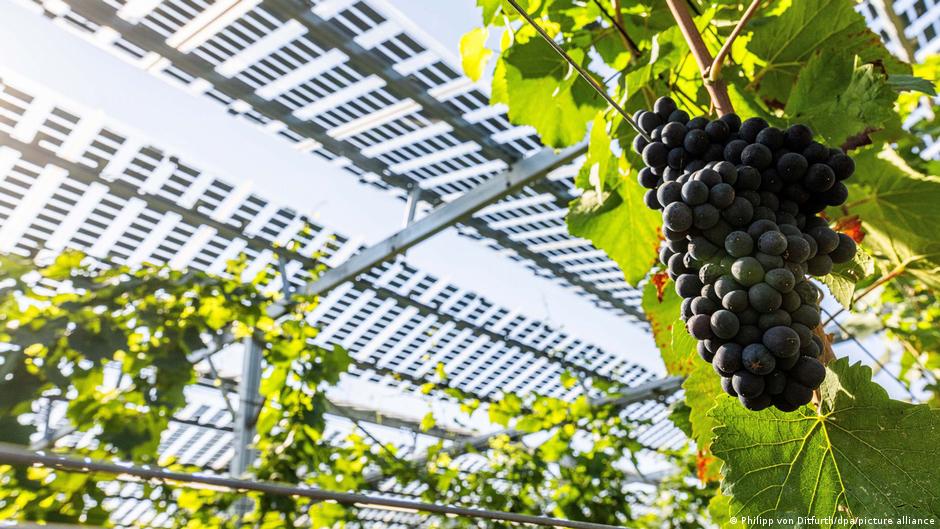
In some cases, barley was harvested several weeks earlier than usual. According to Gömann, this year's barley harvest is likely to be slightly below average. For wheat, he expects losses of about 10%. Risk diversification is therefore an important adaptation strategy. Instead of growing just one kind of grain, many farms are relying on different kinds with varying maturity rates. "You never know when such extreme heat will strike," Gömann said. He explained that farmers who grow multiple varieties spread the risk across different stages of development. Barley has a natural advantage in this regard. It matures earlier than wheat and often completes grain formation before the major early-summer drought sets in. Experts say that irrigating is only worthwile with crops but not with all fruits Image: Julian Stratenschulte/dpa/picture alliance Fruit farming struggles with late frost and sunburn While drought threatens crops in the fields, late frost is a major concern in fruit farming. Due to climate change and mild winter temperatures, flower buds, from which the fruit will eventually develop, form earlier. However, frosty nights can occur well into spring. Many fruit growers, therefore, protect their blossoms with frost-protection sprinklers. Water is sprayed over the blossoms, forming a layer of ice. "This traps enough heat inside so that temperatures don't drop as low as they would without frost-protection sprinklers," explains Gömann. These systems can also be used for irrigation during long dry spells in summer. There are also technical solutions for combating heat. Today, hail protection nets serve more than just protection against severe weather, as they also shade the fruit and prevent sunburn. In addition, experiments are already underway in fruit and wine growing with semi-transparent photovoltaic films. They generate electricity and protect the plants from excessive sunlight while allowing enough light to pass through.
 The BriefWire