US, Japan's WTO Praise Gives Modi Govt's Lateral Entry Model A Global Endorsement
US, Japan's WTO Praise Gives Modi Govt's Lateral Entry Model A Global Endorsement Reported By, Edited By Last Updated: July 29, 2026, 11:42 IST Aashish
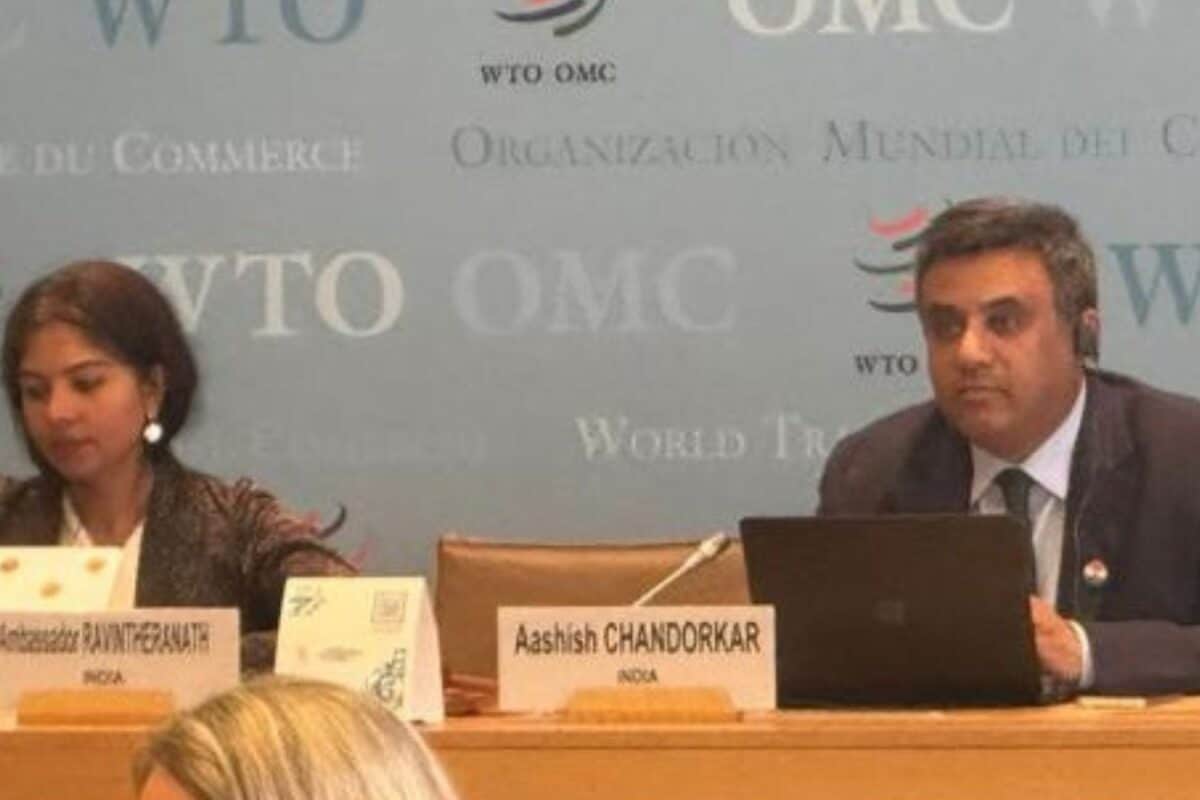
US, Japan's WTO Praise Gives Modi Govt's Lateral Entry Model A Global Endorsement Reported By, Edited By Last Updated: July 29, 2026, 11:42 IST Aashish Chandorkar, a lateral entrant in India’s delegation to World Trade Organization in Geneva, brought years of private sector experience into India’s trade policy ecosystem Rapid Read Aashish Chandorkar (right) joined the government of India and represented the country at its Permanent Mission to the World Trade Organization. (News18) In the often-opaque world of multilateral diplomacy, public praise from counterparts across negotiating tables is rare. Praise from two major economies, the United States and Japan, during formal proceedings is in fact rarer. This is precisely why references to Aashish Chandorkar, a lateral entrant in India’s delegation to the World Trade Organization (WTO) in Geneva, are particularly noteworthy in diplomatic statements. During the crucial Trade Policy Review (TPR) meetings, Japan, in its statement, said Chandorkar’s prior experience in India’s private sector had “added great depth" to discussions and that he would be “greatly missed" by colleagues.
The US delegation echoed the sentiment, describing him as an “excellent counterpart" whose professionalism and thoughtful engagement strengthened bilateral work, while expressing hope of continuing the relationship in the future. According to Chandorkar’s LinkedIn profile, he joined the government of India and represented the country at its Permanent Mission to the World Trade Organization (WTO) in Geneva. His profile describes him as a “senior strategist operating at the intersection of global commerce, digital policy, and statecraft". For seasoned trade negotiators, such personalised acknowledgements during official interventions are highly unusual. Diplomatic statements are typically institution-focused, not individual-centric. The episode is also significant because Chandorkar was not a career diplomat. He joined the government through the lateral entry route, bringing years of private sector experience into India’s trade policy ecosystem. His recognition comes at a time when the Narendra Modi government has increasingly argued that governance should not remain an exclusive domain of the permanent bureaucracy.
Over the past few years, the centre has opened several senior policy positions to domain experts from industry, academia and the private sector, arguing that specialised expertise can strengthen policymaking and implementation. Senior officers who support the lateral entry model said that Chandorkar’s experience offers an example of how external professionals can add technical depth to complex negotiations, particularly in areas such as trade, technology and global economic governance where industry experience can complement traditional diplomatic skills. The public appreciation from both Japan and the United States is likely to be cited by the proponents as evidence that domain specialists can integrate successfully into India’s diplomatic machinery. Beyond one individual’s contribution, the episode reflects a broader shift in New Delhi’s governance philosophy, that is one that seeks to combine institutional experience with specialised expertise, and views talent from outside the traditional bureaucracy not as an exception, but as an asset in advancing India’s interests on the global stage.
 The BriefWire